Your hydrangea hasn't bloomed in three years - what went wrong?
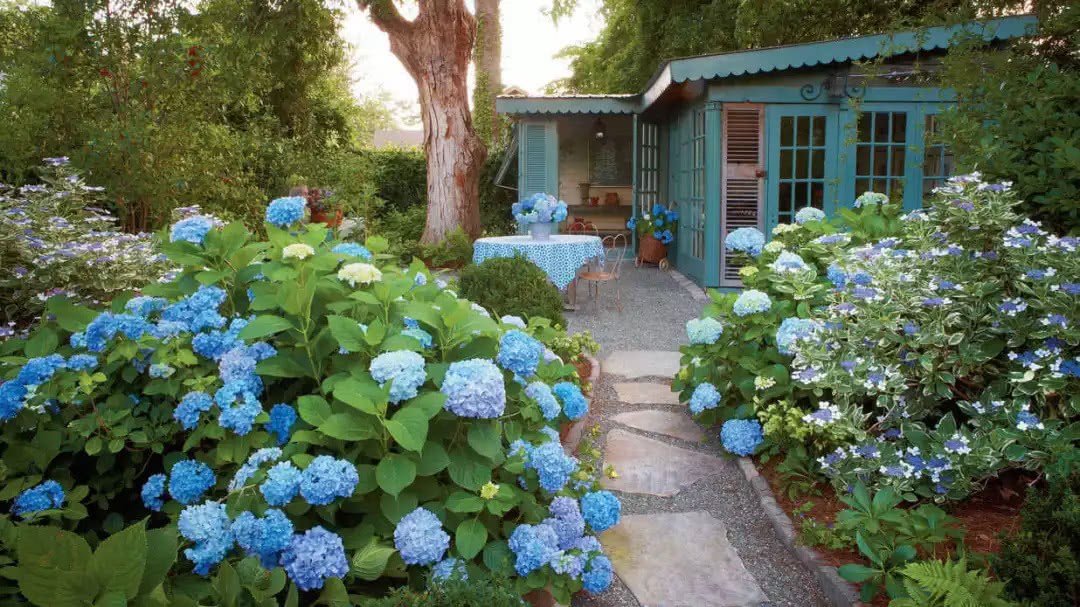
The hydrangea is a shade-loving shrub flower that does not need much light and is suited to growing under the shade of trees, and it does not grow well in spots with plenty of sunlight. If your hydrangea has been grown for two or three years without blooming, it may be that the plant is not old enough, or that one of the following points has not been done well.
1. Growing environment
The environment in which the hydrangea is grown is very important. If you keep it in a spot with plenty of sunlight, the leaves of the hydrangea will easily dry out and turn yellow, which will eventually cause the plant to wither.
Of course, you also cannot keep the hydrangea in an overly shaded environment, otherwise its branches and leaves will easily grow leggy, and the branches and leaves will become very fragile.
The best growing environment is one that is ventilated and lets light through, with appropriate scattered light every day. Be careful to avoid scorching sun or excessive direct sunlight, and do not keep it in an environment that is not ventilated.
The hydrangea's growing environment should be protected from strong winds; its stems are actually rather fragile, especially during the typhoon season in summer, so it should be properly protected.
2. Notes on soil and watering
During the growing period, the hydrangea's soil should be kept from staying dry for long periods. Especially in spring and autumn, the hydrangea needs a warm, slightly moist environment; if the soil stays dry for a long time, the leaves will easily turn yellow. When growing hydrangeas, you should also choose a loose, breathable soil with good drainage. The acidity or alkalinity of the soil does not matter.
If the soil is slightly acidic, the hydrangea's flowers will turn pink; if the soil is weakly alkaline, the hydrangea's flowers will easily turn blue-purple. However, some varieties do not change flower color; this depends on the variety.
3. Regular fertilizing
Besides the suitable growing environment and soil mentioned above, you also need to pay attention to regular fertilizing. In the spring and summer growing seasons, you can apply a slow-release organic liquid fertilizer once every 1 to 2 months, applying small amounts frequently. The fertilizer concentration must not be too strong; give more slow-release organic fertilizer and do not give too much chemical fertilizer.
4. Pruning in different seasons
Most hydrangeas are pruned in spring and summer. During the flowering period, be careful to promptly cut off spent flowers to avoid the withered blooms consuming too many nutrients. In addition, be careful to promptly cut off the flower stems after the flowers fade, pruning from below the growing nodes of the two leaves beneath the flower.
During the hydrangea's growing season, if some dry, yellowing branches and leaves appear on the branches, they should also be pruned promptly. Diseased leaves, diseased branches and crossing branches should also be cut off, and a fungicide should be sprayed promptly for prevention and control to avoid the condition worsening and to keep the spaces between branches and leaves ventilated and letting light through.
Another pruning time is in autumn, when the hydrangea is preparing to enter dormancy. At this time, a larger pruning can be done, cutting from below the branching of the flower stem and cutting off the smaller tender shoots at the top. This helps promote the sprouting of more new branches and is beneficial for producing more flowers the following year.
5. Care during dormancy
If you want the hydrangea to bloom normally after spring warms up, be careful during the winter dormancy period to avoid too high a temperature. During dormancy, the most suitable temperature is around 4 degrees, and the maximum temperature should not exceed 15 degrees. This helps the hydrangea store more nutrients and bloom better the following year.