The art of flower arranging is full of variety. Do you understand its meaning and floral foam?
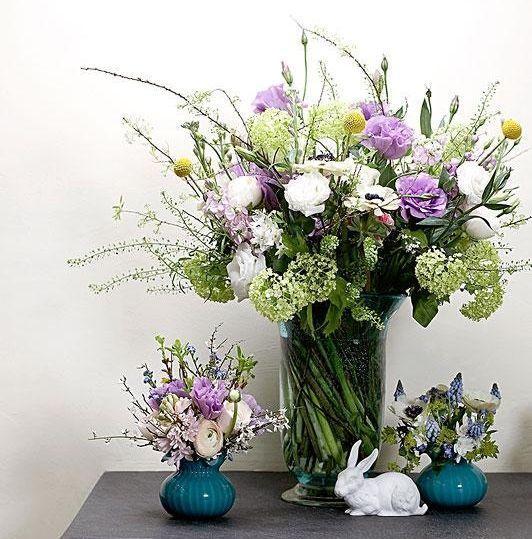
When it comes to the art of flower arranging, perhaps most people think it is a highbrow term, but it has nothing to do with most of us, because the people involved in art are probably those artists with relatively refined taste and minds full of artistic sensibility. They are proficient in aesthetics and rhythm, and have a unique understanding of creating works of art.
And we ordinary people seem to have nothing to do with the creation of these works of art; it seems we only have the privilege of admiring them in art galleries. But the art of flower arranging is not that kind of aloof, highbrow art. On the contrary, it is a relatively accessible art. In fact, anyone whose aesthetic ability is not especially poor can create a beautiful flower arrangement.
1. What is most important in the art of flower arranging? The most important thing in the art of flower arranging is the matching of flowers and leaves. Although in a flowering plant, the green leaves only play a supporting role, and the most dazzling and eye-catching parts are still those colorful and delicately charming flowers, flowers actually look very monotonous without the accompaniment of green leaves. That is why people say red flowers should be paired with green leaves, and why green leaves are not excluded.
Although flowers are very beautiful, only with the company of green leaves will the overall color tone of the flower arrangement look richer. Although you do not need to keep all the green leaves of the whole plant, leaving a few leaves after pruning is no problem. Some people even pursue a kind of incomplete artistic effect, specially choosing some leaves that have already slightly yellowed, or pruning the leaves into irregular shapes. This is a very unique kind of beauty. Perhaps some people cannot appreciate it, but if you savor it carefully, you will still feel something. Now that the matching of flowers and leaves has been mentioned, the matching of flowers with flowers is even more important, because the matching of flowers with flowers pays more attention to the harmony and complementarity of color schemes.
Sometimes, you can use the same color family, such as red, orange-red, and rose red, which are all in the red color family. When paired together, they create a warm tone, somewhat like the feeling of Van Gogh's sunflowers. And sometimes, if you want to innovate and do not want to be so restrained, you can also use complementary color families, such as the collision of cool tones and warm tones. Blue enchantress paired with gentle sunflowers is also a kind of beauty.
2. What is floral foam? When it comes to floral foam, there is actually a lot of knowledge behind it. Floral foam is not a type of mud; it just has the function of mud, that is, it can provide a temporary living place for plants. Floral foam is generally green, though not the pure green found in nature. Its color is darker, with a hint of blue-green. After watering, floral foam becomes relatively soft. When arranging flowers, because it is difficult to shape them in a vase, some professionals choose to first arrange the flower design on the floral foam.
3. Is it true that floral foam cannot be watered too much? Floral foam is equivalent to soil with relatively good breathability, except that it does not have as many nutrients as soil. However, its water permeability is very good. Therefore, if you water it too much at one time, water in the floral foam may leak onto the ground. A piece of floral foam is about as large as two bricks. For floral foam this large, watering once every two days is more than enough.