Yang Rumenn / Does anyone eat cilantro by the jin? Everyone complains vegetables are expensive, so is importing vegetables to "balance" prices right? During peak harvest season, do we export to balance vegetable prices?
Every time a typhoon or torrential rain comes, the cities and the government only care about whether vegetable prices will rise, and people rush out in droves to buy vegetables, not caring whether they can finish eating them all, just buying first and thinking later. One day of typhoon, they buy 3 days' worth of vegetables; one day of torrential rain, they buy a week's worth. "Anticipatory psychology" - just stuff it in the fridge at home first, as if a famine or war were coming and everyone were stockpiling supplies. Most of what they buy goes uneaten and later becomes kitchen waste. Losing one's mind is a truly fascinating thing.
What the media cares about is also fascinating - they pay special attention to cilantro and scallions, with prices supposedly reaching several hundred yuan per jin! But who eats cilantro by the jin?! Is this a joke, or is it using high prices to drive up people's anticipatory psychology and sound the horn for vegetable hoarding?
The mood of urban residents immediately surfaces in the government's mind: "What the people desire is always in my heart." Should we stabilize prices, release refrigerated vegetables, urgently import fruits and vegetables... But who knows the voices of the farmers?!
When torrential rain comes, 3 months of hard work is all washed away. With no vegetables, where does the money come from?
Yesterday I went with a friend to Yuanchang, Yunlin, to chat with a farmer. After a layer of water on the road receded, the weeds, leaves and garbage that could not follow it out had not yet been cleared. Then we saw the water line in the greenhouse, visually about 50 cm. The farmer opened the greenhouse door. What was planted inside was cucumber. It had been submerged for several days, and the water only receded today, but the greenhouse was still muddy. The cucumber had already grown to a person's height, had been pinched and was starting to be harvested, just about to enter a stable production period, but after this flooding, the plants had all rotted.
The leaves below the waist were already yellow, and the upper part looked unaffected, but once the sun came out, it would rot even faster. What could originally have been harvested for nearly 3 months had all drifted away with the water. The farmer casually picked a cucumber that could originally have been shipped, broke it - it was not crisp, but soft and chewy, with wrinkled skin. Even if they wanted to sell it, no one would buy it - all that hard work.
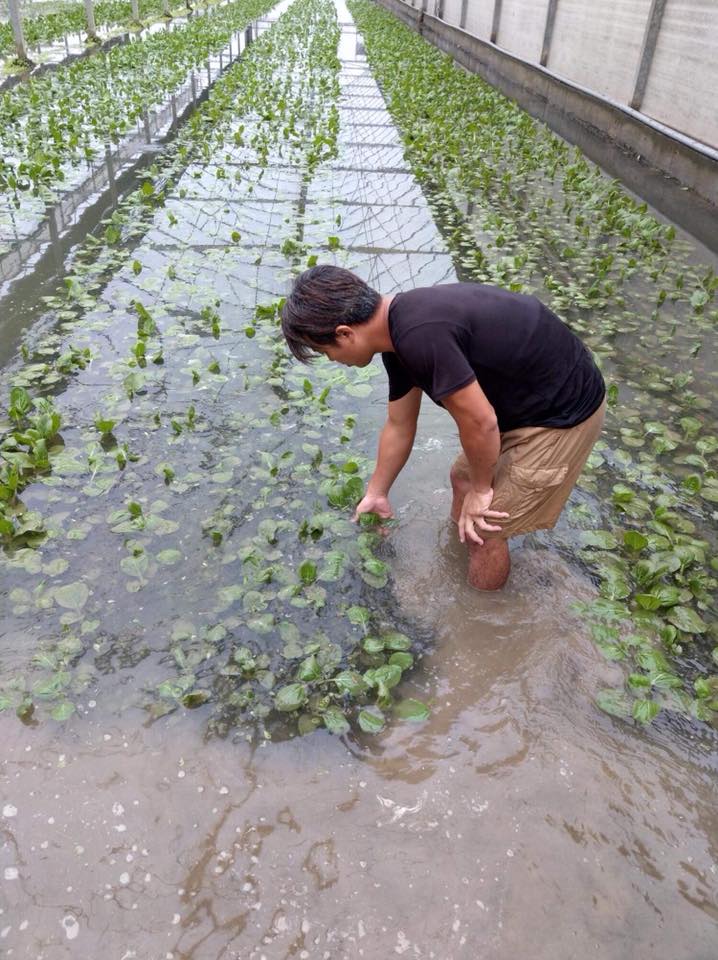
Leafy vegetables submerged, what was originally meant for group catering is now all washed away
The leafy vegetables happened to be submerged. After the water recedes and the soil dries, the whole field will need to be reworked. The farmer then mentioned that the market was originally about to improve, school was about to start, and group catering was gearing up. What should have been bought and prepared has now all become compost. The phone kept ringing with inquiries about direct group catering deliveries. This is not a matter of money - there are simply no vegetables. If there were vegetables, who would not want to ship them?!
What is even more disheartening is those who had signed contracts. After school starts on 8/30, they were supposed to deliver nutritional lunch. Originally, having signed a contract was like taking a reassurance pill - finally there was a stable supply channel. But man proposes and heaven disposes. Now, if they cannot deliver the vegetables, they will breach the contract. Looking at the sky, the dark clouds are getting lower and lower, and it feels like rain in the heart!
To quote a line from Iron Lion Jade Linglong: "If you speak too much, tears will flow without end!"