Master these five tips for growing pothos at home, and its leaves will grow big and wildly, covering the whole wall
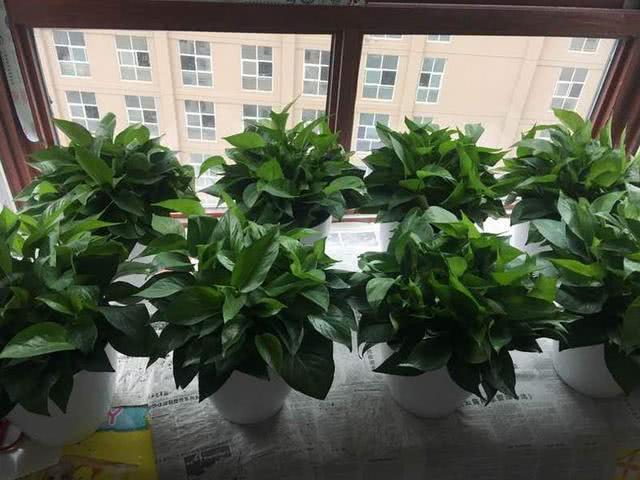
With playful single leaves and a whole plant in vivid green, plus the special ability to purify the air, when it comes to pothos, we always think of many positive adjectives. Indeed, as one of the most popular houseplants, pothos has long found its way into thousands of homes. Besides its high visual appeal, being easy to grow is also an important reason we choose it. Of course, the method is simple, but if you want to grow it well, there are still certain tricks involved. Otherwise, how could it be that some people's pothos grows lush and covers the whole wall, while others' wilts and looks listless! In fact, the gap between you and a pothos growing expert may just be the following 5 points.
From beginner to expert, these 5 points are all you need!
1. Don't agonize over the method, disinfection is key:
Many friends always agonize over whether to use water culture or soil culture when growing pothos. Actually, this is completely unnecessary, because considering how "tough" pothos itself is, either method can let it survive successfully. But there is one most critical point, and that is that the entire cultivation environment must be "clean." For water culture, the water must not be tap water used directly. Even if we have no way to get purified water, it is best to leave tap water in the sun for about two days. As for soil culture, the soil must be disinfected before use, so as to thoroughly remove pathogens or insect eggs in it.
2. Give it some sunlight and let it shine brighter:
Although from the perspective of its habits, pothos counts as a shade-loving plant, we still need to regularly take it out to get some sun. When growing it at home, especially on a balcony, it is best to place it in a spot with diffused light. If it is placed in a shady, lightless spot for a long time, then it will inevitably have an adverse effect on photosynthesis, and only sufficient photosynthesis can make pothos grow more luxuriantly!
3. Drinking water is not about quantity, just the right amount is fine:
Does pothos like water? Yes, but too much is no good. Overwatering easily causes leaves to turn yellow or even rot. In addition to the principle of watering when dry and withholding when wet, the season is also something we need to consider. In summer, for example, we can water once a day, and the best time is around evening. Of course, you can also spray water on the pothos leaves more often to keep the leaves moist.
4. Making pothos fill its pot is simple, the right temperature is key:
One important reason many people's pothos does not grow bigger is unsuitable temperature. Pothos likes a warm and humid climate, so under normal circumstances, a temperature of around 20°C is most suitable for its growth. Given such a range, we need to take measures according to different temperatures. For example, in summer we can build a shade canopy or lower the temperature by sprinkling water, while in winter we should promptly move the potted pothos indoors to a warm place, and the indoor temperature must not be lower than 10°C.
5. Want it to grow tall? Fertilizer is indispensable:
Pothos likes fertilizer, so providing certain fertilizer support during its rapid growth stage is the key to it growing well and filling its pot. The best season for fertilizing pothos is spring. Generally, it can be fertilized 2-3 times within one month, but note that each fertilization should preferably be in an appropriate amount. In autumn and winter, considering the growth rate, we do not recommend fertilizing pothos. As for the specific fertilizer type, you can choose the common pothos-specific fertilizer on the market, and there is no need for everyone to worry too much!
Learn to self-check and become a pothos "attending physician":
Growing it well is one aspect, and learning to troubleshoot problems is also a necessary part of making it fill its pot. If you see that the pothos in your home has yellow leaves, wilting, or blackened and rotting stems and roots, then do not hesitate. The first step is to cut off all these stems, roots, and leaves in poor condition, otherwise it may become infected with more serious diseases. Even if it is just a normal plant growth phenomenon, it will waste nutrients for nothing. There is nothing to regret, just cut boldly!
Second, if the leaves look listless and show wilting, but the potting soil is moist, then do not water it, and do not rush to put it in the sun. The correct approach is to spray water on the leaf surface, and it can get a little weak scattered light in the morning; do not expose it to too much sun.