Skip this one step when repotting and it is as good as not repotting at all - by autumn the plant will barely grow a few leaves
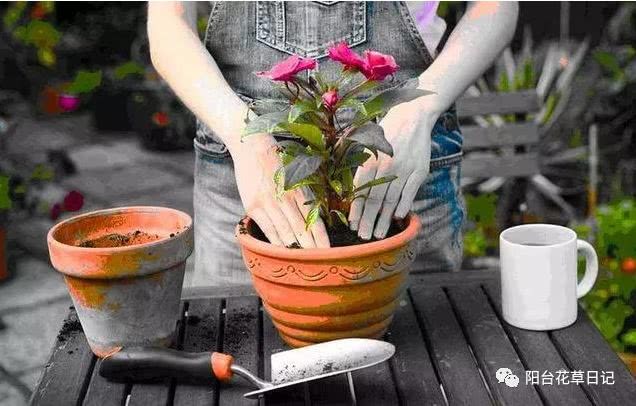
Actually, many flower lovers do not know how repotting should really be done. It is not just pulling the plant out and planting it into another pot! Repotting has its finer points. When repotting, the roots should be pruned appropriately; the roots should not be allowed to grow thicker and thicker. This can reduce the occurrence of root diseases and pests and make the flowers bloom more and more brilliantly! If you are unwilling to prune the roots, repotting is a waste of time!
Everyone knows that pruning branches appropriately can make flowers bloom more and grow faster. But in fact, pruning roots is even more important than pruning branches! This is because pruning roots not only makes the root system stronger and reduces the occurrence of root diseases and pests, but also makes the plant lush with branches and leaves and covered in splendid blooms.
How do you determine when to repot a plant?
One, observe the plant's roots
Look at the roots of the potted plant. If its roots have stretched outside the pot, then of course it means the pot is already too small to hold the increasingly large root system, and a larger container with more soil is needed.
Two, observe the plant's leaves
If you find that the plant's leaves are growing smaller and smaller in size, thinner and thinner in thickness, and paler in color, just like a person with a sallow face and emaciated body, it means the soil's nutrients are insufficient and the plant needs repotting to replenish the soil.
How do you choose a pot when repotting?
When choosing a new pot, you can refer to the plant's growth rate. A diameter roughly 5-10 cm larger than the original pot is enough.
How do you repot a plant?
Materials and tools to prepare before repotting: flower pot, potting soil, perlite, gardening shears, trowel, vermiculite.
1. Take the plant out of the pot, gently press the soil ball around the roots with your hands to loosen the soil, then sort out the roots from the soil.
2. To balance the breathability and water retention of the new soil, thoroughly mix vermiculite, perlite and potting soil in a ratio of 1:1:3 (for reference) as the new potting soil.
3. Add the mixed soil to the new pot, about 1/3 of the height, press it down slightly with your hands, place the plant in, then add soil until it is eight-tenths full.
So how should we prune the plant's roots? The editor will tell you today.
1 Prune diseased roots
(Rose root nodule disease)
When repotting a plant, carefully check the growth condition of the root system. Once any abnormality is found, cut it off promptly and remove it completely.
2 Prune rotten roots
(Image author: zhangtr1 Source: Orchid Forum)
When a plant is watered too much and the potting soil holds water for a long time, the roots easily rot. When repotting these plants, the rotten roots should be pruned off to prevent further infection.
3 Prune adventitious roots
(Image source: Gusu Evening News)
In order to grow, flowers always produce many fine roots. When repotting, part of these fine roots should be pruned appropriately to promote the sprouting of new roots.
4 Prune reverse roots
So-called reverse roots are roots that grow in the opposite direction. If not pruned, the roots will coil and tangle, affecting growth. The first way to deal with them is to cut them off directly; alternatively, you can adjust the growth direction of the roots and fix them so they grow downward.
5 Prune tangled roots
(Image author: Xiaoping Superman Source: Osmanthus Forum)
For potted plants, because pot space is limited, if they are not repotted in time, the plant's roots will coil and crisscross and cannot grow normally. If this happens when repotting, carefully untangle the roots, prune them appropriately, and then replant.
6 Prune thick roots
A plant's thick roots will weaken the other roots and affect the growth of the other roots, so when repotting, if you find such roots, cut them off promptly as well.
7 Prune downward-growing roots
(Image author: Wusha Garden Source: 91 Succulents)
When repotting, cut off the overly long roots that the plant extends downward. This allows the root system to spread in all directions, so the plant can develop better!
Flower lovers, have you learned how to repot and prune roots?
▍Comprehensive editing: Balcony Flowers and Plants Diary hcrj520