5 drought-tolerant indoor potted plants with distinctive looks that need no care for months
Most plants grown indoors can grow well without much care, while those that are watered frequently are the ones that easily die, because indoor temperature changes very little, and most indoor environments get no sunlight, making care very simple.
The indoor plants most afraid of water include: money tree (Pachira aquatica), ZZ plant (Zamioculcas zamiifolia), snake plant (Sansevieria), dragon tree (Dracaena fragrans), dragon plant (Dracaena marginata), spider plant and aloe, among others; these plants must not be watered frequently, as too much water easily causes root rot and stem rot.
When growing plants at home, the indoor environment is not ventilated, so when watering, do not pour water directly into the leaf center; if the leaf center stays waterlogged or damp for a long time, it easily causes the leaves to rot.
Below are several drought-tolerant potted plants, all with very delicate looks.
1. Elephant foot tree
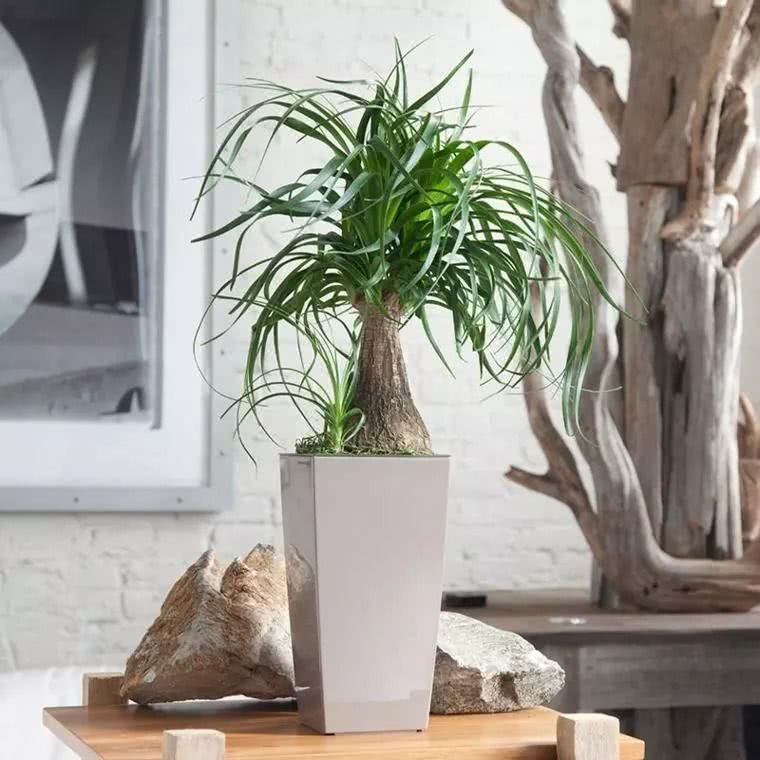
The elephant foot tree (Beaucarnea recurvata) was originally a particularly tall tropical desert plant with a very cute look; its base has a swollen tuber, and it needs almost no watering during care, as its water demand is extremely low, because the tuber at the base is full of water, so even if it is not watered for months it does not matter.
The elephant foot tree, also called the bottle palm, likes ample light and a warm, dry environment year-round; cultivation requires loose, well-draining sandy soil, with some decomposed compost added to the soil, plus 2~~3 parts river sand or perlite to ensure good drainage; an elephant foot tree grown indoors needs even less water, basically watered once every 1~2 months.
2. Spring grass
Spring grass (Albuca spiralis) is a succulent-type plant with a swollen tuber under the stem, and is especially drought-tolerant. It originally grows in a dry, cool environment and likes moderate light; you can grow it on a windowsill with moderate scattered light each day, and it also grows well indoors in a bright spot; when cultivating spring grass, be sure to choose loose, well-draining sandy soil, and do not choose heavy soil, otherwise the soil easily becomes waterlogged.
Another issue is to pay attention to keeping it warm; keep the minimum care temperature above 5 degrees, with the optimal growing temperature between 18~24 degrees; it is suitable for placement on a windowsill or balcony, and during the growing period pay attention to water control, as too much water easily causes stem rot.
3. ZZ plant
The ZZ plant (Zamioculcas zamiifolia) is also a fleshy-type plant, originally a drought plant from the East Africa region; even without water for two or three months it can maintain good growth, and it is also very suitable for growing indoors; it tolerates low-light environments well, and during care you should pay attention to water control, avoiding sun exposure or excessive direct sunlight; it can be placed in a ventilated, light-filled living room or office.
When caring for a potted ZZ plant, pay attention to water control and keeping it warm; it is a tropical foliage plant, and the optimal minimum care temperature is above 7 degrees.
4. Desert rose
The desert rose (Adenium obesum) is a fleshy-type succulent with particularly good ornamental value and low water demand, but to grow it well it needs more light; apart from shading during summer when temperatures are high and sunlight is strong, in other seasons it needs ample light every day, with more than 6 hours of light per day being best.
When caring for a potted desert rose, besides keeping light ample, also pay attention to water control; do not water before the soil has dried out completely, as too much water easily causes yellow leaves and leaf drop, and in severe cases leads to root and stem rot.
5. Mountain turtle
The mountain turtle (Stephania epigaea), also called di burong, is a fleshy-type plant with a very distinctive look; its tuber is especially large, and it goes into partial dormancy in hotter and colder seasons; its branches and leaves grow as vines, and during care it can be given moderate light without needing frequent attention.
For a potted mountain turtle, you can choose a larger container with larger drainage holes; the growing soil should be loose and breathable, the minimum care temperature should stay above 5 degrees, and during the growing period pay attention to water control.