Embracing the spirit of all things between heaven and earth, guarding the beauty of nature
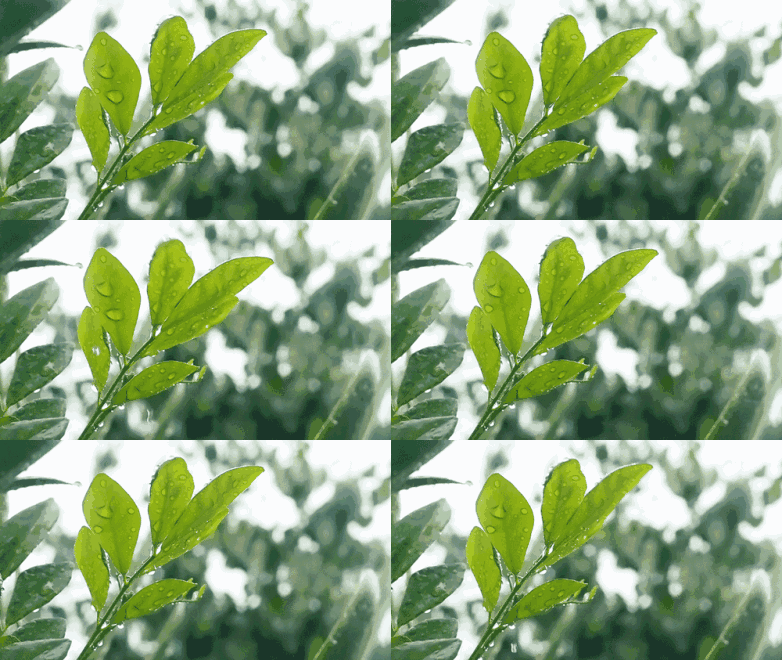
Tea, the miraculous herb of heaven, earth, and the natural world. Break apart the character for "tea", and its meaning is a person among grass and trees. Tea is born of heaven, grows from the earth, embraces the spirit of all things between heaven and earth and the beauty of nature, receives the harmonious qi of heaven and earth, and is formed by the union of yin and yang qi.
Chen Zangqi, the great medical scientist of the Tang Dynasty, wrote in Supplement to the Materia Medica: "All medicines are medicines for their respective diseases, but tea is the medicine for all diseases." From this we can see that tea is as beautiful as described in Du's poem, and as Chen Zangqi said, it is extremely beneficial to human health.
And Yuan Zhen of the Tang Dynasty wrote in his poem "Tea": "Tea, fragrant leaves, tender buds, admired by poets, loved by monks. Ground and carved like white jade, sifted through red gauze. Boiled in a pan to a yellow-stamen hue, swirling in the bowl like koji-dust flowers. After nightfall, invited to accompany the bright moon; before dawn, alone facing the morning glow. Washing away the dust of past and present, people never tire; who would know that after drunkenness it could ever be praised?"
Tea
Yuan Zhen
Tea, fragrant leaves, tender buds,
Admired by poets, loved by monks.
Ground and carved like white jade,
Sifted through red gauze.
Boiled in a pan to a yellow-stamen hue,
Swirling in the bowl like koji-dust flowers.
After nightfall, invited to accompany the bright moon,
Before dawn, alone facing the morning glow.
Washing away the dust of past and present, people never tire,
Who would know that after drunkenness it could ever be praised?
Swipe left
We cannot help but marvel at the wonder of tea, whether for its cultural value or its value for drinking! Chinese tea spread to every part of the world through various channels, making tea a worldwide healthy beverage and industry.
The essence of Chinese tea culture has also continuously taken root, blossomed, and borne fruit around the world, and has blended with the lifestyles, customs, and religious consciousness of the peoples of every country, forming the rich and colorful distinctive tea cultures of various countries and peoples. Tea is one of China's important contributions to humanity and to world civilization, and also one of the East's major contributions to the world!
The fresh leaves used for Fujian white tea are mostly early spring tender buds. The processing involves only withering and drying. Compared with other tea categories, it retains a large amount of the flavor and nutritional components of fresh tea leaves, such as tea polyphenols, theanine, flavonoids, caffeine, and soluble sugars, and also contains aroma components such as linalool oxides I and II, linalool, phenylethanol, and geraniol, and its compositional changes are the smallest among the six major tea categories.
The tea leaves absorb little heat, the tea taste is light, and its nature and flavor are cold and cooling. It is a commonly used folk cooling medicine for reducing internal heat, with effects of relieving summer heat and promoting salivation, reducing fever and lowering internal heat, and detoxifying. Compared with other tea categories, white tea has more distinctive health benefits in protecting oral hygiene, resisting radiation, antibacterial and antiviral effects, and inhibiting cancer cell activity.
White tea is the brilliant pearl among China's six major tea categories. White tea belongs to the lightly fermented tea category, and its processing technique involves only the two steps of withering and drying. Its special processing technique has made white tea mainly sold to Hong Kong, China, Germany, Japan, the Netherlands, France, the United Kingdom, Singapore, Switzerland, and other places.
Many interesting customs and living cultures are passed down among the people of Fuding, from grand matters such as honoring heaven and earth, offering to heaven, honoring the Buddha, and honoring ancestors, to small matters such as receiving guests. In Fuding, people cherish tea even more than rice, placing tea before rice and calling it "tea elder brother, rice younger brother." People also show great respect for tea and never casually discard tea dregs; tea dregs must be poured together with the water used to wash dishes and pans, or poured into streams and rivers.
The Baihao Yinzhen picked and made on Qingming day of that year is sealed well and opened when a man in the family marries, called "descendant tea"; the Bai Mudan picked and made on Qingming day is sealed well and given as a dowry when a daughter in the family marries, called "daughter tea."
Zhang Tianfu, a leading authority in the tea world, published "A Survey Report on Fujian White Tea" in 1963, arguing: "White tea was first created in Fuding County. At that time, the silver needles were picked from caicha tea trees. After the Dabai tea was discovered in Fuding around 1857, silver needles began to be made from Dabai tea buds in 1885, called Dabai, while those picked from caicha were called native needles or Xiaobai."
Luo Shaojun, Chen Chuan, and many other experts conducted multi-angle and multi-level research and verification on Fuding white tea from historical origins, documentary records, and natural geographical conditions, and reached the conclusion: the source of Chinese white tea is in Fuding.
As the birthplace of Chinese white tea, Fuding is located in the mid-subtropical monsoon climate zone, with obvious maritime climate characteristics. The average annual temperature is 18.5°C, the annual rainfall is 1669.5 mm, the annual relative humidity is 80%, and the average frost-free period in the mountainous areas is 228 days. The mountainous areas in the southwest and northwest have more rainfall. Taimu Mountain is distributed in the northeastern part of the region, shrouded in clouds and mist all year round, with an average annual rainfall of up to 2112.3 mm. Influenced by inner bays such as Qingchuan Bay and Shacheng Bay, the climate differs noticeably from other tea-producing areas across the country.
The Fuding region is surrounded by streams, with content distributed southeastward and west-to-east along the Taimu Mountain range. The larger flowing streams in the region include Tongshan Stream, Chi Stream, Baibu Stream, and Zhaolan Stream, with a total length of 242.8 km. Water resources are abundant, and the city's freshwater water area is 1340.3 sq km. The average annual water volume is 1.6856 billion cubic meters, of which groundwater is 550 million cubic meters. The water quality within the basin is clean. According to laboratory testing, the content of heavy metals and harmful microbial bacteria is lower than the environmental standards for organic agricultural products.
Fertile and slightly acidic soil is fundamental to producing good tea. The soils within Fuding are all very suitable for growing tea, including red soil, yellow soil, purple soil, and alluvial soil, with a pH value between 4-6.3, generally around 5.0.
The original producing areas of the two tea tree varieties "Fuding Dabai Tea" and "Fuding Dahao Tea" are in Fuding. These two tea trees are also national-level improved tea tree varieties. In 1985, they were recognized as national varieties by the National Crop Variety Approval Committee, with the numbers GS13001 and GS13002, commonly known as "Huacha No. 1" and "Huacha No. 2."
These unique resource conditions have created the unique Fuding white tea
Tea expert Luo Shaojun commented on why Fuding white tea is of superior quality: "It is determined by factors such as its specific soil and water, specific microclimate, and specific varieties, together with specific traditional processing techniques and specific brewing methods."