Grow large-leaf pothos this way for glossy green leaves
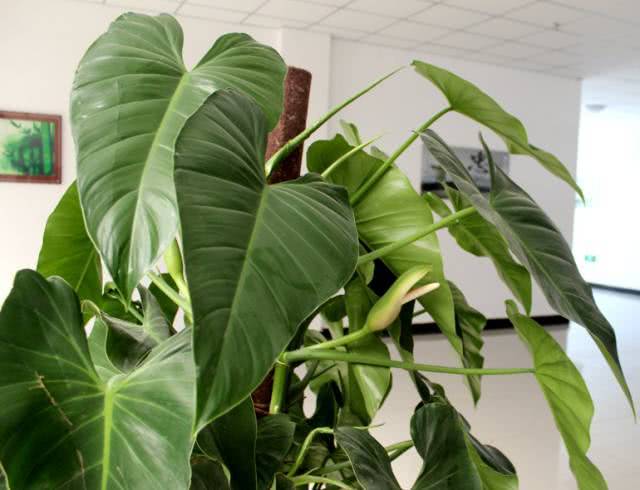
Large-leaf pothos is one of the easier foliage plants to grow. Its leaves are large and emerald green, it can beautify the environment, and it is an easy-on-the-eyes plant, generally grown indoors. But how do you grow large-leaf pothos? And what good methods are there for growing it?
Large-leaf pothos is naturally robust and can be potted indoors in all four seasons, and can be placed long-term in a bright, sunny spot in the pot. If kept in a dark place for a long time, the leaves will become smaller and the internodes will lengthen; for color-leaf variants, the leaf color will fade, affecting its ornamental value. In summer it needs to spend time in a semi-shaded environment, avoiding direct sunlight.
Large-leaf pothos develops best when grown in loose, organic-rich, slightly acidic to neutral sandy loam. You can use a mixture of 70% leaf mold, 20% red loam soil, and 10% rapeseed cake and bone meal, composted together.
Large-leaf pothos grows faster in environments with higher air humidity. It is recommended to maintain indoor humidity; you can use a humidifier to increase air humidity. Specifically, you can spray water around it to increase air humidity.
The suitable growing temperature for large-leaf pothos is around 25°C during the day, and in winter the suitable temperature should be kept at 10-13°C, generally not lower than 7°C. In the warm winter areas of South China and Southwest China, it can be grown outdoors.
Large-leaf pothos is not strongly phototropic, so when growing it you need to place it in a spot indoors with good light, and at noon you can put it in the sun for a while. In the north, large-leaf pothos can overwinter safely at a room temperature above 10°C, and can grow normally at a room temperature above 20°C. Generally, a home environment can reach this temperature without much problem; note that you should avoid too large a temperature difference, and also be careful that the leaves do not get close to heating equipment.
When growing large-leaf pothos, do not water too much; you can spray water at the rooted area, which can reduce the rate of water evaporation. Water daily to keep the soil moist, but do not let water accumulate and breed mosquitoes. In autumn and winter, the amount of watering should be strictly controlled according to room temperature. Before heating is turned on, the temperature is lower, the soil of the large-leaf pothos plant evaporates more slowly, so watering should be reduced, with the amount controlled between 1/4 and 1/2 of the original. Even after heating is turned on, watering should not be too frequent; when watering, pour less into the pot and let water seep through the coir. In addition, you should also spray water at the places where aerial roots grow on the coir pole, to reduce insufficient root water uptake caused by too-rapid evaporation
Large-leaf pothos grows relatively fast and is undemanding in cultivation and management. During care and management, in summer you should spray water on the plant more often and apply a foliar fertilizer once every 10 days to keep the leaves green. In winter, large-leaf pothos can overwinter safely above 10°C, and generally can grow normally above 20°C. Therefore, an ordinary home environment is quite suitable for the growth of large-leaf pothos.
The original growing conditions of large-leaf pothos are in forests shaded by towering trees, so it is not strongly phototropic. But in the north in autumn and winter, to make up for the lack of temperature and photosynthesis, its light exposure should be increased. The method is to place large-leaf pothos in the spot indoors with the best light, or move it to a sealed balcony at noon to sunbathe. At the same time, when the temperature is low, open windows as little as possible, because in a very short time the leaves may be frostbitten