Want to grow a Buddhist pine (Podocarpus macrophyllus) but find it too expensive? Just cut a branch and propagate it from a cutting, and it will still grow vigorously.
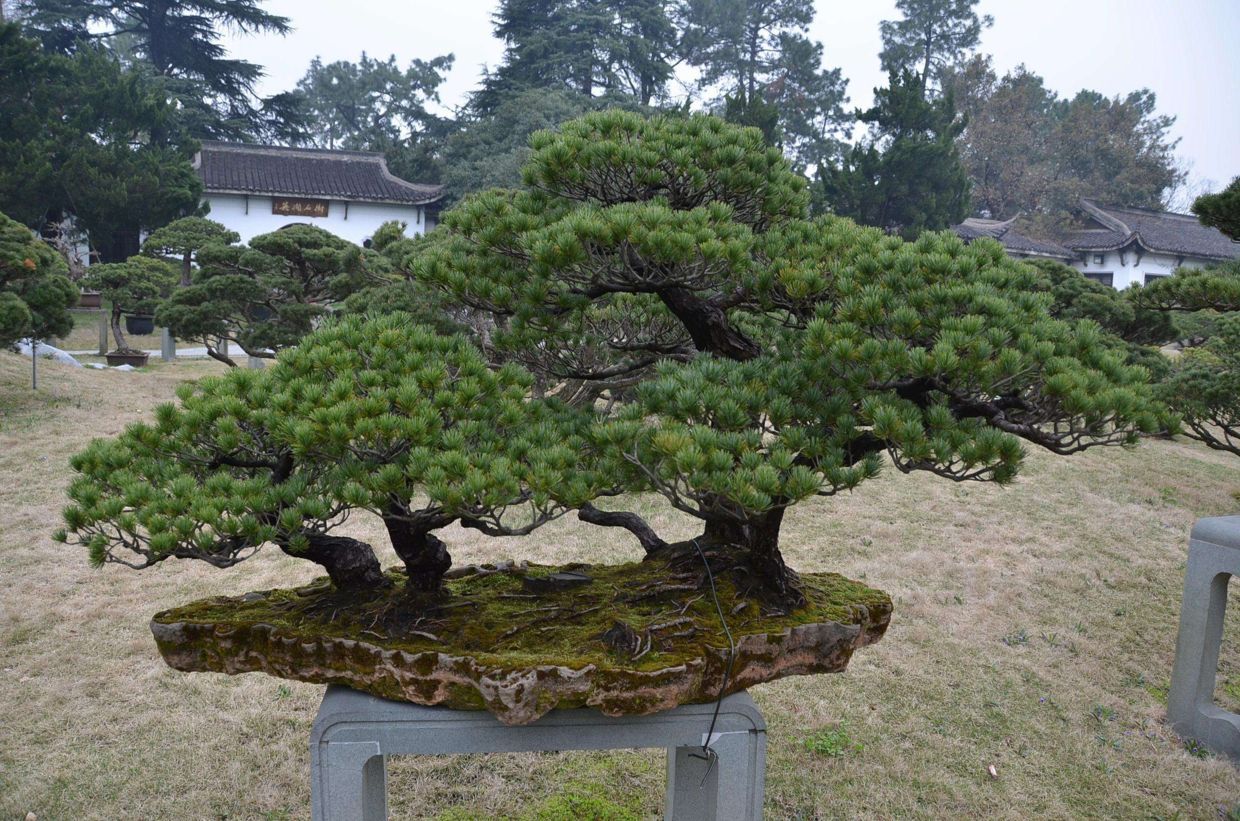
Many flower lovers nowadays not only like growing beautiful plants, but also like ones with good meanings. However, plants like pine bonsai and ginkgo bonsai generally tend to be a bit more expensive, and people really cannot bring themselves to spend a large sum on a potted plant. Don't worry, Huahua is here to think of a way for you. In fact, some plants can be successfully propagated from just one branch!
For example, the Buddhist pine (Podocarpus macrophyllus). Everyone knows that the Buddhist pine is a relatively thick and sturdy tree, generally more common in the south, and many people plant it in their courtyards because it also carries the meaning of peace and good fortune. Nowadays, some people have also propagated Buddhist pines into bonsai, and they truly look magnificent.
In fact, propagating Buddhist pine from cuttings does not require any special technique; just a small branch from the tree will do. Below, Huahua will explain the cutting propagation method for Buddhist pine!
1. Choosing the cutting season
Buddhist pine is generally propagated by cuttings in spring and autumn. The weather in these two seasons is relatively cool, and the survival rate is also relatively high. However, the branches chosen for cuttings in spring and autumn are different. In spring, dormant branches are generally used, and cutting them to a length of about 20 cm is enough, while in autumn, relatively delicate young branches are used. Still, the difference between the two is not great, and basically both can survive.
2. Choosing the soil
For the cutting soil medium of Buddhist pine, relatively coarse river sand soil is generally used. This kind of soil is rich in nutrients and relatively beneficial for growth. However, when putting it into the flowerpot, it is best to disinfect the soil first, so that there is a safety guarantee for the later growth of the Buddhist pine.
3. Treating the branches
The branches of Buddhist pine need to be treated first before cutting. We should first clean off the leaves on the lower two-thirds of the branch. The remaining smaller ones that are inconvenient to remove by hand can be trimmed off with scissors, but be sure not to cut through the bark. After treatment, the bottom end of the branch also needs to be cut into a slanted shape, and then disinfected with a disinfectant solution.
Finally, insert the branch into the pre-prepared soil and it is done. Naturally, the subsequent care of the potted Buddhist pine is also very important. Buddhist pine is a relatively drought-tolerant plant, so when watering it, be careful to water less rather than more; otherwise, excessive watering can also cause the death of the Buddhist pine.
Buddhist pine has a large demand for fertilizer in spring and autumn. In these two seasons, it needs about 4 applications of dilute fertilizer water each to be sufficient. Just choose dilute fertilizer water containing nitrogen. After fertilizing, water promptly the next day, which helps the Buddhist pine roots absorb the nutrients from the fertilizer.
When the Buddhist pine has just been propagated from cuttings, it is a small little clump and looks very delicate, but after a few years of growing it will become a "towering tree." Is this also what is called gap moe? Flower lovers who like Buddhist pine should not miss autumn, this good season for cuttings. While you can, you may be able to gain a brand-new Buddhist pine!