What are the quick ways to master bonsai knowledge
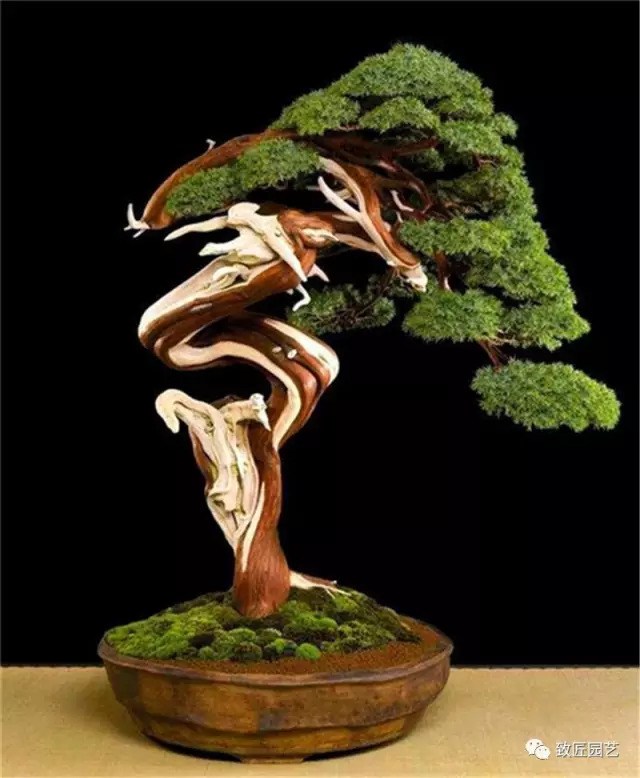
[pén jǐng]
Bonsai
Bonsai (penjing) is one of China's outstanding traditional arts; it is an artwork that uses plants and rocks as basic materials to express natural landscapes within a pot.
It uses plants, rocks, soil, water and other materials, and through artistic creation and horticultural cultivation, typically and intensively recreates the beautiful scenery of nature in a pot, achieving the artistic effect of shrinking the land to an inch and seeing the great in the small, while also expressing feelings through scenery and conveying a profound artistic conception, like a three-dimensional, beautiful miniature landscape scenic area.
Bonsai originated in China. Bonsai generally falls into two major categories: tree-stump bonsai and landscape bonsai. Bonsai is composed of three elements: the scenery, the pot, and the stand (rack), which are interconnected and mutually influencing as a unified whole. People praise bonsai as "three-dimensional paintings" and "silent poems."
Origin
Bonsai originated in China. In 1972, in Shaanxi, a mural depicting a maid holding a bonsai was excavated from the east wall of the corridor of the Tang Dynasty tomb of Crown Prince Zhanghuai (built in 706), which is the earliest known record of bonsai in the world. By the Song Dynasty, bonsai had developed to a relatively high level. Famous literati of the time, such as Wang Shipeng, Lu You, and Su Dongpo, all described and praised bonsai in detail. In the Yuan Dynasty, the eminent monk Yun Shangren created small bonsai, following nature, called "xiezi jing" (tiny landscapes). During the Ming and Qing dynasties, bonsai flourished even more, and many works on bonsai appeared. The term "penjing" (bonsai) first appeared in the Ming Dynasty work "Kaopan Yushi" by Tu Long. After the 1950s, bonsai making became widely popular in public gardens, nurseries, and private homes, and bonsai associations were established, regularly holding bonsai gardens and bonsai art exhibitions.
Japan's tree-stump bonsai was introduced from China and is called "bonsai" (potted planting). It appeared in 14th-century paintings. In 1909, Japanese bonsai spread to the West through an exhibition in London, and after World War II it became popular in Europe and America, transliterated as "bonsai." Now the United States, the United Kingdom, the Federal Republic of Germany, Australia, and Japan all have national and local associations. In 1980, the first World Bonsai Convention was held in Osaka, Japan, along with a world bonsai exhibition.
Classification
Bonsai is generally divided into two major categories: tree-stump bonsai and landscape bonsai. The former uses trees as the main material and can be further divided into 4 types: branch-appreciation, foliage-appreciation, fruit-appreciation, and flower-appreciation; the latter uses more rocks, water, and soil as materials, with water-based ones being water bonsai, soil-and-rock-based ones being dry bonsai, and those with both water and soil being water-and-dry bonsai.
Sizes of bonsai: tree-stump bonsai is classified by the height of the stump (for cascade style, by the length of the extended branches and trunk), and landscape bonsai by the length of the pot, into 5 types: extra-large (over 150 cm), large (80-150 cm), medium (40-80 cm), small (10-40 cm), and miniature (under 10 cm).
Tree-stump bonsai
Species with fine branches and leaves, easy to survive in pots, slow-growing, long-lived, and with peculiar roots and trunks are mostly chosen, and those with both brilliant flowers and fruit are especially preferred. About 160 species have now been used as tree-stump bonsai trees. Besides artificial propagation, old trunk stumps left after years of cutting are often dug up from mountain forests and wild areas for cultivation. Tree-stump bonsai has a thousand postures and forms, which can be summarized as: straight trunk, slanting trunk, curved trunk, lying trunk, cascade, dead trunk, connected roots, rock-attached, and forest styles. The best growing soil is loose, breathable, well-draining, and able to retain fertilizer. Bonsai making includes shaping methods mainly by pruning, and methods of binding branches and trunks with metal wire or palm fiber to bend them into a certain shape, then through years of careful pruning to form the final shape, and there are different local styles.
After a tree-stump bonsai takes shape, it must be carefully maintained. Among these, pruning is an important measure to promote or control the growth of the stump and keep it in a certain posture. For stumps whose branches and leaves form layers with distinct levels, thinning or short-cutting should be done frequently to control branches that disturb the shape. For pines, all or part of the main buds can be removed to shorten the shoots. Pruning of broadleaf trees varies according to species and flowering and fruiting habits. Fertilization should not be excessive, but should be applied frequently, to keep the plant with lush leaves and abundant flowers, healthy but not overgrown. Flower and fruit tree stumps need more fertilizer, and additional phosphorus and potassium fertilizer must be applied. The amount of watering varies with climate, species, phenological period, and pot material, with the aim of keeping the soil moist. For pines, cypresses, and azaleas from high mountains, foliar spraying with water is also needed regularly. Depending on the size of the bonsai, repot once every 1-5 years. When repotting, remove part of the old soil, cut off some old roots around and at the bottom, add new growing soil, and replant. In addition, maintenance measures such as pest and disease control, cold protection, and shading must also be taken.
Landscape bonsai
The theme must be selected in advance and carefully designed; stones are chosen and processed according to the theme, or one may adapt to the stones and apply colors according to their type. Mountain stone materials include soft stone (soft in texture) and hard stone (hard in texture). Soft stone materials can be carved with a specially made hammer to create gullies, caves, peaks, and ridges; hard stone materials are cut, sawed, and trimmed to remove the crude and keep the essence, and deficiencies can be made up by joining and gluing. Planting holes are left in the stones to facilitate planting of vegetation. The layout of scenery in the pot must have clear primary and secondary elements, rich layers, and variation without disorder. In the same pot, it is best to use the same stone type, with similar stone colors and consistent textures. At the same time, using the perspective principles of near-large and far-small, low-large and high-small, and near-solid and far-void, matched with appropriately sized vegetation, pavilions, bridges, birds, animals, and figures, and set off by a shallow pot, the artistic effect of seeing the great in the small and a thousand miles within a foot is achieved.
Styles and schools
China has a vast territory, and due to differences in regional environment and natural conditions, there are many bonsai schools. As for the traditional five major schools, they are further divided into the Southern and Northern schools. The Southern school is represented by Guangzhou, known as the Lingnan school; the Northern school includes the Chuan school, Yang school, Su school, and Hai school of the Yangtze River basin (the latter three were formerly collectively called the Jiangnan school).
Hai school
The bonsai art of Shanghai has a history of more than 400 years.
Due to Shanghai's special geographical location and important position in domestic and international trade, a Hai school culture that dares to innovate and create and is good at absorbing new things gradually formed. Under the influence of this culture, Shanghai bonsai extensively absorbed the strengths of the major domestic schools, and also drew on the shaping techniques of Japanese and overseas bonsai, creating the Hai school bonsai, which follows nature and is ancient and picturesque.
Hai school bonsai is not confined to one pattern and is not restricted by any formula, but in layout it strongly emphasizes theme, layering, and variability. In the production process, it strives to reflect the wild charm of mountain forests, values the forms of ancient trees in nature and the individuality of tree species, guides according to circumstances, shapes according to the material, and according to the requirements of Chinese painting theory, strives to achieve both spirit and form. Although it, like all Northern school styles, pays attention to branch-pad shaping, the branch pads are not only more numerous, with no fixed specifications, but also of varying sizes and shapes, spaced with both density and openness, gathered and scattered freely, with thriving vitality as the primary goal. Therefore, in technique it takes a different path, emphasizing both binding and pruning, not using palm fiber but wrapping branches and trunks with metal wire to bend and shape them, and then carefully trimming and pruning to maintain a beautiful form, combining hardness and softness, flowing and natural.
The tree species used in Hai school bonsai are very rich, with deciduous, evergreen, flowering, and fruiting types all available, reaching more than 140 species, among which evergreen pines, cypresses, and colorful and graceful flowering and fruiting types are the main ones. In recent years, some tree species have also been introduced from abroad (such as Japan and Portugal), making Hai school tree-stump bonsai even more colorful and varied.
There are no large mountains within Shanghai, but landscape bonsai has developed considerably and achieved remarkable results. Hai school landscape bonsai has two major types: one uses hard mountain stones to express close-range scenery, with steep peaks and lush trees in the pot; the other uses soft stone materials such as sea mother stone and pumice, carefully carved to create mountain patterns and stone textures, planted with small trees and grass, to express a profound artistic conception. However, in terms of overall style, both types of landscape bonsai are relatively vast, which is undoubtedly the imprint left by the regional environment on the minds of bonsai artists, reflecting the regional characteristics of an alluvial plain.
Lingnan
Guangdong bonsai, centered on the "Flower City" Guangzhou, is called the Lingnan school because it is located south of the Five Ridges. The climate here is warm, sunshine is abundant, rainfall is plentiful, and vegetation is lush; the uniquely favorable natural environment provided extremely favorable conditions for the prosperity of bonsai art. Although Lingnan bonsai art started relatively late, it also has a history of several hundred years.
It includes bonsai from Guangdong and Guangxi regions, with Guangzhou bonsai as the representative. Because Lingnan has a warm climate and lush ancient trees, tree species such as elm, Sageretia spp., banyan, Murraya paniculata, and Fujian tea (Carmona microphylla) are mostly chosen as bonsai species, and a production method mainly based on "trunk cutting and branch storage" was created: first the stump is topped to promote branch and leaf growth, and after repeated pruning, the characteristic of old trunks and dense branches is formed, reflecting a style of upright naturalness or elegant boldness.
In the formation process of Lingnan school bonsai, influenced by the Lingnan painting school, and also drawing on the tree methods of Wang Shangu and Wang Shimin and the techniques of Song and Yuan flower-and-bird painting, a unique branch-folding composition method mainly based on "trunk cutting and branch storage" was created, forming the characteristic of "lush naturalness, elegant boldness." For creative subjects, whether following nature or taking from painting albums, tree bonsai with obvious local characteristics were created, such as the lush and majestic large-tree type, the sparse and upright tall type, the wild and natural type, and the short-trunk dense-leaf layered-jade type; and using natural ornamental stones produced in South China, according to the painting principles of "a thousand miles within a foot" and "seeing the great in the small," landscape bonsai featuring a reproduction of Lingnan's natural scenery was created. Lingnan school bonsai mostly uses Shiwan pottery pots and ceramic accessories, and pays attention to the configuration of scenery, pot, and stand, with titles conveying meaning, embodying the effect of "one tree, two stones, three stands," becoming a rising star and important component among Chinese bonsai art schools, and enjoying a relatively high reputation at home and abroad.
Chuan school
Represented by Chengdu bonsai, including bonsai from Chongqing and other places. Tree species are mostly Diospyros sp., Chaenomeles speciosa, Podocarpus macrophyllus, ginkgo, bamboo, plum, etc. Tree-stump bonsai is especially skilled in binding and shaping techniques, and emphasizes the forms of exposed hanging roots and claws and twisted, interlocking roots. It can be divided into two types: traditional rule-based style and improved natural style. The former uses palm fiber to bind and bend branches, while the latter wins by being ancient, majestic, and extraordinary.
Chuan school bonsai has extremely strong regional characteristics and shaping features. Its tree bonsai displays the characteristics of twisted and varied forms, ancient and majestic and extraordinary, while also embodying the spiritual connotation of exposed hanging roots and claws and the appearance of a large tree. It stresses rhythm and cadence in shaping and production, mainly using palm fiber binding, combining pruning and binding. Its landscape bonsai displays the majesty, height, and steepness of Bashu landscapes, with the shaping combination of "qi, cheng, zhuan, he, luo, jie, zou" as the basic principle, constituting in momentum a landscape of high, hanging, steep, and deep great mountains and great waters. Although the bonsai of western Sichuan and eastern Sichuan within the Chuan school differ somewhat in certain specific production techniques and landscape shaping, the basic principles of composition and production methods are consistent.
Due to the uniquely favorable natural conditions, Chuan school tree-stump bonsai generally uses Diospyros cathayensis, Serissa japonica, Podocarpus macrophyllus, ginkgo, crape myrtle, Chaenomeles speciosa, plum blossom, Pyracantha, camellia, azalea, etc.; landscape bonsai uses sandstone slices, stalactite, mica stone, sandy accumulated stone, turtle-vein stone, and newly developed varieties as production stones.
Chengdu, with a history of 3000 years as a city, has a humid climate and abundant rainfall, suitable for the reproduction and growth of plants, providing extremely favorable regional environment and natural conditions for the development of tree-stump bonsai.
Su school
Su school bonsai is mainly tree bonsai, ancient and elegant, plain and simple, old yet increasingly vigorous, vivid in spirit and charm, blending scene and emotion, and thought-provoking. Su school bonsai breaks away from traditional shaping methods and adopts the technique of "coarse binding and fine pruning." For major tree species such as elm, Sageretia, and trident maple, palm fiber is used to trim branch pads into a two-and-a-half-bend "S" shape with the middle slightly drooping and slanting, and then scissors are used to trim the branch pads into an oval shape, slightly raised in the middle in an arc, like clouds in the sky. For pomegranate, boxwood, pine, cypress and other slow-growing and evergreen species, while maintaining their natural form, some branches are bound, or bent or thinned, so that branches and leaves are evenly distributed and arranged at different heights. Its pruning also follows the principle of maintaining a beautiful and natural form, only cutting or removing part of the "protruding" tender shoots, which has become the main feature of Su school bonsai. In the binding process, Su school bonsai strives to follow nature and avoid artificiality. In addition, naturally forming the "crown" is also a unique aspect of Su school bonsai.
Shaping features of Su school bonsai: emphasis on nature, the form changing with the stump, and seeking quick formation. It breaks free from the shackles of the traditional shaping of the past with its long formation period, cumbersome procedures, and rigidity. Su school bonsai also pays attention to the diversity and unity of the scenery (stump, stone), pot, and stand. Especially in hall display arrangements, the scenery, pot, and stand must coordinate with the hall structure, showing that "scenery" and "setting" match and are appropriate.
Yang school
Yang school bonsai, centered on Yangzhou, includes Jiazhou, Taizhou, Xinghua, Gaoyou, Nantong, Rugao, Yancheng and other places. Because it is located in northern Jiangsu, it is also collectively called the Subei school.
Yang school bonsai, tempered by generations of veteran bonsai artists, inspired by the vigorous and heroic posture formed by ancient pines and cypresses on high mountains and steep ridges after being "processed" by wind and waves, and based on the Chinese painting principle that "no branch is a full inch straight," created a branch-pad binding art technique combining and applying 11 kinds of palm methods, so that branches an inch long in different parts can have three bends (abbreviated as one inch three bends or inch branch three bends), cutting and binding branches and leaves into rows of parallel branches with all leaves level and facing upward, like extremely thin "cloud pads" floating in the blue sky, forming the local characteristic of "distinct layers, strict and stable," rich in the decorative beauty of fine brushwork. This local characteristic, originating from nature yet higher than nature, was developed and widely spread in the region centered on Yangzhou and Taizhou, forming a school, and was listed as one of the five major schools of Chinese tree (stump) bonsai.
Yang school landscape bonsai is mainly of the flat-and-distant type, containing the Jiangnan sentiment of "the tide is flat, the two banks are broad; the wind is fair, a single sail hangs." Commonly used tree species in Yang school tree-stump bonsai include: pine, cypress, elm, boxwood, and five-needle pine, Podocarpus macrophyllus, Serissa japonica, ginkgo, ornamental peach, pomegranate, plum, camellia, etc. Landscape bonsai, in addition to locally produced axe-cut stone, also uses sandy accumulated stone, reed-pipe stone, etc. from other provinces.
Featured content