When watering orchids, you should give them a "half watering" - the orchid roots will be plentiful and strong, the leaves green, and the flowers many and fragrant.
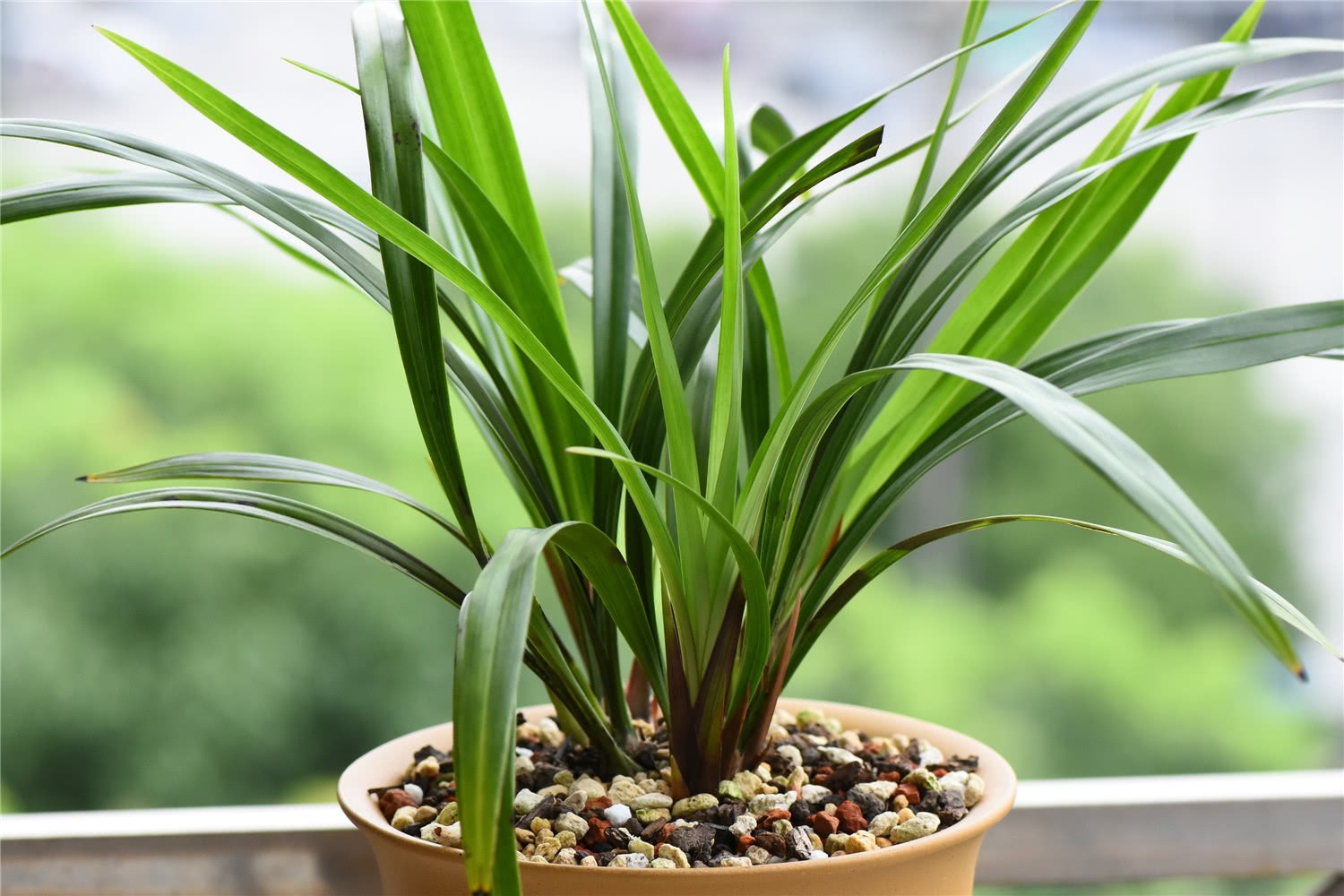
Growing orchids, watering takes 3 years of skill. We often say that when growing orchids, you should water thoroughly and avoid half watering, but a veteran who has grown orchids for over 20 years says that to grow orchids, you should give a "half watering" - that way the orchid roots grow plentiful and strong, the leaves are glossy green, and the flowers are many and fragrant.
Some orchid growers may wonder, why give a half watering? Growing orchids at home today often comes with 2 common problems: first, the air humidity is not enough; second, in the potting soil, the surface always dries first, and the moisture difference within the pot is fairly large. In such an environment, orchids often develop slowly, and if new shoots are to send out roots, the new roots tend to grow thin and sparse. So what should be done?
At this point, you need to break the "taboo" - that is, give a "half watering." In summer and early autumn, when temperatures are higher, it often happens that there is still moisture in the pot while the surface has already dried. At this time, you can lightly sprinkle a little water on the surface, or give a small watering - the so-called "half watering" - to keep the moisture content in all parts of the soil in the pot relatively similar, so the orchid roots get sufficient and even moisture and grow plentiful and strong.
To grow orchids, first grow the roots. Many orchid growers now attach great importance to this, so the growing medium is often mainly granular, and the bottom of the pot uses larger granules as a drainage layer, or is fitted with a drainage hood, with the orchid set on an orchid stand, all in pursuit of water permeability and air permeability. But the orchid roots still do not grow well - why is that?
Although granular growing medium is airy, it contains relatively little organic matter, and the beneficial bacteria that live symbiotically with orchid roots need an environment rich in organic matter to survive, so you should promptly supplement orchids with organic fertilizer. Many orchids have now entered the flower bud differentiation stage. We can use an organic nutrient solution specially made for orchids, which is fully fermented from pure plants. It can promote orchid root growth, make the root-growing effect of the growing medium better, and also encourage orchids to bloom more, with good flower quality, full fragrance, and a long flowering period.
We also often say that when watering orchids, do not water until dry, and when you water, water thoroughly. But this is only a general principle. Strictly speaking, "dry" and "thoroughly" are fairly vague concepts. In dry northern climates, "bone dry" is actually not very applicable. During the period when the orchid lacks water, it will consume the water in the orchid roots. When the potting soil is very dry, only then watering the orchid means the dried-out orchid roots no longer have the ability to absorb water, which easily leads to water accumulation.
When growing orchids, we also often say that keeping the potting soil at "eight parts dry, two parts moist" is best. For example, with the tall orchid pots some growers use, you can use a toothpick to judge when to water, because there is a row of ventilation holes in the middle of the orchid pot. You can insert a toothpick into the topmost hole; if the toothpick is wet, no need to water, and if it is only slightly damp, then it is time to water.
More accurately, we can use a flower and plant monitor to check the moisture conditions of the soil in the orchid pot. Insert it into the soil, and when you see the data on your phone showing that the moisture content is below 20%, then look at the bottom of the pot - if it is moist but not wet, you can water the orchid.
Growing orchids involves many rules, but sometimes on reflection, these "rules and restrictions" may not necessarily suit you. Orchid growing requires "flexible use" for orchids to grow well. What do you all think?