The fiddle-leaf fig is suitable for growing at home and makes a large potted green plant that pairs well with modern interiors.
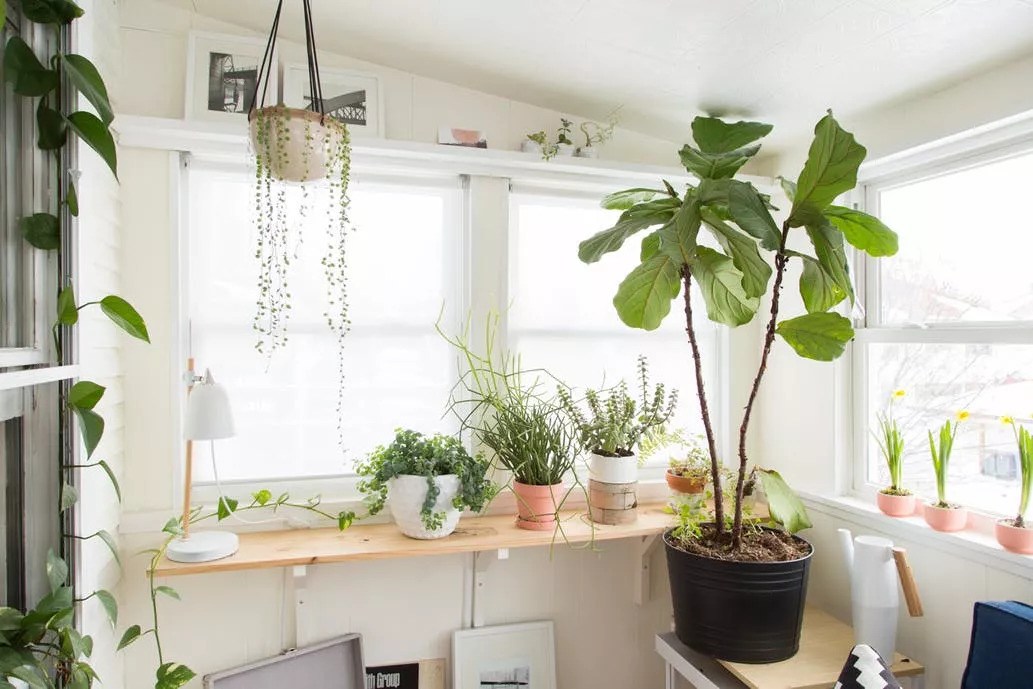
I really enjoy growing fiddle-leaf figs. I remember the first time I saw one in a friend's office, potted in a very striking white cylindrical ceramic pot. It looked especially grand, fresh and natural, and its leaves were very large with a bright glossy sheen. I really admire this plant.
Five things to pay attention to when caring for a fiddle-leaf fig.
1. Suitable moisture
When growing a fiddle-leaf fig indoors, you must avoid watering too frequently. Be sure to wait until the soil 3-5 cm below the surface is dry before watering.
When caring for a fiddle-leaf fig indoors, do not pour water directly onto the leaves, and do not mist the leaves often, otherwise the leaves easily develop yellow or brown spots, which ultimately leads to fungal infections on the leaves and can easily cause leaf drop.
You can spray water around it to maintain a certain level of air humidity and prevent the air from becoming too dry.
2. Appropriate lighting
Caring for a fiddle-leaf fig requires a bright environment, ideally with suitable scattered light every day, giving it about 3-8 hours of light per day, so it can grow more vigorously.
A fiddle-leaf fig kept indoors should be protected from excessive shade. It is best to grow it by a south- or east-facing windowsill, or place it in a bright living room, keeping the environment ventilated and well-lit, and avoiding confined spaces.
3. Fertilizing tips
Caring for a fiddle-leaf fig does not require frequent fertilizing, as its demand for fertilizer is not very high. You can fertilize once a month in spring and summer, using a balanced fertilizer or a slow-release organic fertilizer solution.
4. Repotting and potting soil selection
The fiddle-leaf fig belongs to the tree and shrub group of plants. The container chosen for growing it should have drainage holes, and should be a large clay or earthenware pot; you can also choose a heavier ceramic pot. The container should be relatively deep and wide. The soil for growing a fiddle-leaf fig should be a loose, well-draining humus soil rich in organic matter, which helps promote better growth.
The fiddle-leaf fig does not need frequent repotting; generally it is repotted once every 3 to 5 years. When repotting, you can appropriately remove some of the surface soil, and afterward, if you find withered or crossing roots, you can prune them appropriately, but do not cut too much.
5. Cleaning the leaves
If you want an indoor fiddle-leaf fig to grow more beautifully and freshly, you should also pay attention to cleaning the leaves regularly. If too much dust accumulates on the leaves, it will affect the health of the fiddle-leaf fig, because dust blocks light absorption and photosynthesis. You can simply wipe off the dust with a damp soft cloth.