Care for fragrant plants this way to fill your home with a fresh scent
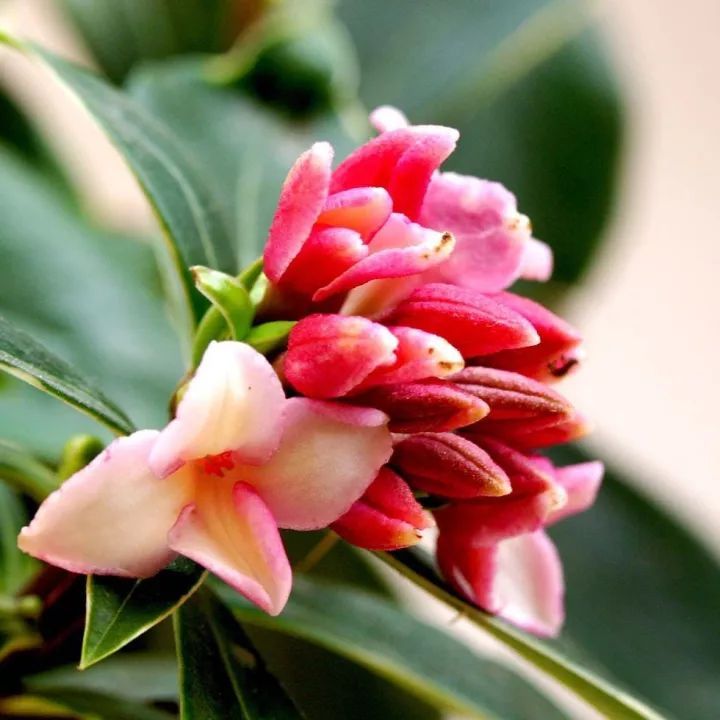
Many flowers have very fragrant scents, but not all of them are suitable for growing indoors. Today I will introduce a few plants with non-pungent floral fragrances that are suitable for growing indoors. Let's take a look!
Gold-edged winter daphne
Winter daphne is a rare good flower in winter, with excellent ornamental value, and the gold-edged leaves need no further praise. For the potting soil, use fertile, loose, acidic leaf mold rich in humus, mixed with an appropriate amount of river sand and decomposed cake fertilizer.
In usual care and management, pay special attention to controlling watering. If watered too much, the potting soil stays wet for a long time and root rot is easily caused.
It likes semi-shade. In winter and spring it should be placed in an environment with sunlight. If there is sufficient light during the growing period, in summer it should be placed in a well-ventilated shady spot, and water should be sprayed to cool it down when it is hot.
Sweet osmanthus
Growing sweet osmanthus is not picky about soil; most soils will do, but overly sticky yellow earth or alkaline soil will not work, and neither will soil with poor drainage. Deep, loose, fertile, well-drained slightly acidic sandy soil is best.
It is generally planted in spring or autumn, and planting on a cloudy or rainy day is best. Plant it in a ventilated, well-drained and warm place. Generally, plant it in a semi-shady environment first, then slowly move it to a sunny place.
South of the Yellow River, overwintering in the open ground is no problem. Potted plants can be moved indoors in winter and should also get plenty of sun. A temperature of 5°C is fine, but temperatures above 10°C are also unsuitable. If it does not bloom the next year, it is because it was too hot indoors in winter.
Add base fertilizer before planting in the ground, generally organic fertilizer, and water thoroughly after planting. Keep it moist before new shoots emerge, and do not fertilize during this period. Fertilize once each in spring and summer, and before winter you can apply 1 application of organic fertilizer; do not use concentrated fertilizer.
Orange jasmine
Orange jasmine has low soil requirements; just choose loose, fertile sandy soil rich in humus. Water by the principle of "water when dry, stop when wet"; the pot should not accumulate water, so as to avoid damaging the roots.
It can survive in ordinary soil. However, for it to bloom beautifully and produce many fragrant flowers, it is best to use potting soil, fertile soil with relatively more humus. But be sure to ensure its aeration performance.
Orange jasmine is drought-tolerant and afraid of waterlogging, so water by the principle of "water when dry, stop when wet." Remember not to water too much, otherwise water will accumulate and cause root rot and yellow leaves.
Generally, fertilize around April during the growing period, then fertilize once every 2 months.
Shrub althea
It is a flower very suitable for growing in the north and suitable for pot cultivation. It is also called "mini hibiscus." Its care requires loose, fertile and well-drained soil, and the soil must maintain good drainage. It is best to use sandy soil mixed with a small amount of river sand and appropriately add decomposed organic fertilizer, so as to ensure its robust growth.
It has relatively good cold resistance, and in winter it can be cared for on a balcony or windowsill. With enough sunlight every day, it will bloom abundantly, and each small flower makes people happy just looking at it.
Chinese hibiscus
For potted Chinese hibiscus, use loose, fertile sandy soil, and before moving it outdoors in early spring each year in April, it should be repotted.
Replace with new potting soil, cut off some overly dense and curled fibrous roots, and also apply enough base fertilizer, adding a little phosphate fertilizer at the bottom of the pot. Chinese hibiscus has a good ability to send out branches and grow branches. Around early spring, it can be properly pruned and shaped. Except for leaving 2-3 buds on the base of each branch, cut off all the upper parts. Pruning can promote new branches, make growth more vigorous, and also make the plant shape more beautiful. After pruning, because the aboveground part consumes less, appropriately restrict water and fertilizer.
Chinese hibiscus should be kept in a sunny place. During the growing period, strengthen management work such as fertilizer and water, loosening the soil, and weeding. Apply a dilute liquid fertilizer once every 7-10 days. Water according to whether the potting soil is dry or wet; too dry or too wet will both affect flowering. Daily sunlight must not be less than 8 hours.
After the weather turns cool at the end of October, move it indoors for care, keeping the temperature above 12 C. After autumn, pay attention to applying less fertilizer, as this will affect dormancy, and the minimum temperature should also be above 5 degrees.
Gardenia
Gardenia likes slightly acidic soil, which is also the key to determining whether gardenia grows well. It also needs to be loose, breathable and well-drained. A common mix is 7 parts sandy loam red soil + 3 parts leaf mold.
Its optimum growth temperature is 16°C-18°C. Too low a temperature and direct sunlight are both extremely harmful to its growth. In summer, place gardenia in a shaded spot with good ventilation, high air humidity, and light transmission.
During the growing period, appropriately increase watering. Watering frequency differs from place to place. When the potting soil is completely dry and whitish, water it, and water thoroughly at one time. Summers are hot and dry, so spray the leaves 2-3 times a day to increase air humidity and help the plant cool down.
After the flower buds appear, watering should not be too much, so as to avoid bud drop. In winter, it is better to keep watering on the dry side, to prevent excessive water from causing root rot.
After entering the peak growing season in April, topdress once every half month (when fertilizing, it is best to dilute with more water to prevent burning the flowers).