How to Grow Peperomia? Hydroponic Methods and Care Guide for Peperomia
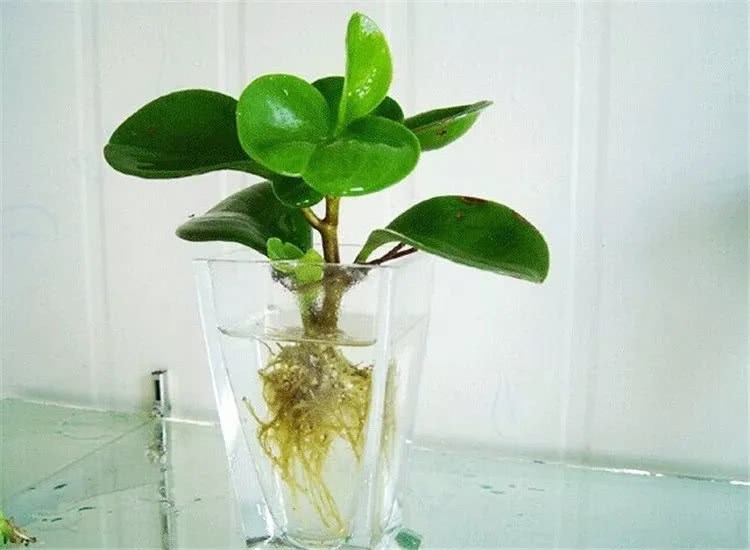
Peperomia, a perennial evergreen herbaceous plant in the genus Peperomia of the family Piperaceae, is favored for its bright gloss and natural green color. Quite a few friends have asked, how do you grow Peperomia hydroponically? How do you care for it? Below, the editor will answer these questions one by one.
1. Hydroponic Methods
(1) Method One
For hydroponic Peperomia, the root-washing method can be used. After washing a healthy plant with a good shape, remove dead roots and dead leaves, soak it in a 0.05% potassium permanganate disinfectant solution for 10 min, rinse it once more with clean water, and then plant it in a container. Add water up to 1/2-2/3 of the root system, and water roots will grow in about 7 days.
(2) Method Two
You can also cut a healthy branch of Peperomia, remove the leaves at the base, let the cut dry, and insert it directly into water.
2. Care Guide
(1) Temperature and Light
The temperature suitable for Peperomia growth is 20-25°C. If it is higher than 30°C or lower than 15°C, its growth will be affected. The safe wintering temperature is 10°C. Peperomia likes ample scattered light and avoids direct sunlight.
(2) Changing the Water
For hydroponic Peperomia, change the water once every 2-3 days in the early stage of growth. After water roots grow, change the water about once every 15 days.
(3) Fertilizing
Add nutrient solution when changing the water for hydroponic Peperomia. In summer, spray water on the leaves more often to keep the air and leaf surface moist.
(4) Pest and Disease Control
Hydroponic Peperomia has few pests and diseases, with occasional damage from scale insects and slugs, which can be controlled by manual capture.