A few key tips for orchid care to turn an old shriveled plant into a fresh young beauty
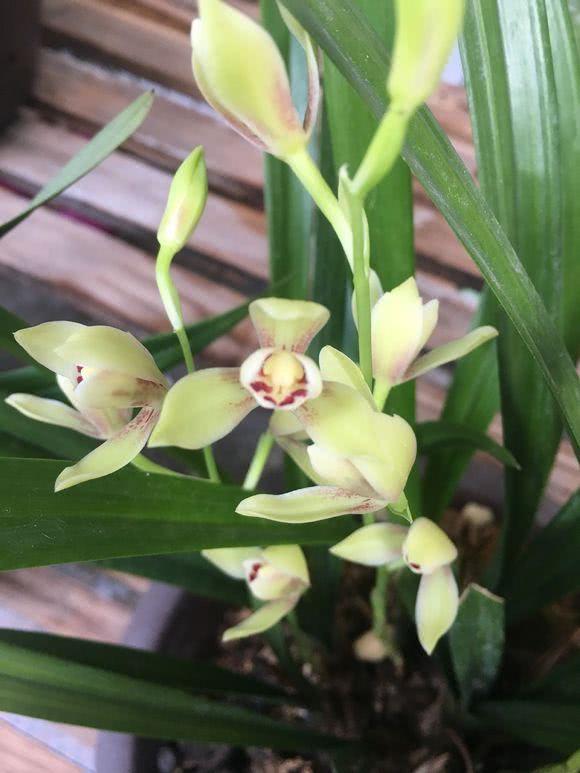
The beauty of orchids cannot be expressed in just a few words like elegant and refined, transcendent and otherworldly. It is even more the gentleman among flowers, the source from which ancient scholars and poets poured out countless poems and compositions. Such a precious flower, yet it never seems to grow, or it refuses to bloom - what should be done?
Orchids are rather low-key
Why do we say orchids are low-key? First, because orchid flowers are not as showy and large as roses, fruits, or peonies, yet they possess a transcendent quality. Second, orchids prefer semi-shaded environments and do not like to be exposed to the blazing sun competing among a crowd of flowers. But orchids cannot do without light either; they need diffused light for photosynthesis to make their leaves healthier and their blooms more abundant.
Orchids have a rather light diet
For orchids to grow and bloom, nutrients are naturally indispensable, but orchids have a rather light diet. They dislike fertilizers that are too harsh, or chemical fertilizers and hormones. They generally prefer a "vegetarian" diet, meaning organic fertilizers fermented from vegetables, fruit peels, leaves, and sugarcane bagasse. Though these things are quite cheap, once fermented they truly become organic nutrient solutions that are very rich in nutrients, with abundant and balanced nitrogen, phosphorus, and potassium content, and they are ecologically safe with no harsh elements whatsoever.
Of course, not every flower enthusiast has the ability to ferment organic fertilizer themselves. A better approach is to choose an ecologically safe organic nutrient solution specially formulated for orchids, with abundant and balanced nitrogen, phosphorus, and potassium content, enriched with various organic matter, minerals, and amino acids, promoting the plant to grow vigorously, bloom more, produce larger buds, and have a longer flowering period.
Orchids are also big water guzzlers
We all say roses are big water guzzlers, and orchids are much the same. Moreover, if they do not get enough water, they easily develop hollow roots and yellowing leaves, reacting even more strongly than roses. But if they get too much, they cannot handle it either. With excess water, orchid roots easily have difficulty breathing, causing plump fleshy roots to turn into black, rotted roots.
Watering is generally best done in the morning or evening. As for how many days between waterings, you still need to consider the moisture level of the potting soil. Generally, keep it on the drier side, but do not wait until it is completely devoid of water to water, as this very easily leads to root dehydration and hollow roots. A fairly useful method is to insert a wooden stick into the soil for 5 minutes, and if you take it out and see that the bottom quarter is still moist, then you can consider the question of watering.
If poor control of watering amount leads to orchid root rot or other problems, you must take the plant out of the pot to inspect it. At the same time, trim off the rotted roots, disinfect with carbendazim, generally diluted at 1000 times with water and sprayed onto the root wounds, then let them dry and repot. At the same time, you should also properly disinfect the potting soil, let the roots dry and then reuse it, or use fresh nutrient soil.
Actually, growing orchids well is not as difficult as we imagine. A fairly good approach is to follow the orchid's growth habits and do a good job with watering, fertilizing, and lighting.