Complete Guide to Plant Pruning Techniques: Pruning Methods You Must Master for Growing Flowers
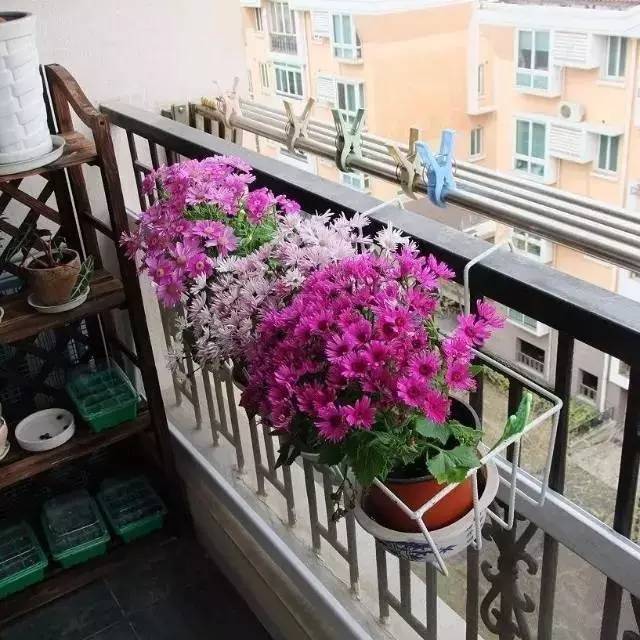
Teach You How to Grow Flowers on a Balcony
Growing flowers this way on a balcony makes them more lush and beautiful, follow to learn.
Follow
Pruning is an indispensable and important part of plant care. Mastering the correct pruning methods can cultivate a beautiful tree shape. Through pruning, you can further regulate the distribution of nutrients in plants, inhibit excessive vegetative growth, promote flower bud differentiation, achieve the effect of young trees blooming and fruiting earlier, and extend the flowering and fruiting periods. It is fair to say there are many benefits. Today, let me introduce the pruning methods for plants, so make sure to remember them well!
1
Dormant Season Pruning
Deciduous trees are mostly pruned during this period. Evergreen trees do not have an obvious dormant period, and winter pruning can have adverse effects on the tree body, so pruning is usually carried out in late spring after the severe cold season has passed.
2
Growing Season Pruning
Also called summer pruning. The pruning time should not be too late, otherwise it easily promotes the growth of secondary shoots that consume nutrients and is unfavorable for the growth of new shoots. At the same time, the amount of pruning should be appropriate; excessive pruning will reduce nutrient accumulation and is unfavorable for plant growth.
3
Pruning of Deciduous Trees
1) Pay attention to maintaining the growth vigor of the terminal shoot:
On the branch points, leave a primary framework branch every 20-25 cm, and on the framework branches also maintain their apical growth advantage. At certain intervals, retain another secondary branch, and so on. Remove excessive growth branches, drooping branches, etc.;2) Evergreen broadleaf trees:
Keep the central main branch well, handle the framework branches reasonably, and keep the branches evenly distributed;3) Evergreen coniferous trees:
When pruning, just pay attention to cultivating and balancing growth vigor. Under normal circumstances, no pruning is carried out, but take care to avoid the formation of double trunks or double leaders.
4
Hedge Pruning
Hedges generally have strong sprouting ability, strong branching ability, and are tolerant of pruning. Generally, formal pruning is the main approach, keeping the appearance neat and beautiful, and avoiding hollowness inside or bareness at the bottom.
5
Pruning of Climbing Plants
Generally, full pruning is rarely carried out. The main approach is shortening side branches, cutting off diseased and pest-infested branches and dead branches, and properly thinning weak branches.
6
Pruning of Spring-Flowering Plants
Taking redbud (Cercis chinensis), crabapple (Malus spectabilis), and white magnolia (Magnolia denudata) as examples, prune within 1-2 weeks after flowering to reduce nutrient consumption, promote more side branches, and increase the flowering amount for the coming year; during the winter dormant period, flower buds have basically formed, and flower buds and leaf buds can be clearly distinguished. You can properly thin branches, remove thin and weak branches, diseased and dead branches, and sprouting branches. Branches without flower buds can be properly cut off.
7
Pruning of Summer and Autumn Flowering Plants
Taking pomegranate, rose of Sharon (Hibiscus syriacus), hydrangea, and crape myrtle as examples, prune before flowering; during the dormant period, shorten the branches to promote the sprouting of robust branches in spring.
8
Pruning of Winter-Flowering Plants
Taking wintersweet (Chimonanthus praecox), Hong Kong orchid tree (Bauhinia blakeana), and plum blossom as examples, after the winter and spring flowers fade, cut back the flowering branches in turn, leaving 3-5 nodes per branch, to promote axillary buds to sprout and form more new side branches. During the growing period, regularly thin out excessive growth branches, densely growing branches, overlapping branches, etc.
9
Pruning of Plants That Bloom Multiple Times a Year
Taking rose (Rosa chinensis) and crape myrtle as examples, after entering winter, shorten all branches to promote the sprouting of strong branches. After the flowers fade, promptly cut off the withered flowers. During the growing period, promptly remove sprouting buds to promote the formation of new flower buds.
10
General Procedure of Pruning
1) Observe:
Observe the inherent growth habits of the pruning target and the specific site conditions, whether the distribution structure of the main and side branches of the tree is reasonable, whether the growth vigor between the main and side branches and between the upper and lower parts of the crown is balanced, whether the relationship between vegetative growth and reproductive growth is coordinated, etc. After comprehensive analysis, determine the corresponding pruning technical measures.2) Remove:
First saw off some perennial large branches, or even framework branches, that affect the tree's growth and development, damage the tree structure, disrupt the tree shape, or are damaged by pests and diseases, so that the tree basically meets the purpose and requirements of shaping and pruning.3) Cut:
On the basis that the structural form of the tree basically meets the target requirements, then carry out specific pruning of each main and side branch, following the principle of keeping strong ones and not keeping weak ones, keeping outer ones and not keeping inner ones, and using techniques such as heading back and thinning branches to make the tree shaping more complete.4) Check:
After pruning is basically completed, carefully re-examine the entire tree body, correct or supplement pruning for places that were wrongly cut or missed, and from the perspective of the group, check what mutual effects exist between adjacent trees and make adjustments.Copyright belongs to the original author. If there is infringement, please contact us for deletion.
95.6% of users followed the following wonderful official accounts after reading this article
Please, Wardrobe
Don't throw away old clothes. Follow me and I'll teach you to alter them. Prettier than new ones.
Follow
Learn Some Flower Growing Knowledge
Growing flowers is a technical job. This way they grow more beautifully.
Follow
Teach You Balcony Flower Growing Techniques
For growing flowers on a family balcony, you can't miss these kinds of flowers. Come take a look.
Follow
Home Storage Tips
Organize your home like this, and a 90 sq m house gives the feeling of 120 sq m.
Follow
Complete Guide to Flower Growing Experience
For beginners growing flowers, this way they grow more lush and beautiful.
Follow
Teach You to Learn Some Flower Growing Knowledge
Follow me, and I'll teach you a few tricks to grow flowers more beautifully!
Follow