How do you care for a Buddhist pine (Podocarpus macrophyllus) so its trunk and branches grow upright and look refined?
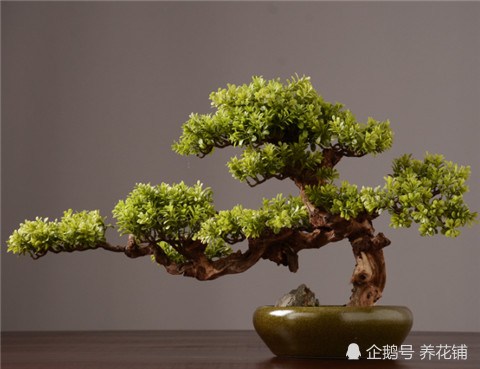
The Buddhist pine has a beautiful tree shape and stays green all year round. It is often used as a bonsai, with an elegant and antique style and high ornamental value. Growing a Buddhist pine as a bonsai and keeping it at home brings a unique charm to the home. Below, we introduce the care methods for the Buddhist pine!
Care methods for the Buddhist pine:
(1). Fertilizing: In spring and autumn, apply 2~3 times a dilute liquid fertilizer mainly based on nitrogen fertilizer to ensure nutrients, so as to meet the growth requirements of the plant and help it grow well. On the second day after fertilizing, combine with watering to help the roots absorb nutrients. Stop fertilizing in September.
(2). Watering: The Buddhist pine is drought-tolerant. During the growing period, watering should prefer dry over wet, and water when dry and stop when wet, just keeping the potting soil moist. Never water too much. If the potting soil is too wet for a long time, it will cause root rot, yellow leaves, and in severe cases the leaves will fall off and the plant will die. In summer, often spray water on the leaves to keep the leaf color fresh green and the growth good.
(3). Pruning: The Buddhist pine can be pruned all year round. Routine pruning of leggy branches and diseased or dead branches can maintain a beautiful tree shape and also avoid nutrient consumption. When it blooms, it is best to remove the flower buds in time to avoid nutrient consumption and affect the growth vigor.
(4). Propagation: The Buddhist pine can be propagated by sowing and cuttings. Seedlings grown from sowing grow slowly, while cuttings root easily. For cutting propagation, in southern regions it is suitable to carry out in spring and autumn. Spring cuttings root in about 90 days, and autumn cuttings in about 60 days, with a survival rate of about 80%.
(5). Styling: The Buddhist pine has small leaves and soft branches, making it an ideal material for bonsai. Usually, beautiful shapes are created through wiring and proper pruning. Wiring is best done during the dormant period, using palm fiber to tie, making sure the palm fiber is not exposed outside. Mainly, based on the characteristic of an antique and elegant tree shape, the bonsai is styled according to the composition modes of the curved-trunk style and the drooping-branch style. For large Buddhist pine plants, advantage should be taken of their low branching position to prune them into a spherical canopy.