Pittosporum bonsai: enjoy both flowers and fruit, beautiful and easy to grow
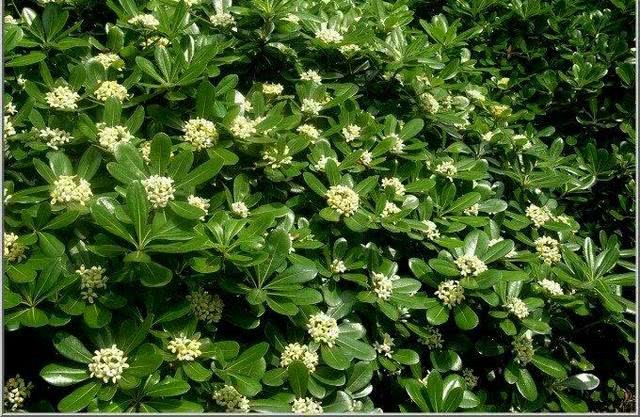
Pittosporum is also known as Qixingxiang, and its fragrance is indeed very pleasant. It is fairly light, smelling fresh and sweet. Unlike the scent of some other flowers, it does not overpower the nose; this light fragrance actually makes people like it even more. Pittosporum has obovate leaves, and the leaves are very smooth and look glossy.
It blooms from April to June. Not only are the flowers beautiful, but pittosporum can also bear fruit, though usually not much. It sets fruit in October and November. The fruit is a round red ball, and once ripe it splits open into three parts that look very nice. However, its fruit cannot be eaten. Although it is inedible, it is excellent for ornamental viewing. Many pittosporums are now used for landscaping, and those are all pruned into ball shapes. In fact, if left to grow on its own, it can grow very tall.
Not only for landscaping but also as potted bonsai, pittosporum is now very common, but growing it as a potted plant requires more careful care. Pittosporum likes a warm environment and likes sunlight. However, its adaptability to temperature is fairly strong, and it can also tolerate cold temperatures, so it is very easy to keep alive. Still, our winter weather is too cold for it, so in winter it should be placed indoors in a spot with a relatively high temperature so it can grow normally.
When potting up pittosporum, be sure to keep its original soil, as this helps it grow normally. During its growing season, be sure to water it, and when watering you can also use a spray bottle to spray some water on its leaves, which will make the leaves look more glossy. Generally, water it when you see the soil become dry.
Because it is a plant that blooms, it should be fertilized before and after flowering, but it should be a dilute fertilizer solution. Once it reaches its flowering period, fertilization should stop; fertilizing at this time will instead affect its growth. Pittosporum needs to rest in winter. Because winter temperatures are too low, the frequency of watering should be reduced appropriately, otherwise it may suffer frost damage.
Pittosporum has strong branching ability, so it is very tolerant of pruning. If it is not pruned, it will grow into a clustered shrub form. Therefore, we need to prune it starting from the seedling stage. When its side branches grow to a certain length, pinch out the growing tips, and promptly cut off root suckers. Also, every autumn it should be cut back once, that is, trim its crown into a round ball shape, which will give a better ornamental effect.
For better growth of pittosporum, its potted plant needs repotting once a year when young. After it matures, the frequency of repotting can be reduced, repotting once every 2 to 3 years.