Spider Plant Leaves Growing Longer and Wider? These Few Tricks Are All You Need
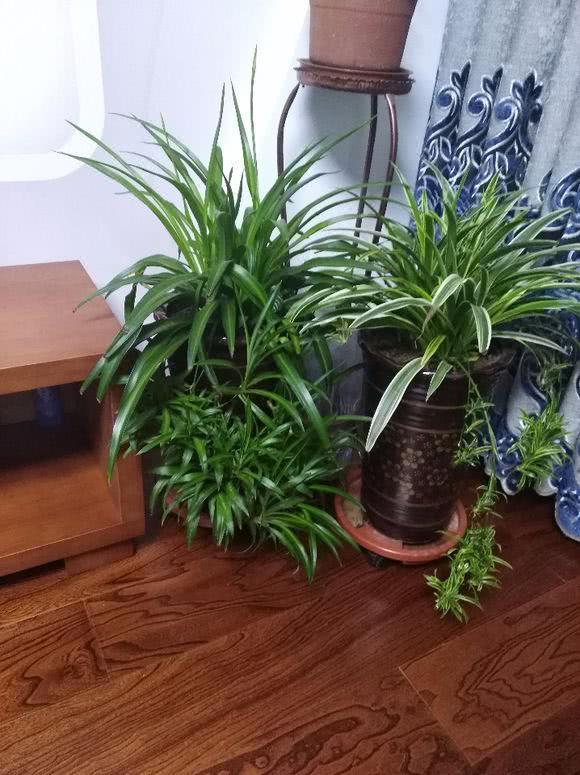
When it comes to spider plants, many friends are quite familiar with them. As the saying goes, to grow an orchid you must first grow its roots; as long as the roots are well cared for, the spider plant will naturally grow well. Some friends have said before that they have seen spider plants growing especially well, with very wide leaves, and wanted to know how it is done. Friends, do you know?
A spider plant growing well is no accident; rather, in the process of caring for it, every step must be done properly, without being good in some ways and bad in others, or doing things carelessly. Only then will our spider plant grow better and better.
First, when planting a spider plant, we must choose loose, fertile soil, and it must also drain and aerate well. Before planting, we should first disinfect the potting soil, and lay a layer of coarse sand at the bottom, so as to maintain a certain degree of drainage. Some friends may ask what substrate is best for caring for spider plants. The editor likes to use pine branch soil or pine tree soil, both of which have excellent aeration and drainage.
Second, spider plants like a warm, dry environment, so we should mainly let them get plenty of sun and maintain their growing temperature. Because their root system grows very fast and the roots are thick, we also need to pay attention to repotting. We usually repot 3 times every 2 years, which benefits the growth of the spider plant's roots. When repotting, we should first clean up the roots, trimming away some old or rotting roots to prevent them from infecting each other and wasting nutrients.
Increasing fertilizer and water can make spider plants grow better. First, spider plants have fleshy roots and stems, so when watering we need to be more careful and not give too much. However, during the growing season and in the rather hot summer, we need to appropriately supplement a bit more water, and also avoid the high temperatures at noon; watering in the morning and evening is best. When fertilizing spider plants, we should pay attention to the choice of fertilizer. If you want the spider plant to send out more spikes, you can achieve this through appropriate fertilization. Nitrogen fertilizer is the main fertilizer we apply to spider plants; it can make the leaves greener and make them more likely to trail over the pot. Potassium fertilizer can make the plant's stems strong, absorb more fertilizer, and promote its maturity, enabling the spider plant to produce more stems and leaves and form new small plantlets. But fertilization is not a one-time thing; it can be applied in small amounts many times.
Sunlight is also something spider plants love very much. Although spider plants are fairly shade-tolerant, appropriate light can make their leaves grow better and their color greener. In spring and autumn, when the temperature is fairly suitable and the light is not strong, we can let the spider plant receive sunlight all day. In summer, because the temperature is very high, it needs shading at noon; it is still fine to let it get some sun in the morning and after 4 p.m. In winter, when the weather is rather cold, it should be kept indoors for care, near a south-facing balcony. When the sunlight makes the spider plant comfortable, it will naturally grow well too.
Caring for spider plants sounds difficult, but it is very simple to do. The main thing is that care is simple. Even though I have said so much, when you do it, it is just a matter of doing it naturally.