Nandina domestica is easy to care for, and when made into a bonsai it is simply breathtaking
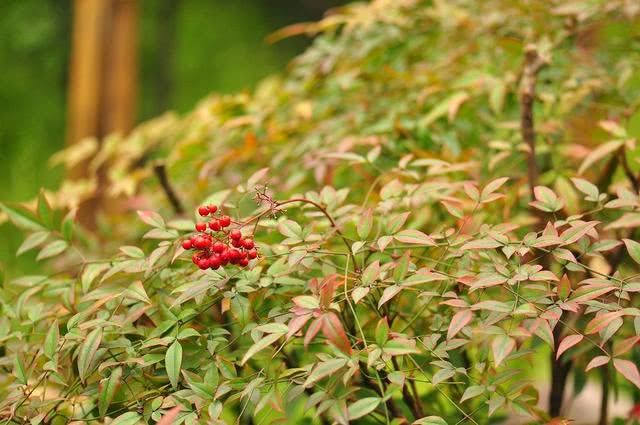
Nandina domestica is a shrub plant with an evergreen bluish-green color. Its flowering period is spring and summer, and in autumn it can also bear fruit. It grows very attractively, with leaves much like feathers and very straight stems, so many people like it. Nowadays people all want to keep beautiful plants at home for decoration, so many people also want to grow it as a potted plant.
When potting Nandina domestica, choosing a suitable pot is very important, because a pot that is too deep or too shallow will affect it greatly. This is not only for its growth; the choice of pot is also very important for its ornamental value, because an attractive pot can make this bonsai look even more beautiful.
So, if you grow Nandina domestica, pots that are rectangular or round are both fine, and light blue-white colors will be more suitable. It is best to plant Nandina domestica in February or March, because spring is the best season for growth. When planting it, you should add some fertilizer to the soil, and you can also shape it directly, so that its growth will have a stronger sense of form.
Like most plants, Nandina domestica likes to grow in a warm environment, because it is a plant from the south of our country, so the temperature suitable for its growth is relatively high, around 20°C, so friends in the north must pay attention in winter and must not let it grow in an environment where the temperature is too low. If the temperature in spring of some year is not high, you should also pay attention to keeping it warm, otherwise it will affect its flowering.
In caring for Nandina domestica, you need to pay attention to watering it more, but you also must not water it too frequently. Generally, when the soil looks slightly dry, you need to water it immediately, and because the weather in summer is too hot and stuffy, you can use water to spray some mist into the air around it, which can both lower the temperature around it and increase the humidity. The growth of Nandina domestica requires frequent fertilizing, once every half a month, but each fertilizing should be with a thin fertilizer, and it should be mixed with water to make a liquid fertilizer for fertilizing.
Potted Nandina domestica must be placed in a place with relatively sufficient sunlight for it to grow, and generally a balcony is quite suitable, and in order to give it better ornamental value, you can wash its leaves with clean water every week, so that its leaves will look very clean and fresh.
A plant like Nandina domestica needs frequent pruning. From the time it is first potted, you need to shape it, and during the growth stage you also need to cut off the branches sprouting from its roots, as well as branches that are too dense. If the fruit spikes grow relatively long, they also need to be pruned. Generally, for the sake of greater beauty, many people keep only one or two lower-growing branches, because a bonsai is for viewing, and if it is too lush it will look unsuitable, and pruning is also very helpful for its flowering and fruiting.