Torrential rain on the 26th: piglets drown in rushing currents, tens of thousands of chicks cry out and die, farmers choke up as they collect the bodies
This August 23 tropical depression severely devastated the livestock industry in southern Taiwan, China. Two consecutive days of torrential rain on the 23rd and 24th poured into livestock farms, causing massive drowning deaths of pigs and poultry. Pig carcasses piled up into mountains, a shocking sight. Chiayi County suffered the most severe livestock losses, currently estimated at 126.4 million yuan, followed by Tainan City (46 million), Kaohsiung City (2.4 million), Yunlin County (1.27 million) and Pingtung County (470,000). On the 25th, most areas began to clear up and cleanup operations could finally begin, but some livestock sheds still had standing water, and it was not until the 26th, after the floodwaters receded, that they were able to report that they were safe.
By the 25th, Chiayi County had lost a total of 5,000 pigs, half of them at the Lianxin Livestock Farm in Puzi City. Lin Pei-ju, director of the Chiayi County Animal Disease Control Center, said heavily that she had never seen such severe livestock and poultry disaster losses. Although cleanup began yesterday, by today (the 26th), after 24 hours, the standing water was still very deep. More and more pigs were being carried out, all of them large pigs, but the smell was getting worse and worse, worms were starting to breed everywhere, and the environment was becoming increasingly harsh.
Tsai Chueh-nan, 82 years old this year and the first-generation owner of Lianxin, who has raised pigs for over thirty years, wearily stared at each piglet being sent into the rendering truck, his eyes full of heartache, choking up as he murmured: "These are all very high-quality pigs."
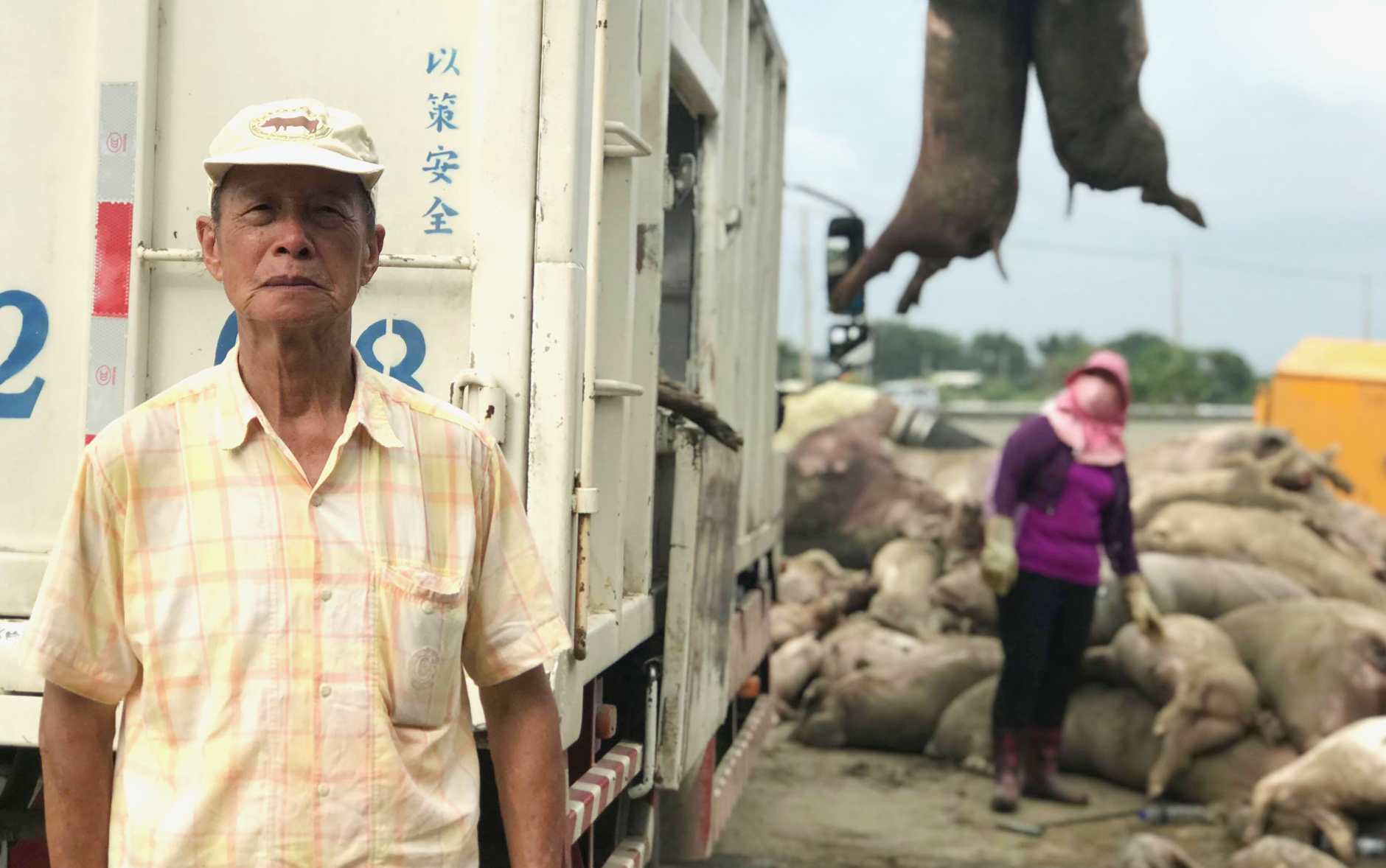
Council of Agriculture: Cross-ministerial assistance for damaged farms
Hsieh Yao-ching, director of the Livestock Division of the Council of Agriculture, said the central government has launched cross-ministerial cooperation to assist damaged livestock farms with related matters. Poultry and livestock carcasses will be disposed of through multiple methods such as composting and incineration. At the same time, post-disaster reconstruction will be provided for livestock farms, including natural disaster relief loans for affected households and intervention and guidance from the post-disaster reconstruction technical service team. On the other hand, after the removal of dead and waste poultry and livestock is completed, local disease control centers will be responsible for cleaning and disinfecting the farms to prevent the breeding of disease and outbreaks of animal epidemics.