Chamomile flowers are small and lovely. Are they a type of chrysanthemum?
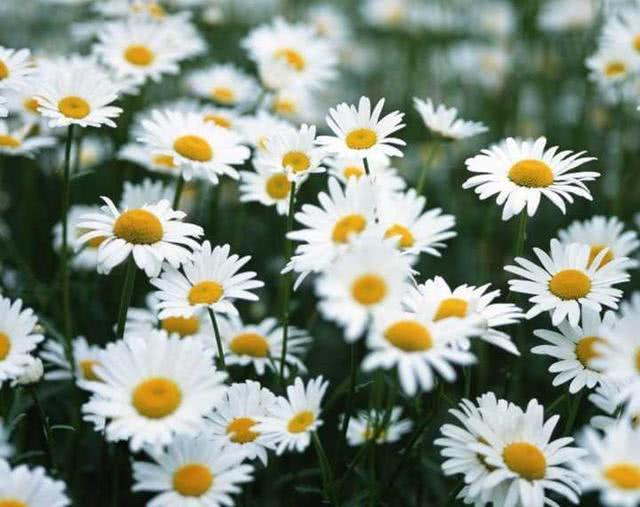
Before addressing this question, we first need to distinguish between small chrysanthemums and large chrysanthemums. Actually, both small chrysanthemums and large chrysanthemums are types of chrysanthemum. They may not look very different in appearance, both being a golden color, and their petals are especially slender, looking especially full. Basically, when a chrysanthemum has not fully opened, it looks like a little ball, which is also quite cute. However, there is a slight difference in size between small chrysanthemums and large chrysanthemums: the radius of a small chrysanthemum may only be as wide as three thumbnails, but a large chrysanthemum can be as big as a palm. Why do some people choose to grow small chrysanthemums instead of large chrysanthemums?
I think the main reason is that small chrysanthemums take up less space, making them more convenient to grow. Generally speaking, only when parks hold flower exhibitions do they plant large chrysanthemums in large quantities, and large chrysanthemums have many varieties and various colors, making them dazzling to look at. Although small chrysanthemums may not be as ornamental as large chrysanthemums, they have a special use: making tea. The dried chrysanthemums we usually buy in supermarkets for chrysanthemum tea are actually made from small chrysanthemums that have been dried in the sun. And the most common type of small chrysanthemum is chamomile.
1. Are small chrysanthemums really exactly the same in appearance as large chrysanthemums? Actually, if they were completely the same, that certainly would not necessarily be the case. Some small chrysanthemums are just mini versions of large chrysanthemums, but some small chrysanthemums are themselves independent varieties within the chrysanthemum family, and this distinction still needs to be made clearly. As far as we currently know, the more common small chrysanthemums include chamomile, cosmos, and spray chrysanthemum. Let us first focus on chamomile. If you often watch TV, you may often hear the term chamomile essential oil in advertisements played after a program ends.
Chamomile is actually the chamomile we are talking about. Generally speaking, its petals are white, and its center is especially large, of that very warm golden yellow. Chamomile is one of the smarter chrysanthemums. Perhaps with other chrysanthemums, first, we have never heard their names, and second, we can basically only see them at flower exhibitions, whereas chamomile can sometimes be found right by the roadside.
2. What special benefits does chamomile have? Actually, most flowers in the world can have essential oil extracted from them, but why do manufacturers choose only a few kinds of flowers to make essential oil? This is because these few flowers have obvious benefits, such as skincare, beauty, and health maintenance. As one of the more common essential oils, chamomile essential oil can help people with poor sleep fall into a state of restful sleep more quickly, and at the same time can also reduce the frequency of excessive liver fire in people who are prone to losing their temper, allowing them to gradually calm down.
Chamomile can also be brewed as tea. It has the same taste as the ordinary yellow chrysanthemum sold outside, slightly sweet with a little bitterness. Of course, because chamomile's beauty benefits are especially good, people generally only know that chamomile has beauty effects, but in fact, besides beauty, chamomile can also relieve pain. If you usually feel a bit of pain in your back, you can also apply a little chamomile essential oil to your body.
3. Since chamomile has so many good effects, can we grow it at home? Chamomile does not survive by drying; rather, it must be sown from seeds. But when sowing from seeds, what problem will we encounter? That is, if we sow in autumn, you will find that you may generally have to wait half a year to see it bloom. At this time, do not be anxious; this is a normal phenomenon. In terms of watering, chamomile does not need too much water. Basically, just water it a bit more when it is blooming.