For jade plants and elephant bushes, pinch here and water with a little "wood" water, then leave them alone for 6 months and they become old stumps.
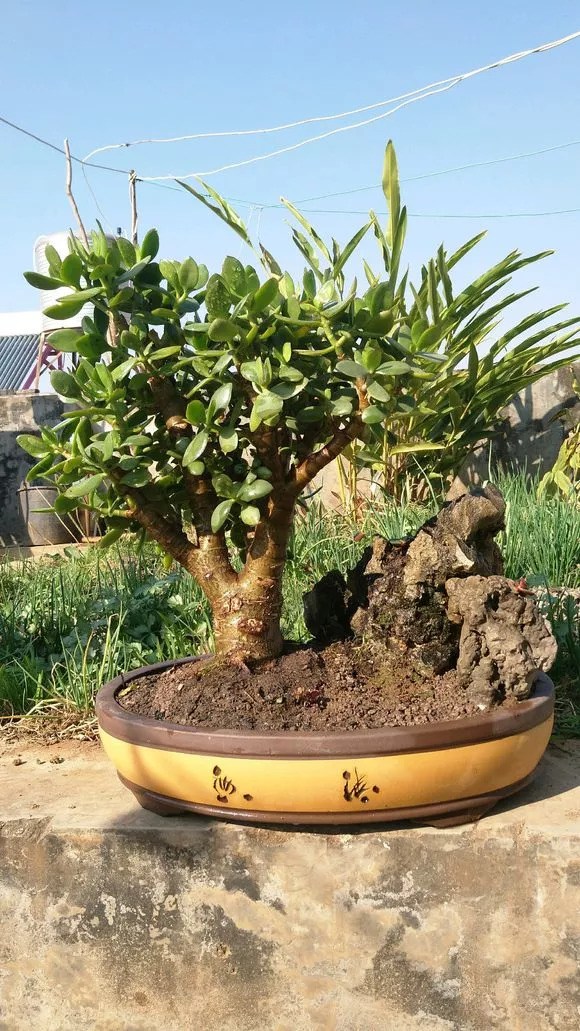
Jade plants (Crassula ovata) and elephant bushes (Portulacaria afra) are both fairly common houseplants among gardening enthusiasts, but many growers find they grow very slowly and don't develop any shape even after several years! Today let's look at how to make jade plants and elephant bushes grow a bit faster and quickly turn into little old stumps! Let's take a look!
“
Quick old stump"
Some growers confuse elephant bush with jade plant. In fact, in some places both are called jade plant, or they are called big jade plant and small jade plant. Actually, the two plants do not belong to the same family or genus, and are in fact fairly distantly related. However, both grow rather slowly, and many growers find that even after keeping them for a long time they hardly grow at all.
Jade plant
Elephant bush
-Jade plant-
Jade plant is a succulent plant in the family Crassulaceae, genus Crassula, and can grow up to 3 m tall. Its leaf shape is rather unusual, with thick, glossy leaves like pieces of green jade, and its sturdy, ancient-looking branches give it the appearance of a large tree. Made into a bonsai, it is like a jade-carved bonsai, elegant and noble, with a beautiful scene.
Jade plant is relatively easy to care for and highly adaptable, with low soil requirements, but it needs good drainage and is not suitable for planting in clay loam. Jade plant is fairly drought-tolerant; normally, water only when the soil is dry, and water thoroughly when you do, and jade plant kept this way generally will not easily die.
If you want your jade plant to grow quickly and also grow into a little old stump, then you need to pay attention to the following points.
1. Water with a little "wood" water
During the growing season, fertilize once a month; in the early stage, mainly with nitrogen fertilizer, do not fertilize in summer, and in autumn mainly with phosphorus and potassium fertilizer. Although jade plant is tolerant of poor soil, to make it grow quickly you should still fertilize appropriately. In spring, you can mainly use nitrogen fertilizer, which helps jade plant grow branches and leaves. In the hot summer, it is not suitable to fertilize again; when it turns cool in autumn, you can mainly use phosphorus and potassium fertilizer.
Potassium fertilizer plays a very important role in plant growth; one point is that it helps plant tissues form a tough cuticle, a hard epidermis layer and thick cell walls, and can promote lignification and silicification, making stems harden and thicken.
Typical potassium fertilizer solutions include wood ash, potassium dihydrogen phosphate and so on. In autumn, you can apply wood ash water or 0.2% potassium dihydrogen phosphate fertilizer solution once a month, which helps new branches become sturdy and helps them through winter.
2. Give more sun
Jade plant is a plant that very much likes sunlight, and in normal care it must not lack light. Although it is also fairly shade-tolerant, if kept in shade for a long time, its branches become weak and it easily grows leggy. Especially in winter, if it can be placed in a sunny spot, in spring quite a few sturdy old plants can bloom.
3. Prune leggy branches
After summer, you can prune the jade plant appropriately. Some jade plants have spent flowers after blooming, which can be cut off. Because in summer people generally provide some shade, quite a few jade plants will produce some leggy branches. You can prune the jade plant according to a complete, round and full shape; first, you can prune out a beautiful shape, and second, you can concentrate nutrients to supply the old branches, making the old branches grow more robustly.
4. Control water appropriately in autumn and winter
Jade plant itself is fairly drought-tolerant and does not need much water. In autumn and winter, if you control water appropriately, it not only helps the formation of lignification but also helps the jade plant get through winter.
-Elephant bush-
The scientific name of elephant bush is Portulacaria afra; it is a perennial evergreen succulent shrub in the family Portulacaceae, genus Portulacaria. Grown in the ground, elephant bush can reach 4 m tall, and compared with our usual potted plants, it is a giant. The old stems of elephant bush are sturdy and ancient-looking, the leaves are small and exquisite, oily and glossy, and the shape is either complex and varied or simple and elegant. Its care is also relatively simple, and it is deeply loved by gardening enthusiasts.
Elephant bush is easy to care for and highly adaptable. You can use loose, fertile, well-draining sandy soil, and put a little crushed stone or tile at the bottom of the pot to help drainage. Elephant bush is drought-tolerant and not tolerant of waterlogging; the potting soil should be dry rather than wet, and generally you can water thoroughly after the soil dries out completely. In high summer temperatures, it is in a dormant state, so water less, and you can spray a little water mist on the leaves every day to supplement moisture.
During care, pay attention to the following points, and you can make elephant bush turn into a little old stump.
1. Prune and shape frequently
Elephant bush has strong budding ability and tolerates pruning. During normal growth, you can prune frequently to maintain a beautiful plant shape, which also helps the old branches become robust. Prune away some diseased and weak branches, dense branches and clustered branches. After pruning, elephant bush should avoid rain and strong direct sunlight, to avoid infection or sunburn at the cut.
When pruning the outer outline, you can make it roughly triangular, which looks more steady and beautiful. Elephant bush has fleshy roots, so pruning should be the main method and wiring supplementary; you can use aluminum wire for wiring.
2. Water with a little "wood" water
To promote the growth of elephant bush, you can apply decomposed liquid fertilizer once a month, and stop fertilizing in hot summer and cold winter. In autumn, you should mainly use phosphorus and potassium fertilizer, and appropriately increase the potassium fertilizer content. Potassium fertilizer is an essential element for plant cell wall growth and can enhance plant tissue toughness, forming a hard epidermis layer and cuticle, thereby achieving the effect of lignification.
Commonly used wood water includes wood ash water and potassium dihydrogen phosphate aqueous solution. Dilute wood ash with water 10 times, let it stand overnight, then take the supernatant to water the flowers. Or use potassium dihydrogen phosphate to make a 0.2% aqueous solution, and use it once a month to achieve the effect of enhancing lignification.
3. Place in a sunny spot for care
Elephant bush likes a sunny, abundant-light environment. Although it is also fairly shade-tolerant, it should not be placed there for a long time, as it not only easily grows leggy but its color also loses its gloss. If there is sufficient sunlight, the branches are more robust and the color is purple-red. But in summer it is best to provide appropriate shade to prevent sunburn.
4. Water and control water appropriately
Elephant bush is drought-tolerant and not tolerant of wetness, so generally you should wait until the potting soil is completely dry before watering. But in spring and autumn it grows fairly vigorously, so you can water a tiny bit more, though still mainly on the dry side. In summer it goes dormant and needs little water, so pay attention to controlling water to prevent root rot. In winter it is also in a dormant state, so watering should be controlled, and it should be placed in a sunny spot for care, which helps the plant form lignification.
Don't be afraid that jade plant and elephant bush grow slowly
With just a few simple tricks they can turn into little old stumps
You can try it too
Show it to gardening friends who need it!