Can't grow Kalanchoe well? A complete care guide helps you grow it easily
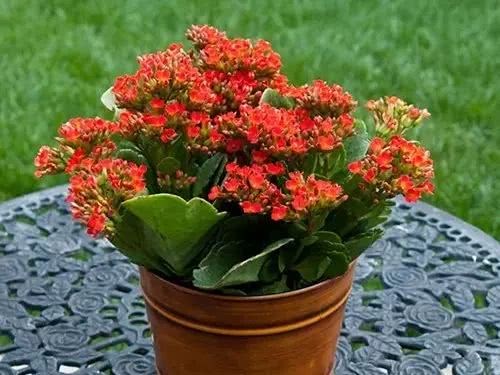
Kalanchoe symbolizes great fortune and longevity. Placing a pot of kalanchoe at home is not only auspicious and festive, but also lush with green leaves and abundant flowers, a feast for the eyes.
Kalanchoe itself is a succulent from southern Africa, with many varieties and beautiful flower colors, and it always shines brilliantly at Christmas, New Year's Day, and the Spring Festival. It has now become one of the best-selling potted flowers on the world flower market.
Kalanchoe potting soil
Kalanchoe likes loose, fertile, slightly acidic soil with good drainage. Many flower enthusiasts directly buy succulent potting mix, which is a relatively good choice. Kalanchoe fears waterlogging, so the potting soil must drain well; water-retentive materials like coco coir should be used as little as possible. Some flower enthusiasts grow it directly in sand, adding just a little organic fertilizer water when watering, and the results are very good.
Granular media commonly used in kalanchoe soil mixes include: coarse and fine sand, coal cinders, perlite, and ceramsite. Adding charcoal, coal cinders, foam, and similar materials at the bottom of the pot as a drainage layer also works well.
Daily care for kalanchoe
Kalanchoe itself prefers a warm, humid environment with good sunlight, and fears both cold and heat. The most suitable temperature is 15 to 25 degrees; in summer it should not exceed 30 degrees, and in winter it should not drop below 10 degrees.
During care, because it is drought-tolerant and prone to root rot, the watering principle is: do not water until dry, better dry than wet, and water thoroughly when you do; a ventilated environment is very important, and as long as conditions are not extreme, outdoor growing is a relatively good choice; light is an important guarantee for flowering, and with 8 hours of short-day light per day during the flowering period, buds can appear within a month.
Fertilizing kalanchoe depends on the potting soil situation. If the base fertilizer is sufficient, you can fertilize less or not at all; if the base fertilizer is insufficient and growth is weak, you need to apply dilute fertilizer frequently. Applying more phosphorus fertilizer before flowering helps flowering, and applying more nitrogen fertilizer before cuttings helps the branches grow sturdy and ensures good cutting results.
What kalanchoe fears most
Kalanchoe belongs to the succulent plants,The first thing it fears most iswaterlogging and root rot,The second thing it fears most issummer sun exposure, stuffy heat and poor ventilation,The third thing it fears most isfreezing below 5 degrees.
How to prune kalanchoe
When a new seedling has grown for about a month, pinch off the growing tips to promote branching. When the branches sprout and grow to a certain height, they should also be pinched, so the plant shape becomes full and it blooms more.
Excessive watering of kalanchoe causes leggy growth, and such branches should be pruned promptly to encourage the branches to divide and regrow.
After kalanchoe finishes flowering, cut off the spent flowers along with the pair of leaves below them, cutting above the axillary buds, which can promote new shoots and a second bloom.
After the flowering period each year, before the high summer temperatures arrive, cut the kalanchoe branches short, keeping about 3 cm of stem, and wait for branching and the next round of flower bud formation.
Starting in September, the plant develops flower buds, so do not prune.
Kalanchoe cuttings
Taking cuttings is one of the important skills in kalanchoe care. Plants over two years old will age, and their ability to produce flower buds decreases, so it is best to propagate new plants from cuttings.
The best time for cuttings is after flowering in spring, in May and June, followed by August and September after autumn begins. At these two times, the temperature and the plant's condition are both favorable for cuttings to take root.
Water propagation roots faster than soil propagation.
For selecting cuttings, choose a healthy stem tip of about 8 cm, cut at a 45-degree angle at a position less than 1 cm below a node, keep three or four leaves at the top, and remove the rest.
Before planting the cutting, it needs to dry slightly, which prevents rot and makes rooting easier. If it has been soaked in rooting powder or fungicide solution, it is also best to let it dry.
For water propagation, you can poke holes in foam, insert the cuttings into it, and place it in water. The water is best mineral water, rainwater, or cooled boiled water. Roots will begin to form within a week of water propagation.
For soil propagation, it is better to choose breathable sandy soil. After planting the cutting, keep the sandy soil moist and place it in a ventilated spot with soft sunlight; roots will form in about two weeks.
Kalanchoe can also be propagated from leaves. Choose healthy leaves, let them dry in a cool place, then insert them into sandy soil, spray water to keep moist, and they will root in about a month and sprout in about three months.
Common problems with kalanchoe
Yellowing and leaf drop in kalanchoe
When kalanchoe drops leaves, and it is mostly old leaves, it is usually due to lack of water or excessive water causing root rot. Judge based on your usual watering and potting soil conditions.
Yellow leaves on kalanchoe are mostly due to too much water or improper light. Control water appropriately and avoid direct strong sunlight.
When changing the care environment for a potted plant, there should be a transition; a sudden environmental change easily causes leaf drop and yellowing.
Kalanchoe not flowering
Sunlight:For a kalanchoe plant with sturdy branches, giving a full 8 hours of light before flowering will naturally result in more blooms.
Nutrients:Not watering for too long, lack of light, or lack of fertilizer, or the plant having too much water and growing leggy and weak, will cause it not to flower or to flower less. Water appropriately and focus on phosphorus fertilizer before flowering to promote more blooms.
Branching:If the seedlings are not pinched, and no branches or leaves are differentiated, even if they bloom, there will be few flowers, so prune promptly.
Common pests and diseases of kalanchoe
Powdery mildew, leaf spot disease, black rotare the most common diseases of kalanchoe.
For powdery mildew, spray with potassium permanganate solution, or mix sulfur powder with water into a paste and apply it to the affected stems and leaves.
For leaf spot disease, spray with carbendazim, chlorothalonil, or thiophanate-methyl diluted in water, and also drench the potting soil for control.
For black rot, promptly cut off the affected branches and leaves, spray carbendazim or chlorothalonil solution, and at the same time promptly keep branches for cuttings.
Aphids and scale insectsare the most common insect pests of kalanchoe.
For insect pests, you can spray with laundry detergent water; if severe, use insecticides, for example baichongling for scale insects and omethoate for aphids.
If you also like growing flowers, follow us!