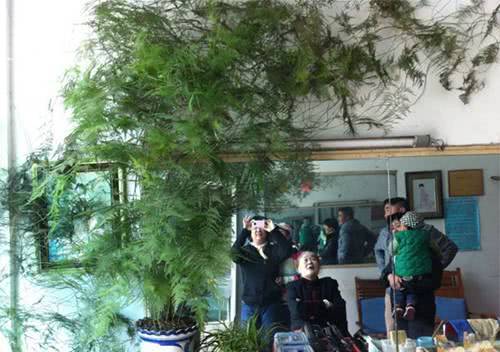
An asparagus fern actually climbed up to the roof - how was it grown?
Asparagus fern (Asparagus setaceus) is a common ornamental potted plant in our daily lives. It not only looks fresh and attractive when displayed, but also has feng shui benefits of promoting study and enhancing literary talent.
Many people know that asparagus fern can fill its pot, bloom, and bear fruit.
But because gardening enthusiasts generally grow small potted plants under 30 cm, with branches and leaves at varying heights in an attractive irregular arrangement, not many know about the asparagus fern's powerful climbing ability.
Asparagus fern is a vine plant. Give it a string or other support, and it will climb right up along it.
Water pipe
Wall surface
Some asparagus ferns climb up to the roof
Not only do they climb up, but they also grow lush and flourishing with abundant branches and leaves.
Asparagus fern is relatively delicate and its leaves easily turn yellow. Achieving the results of the gardening enthusiasts above is truly not easy. If you want to grow yours as well as theirs, pay close attention to the following issues.
Reasons for asparagus fern leaves turning yellow
Asparagus fern leaves are soft and slender. Once the growing environment is unbalanced, yellow leaf problems easily arise.
The simple and common one is leaf tips turning dry and yellow. Insufficient water, watering too little, insufficient moisture, or high temperatures and dry air causing rapid water evaporation can all cause dry yellowing. After the potting soil dries out, replenish water promptly, and pay more attention to air humidity to avoid this problem.
If watered too much, new leaves will turn yellow and soft. In this case, control watering. If it remains severe after controlling water, check the root system and deal with root rot.
If light is too strong, it scorches the leaves, usually with the side facing the sun turning yellow most severely. Just move it to a suitable spot with indirect light.
Asparagus ferns kept indoors long-term will also have leaves turn yellow when exposed to wind and rain, or to sudden temperature changes.
Temperature + humidity + ventilation, tackle all three at once
Around 15 to 25 degrees is the most suitable temperature for asparagus fern growth, but if the air is very dry, yellow leaves can also appear above 20 degrees. Mist promptly and ventilate to keep it healthier.
You cannot focus on just temperature or humidity: when temperatures are high, increase humidity while ventilating; when temperatures are low, control water promptly and avoid drafts.
Sum up your own soil and watering experience
Asparagus fern fears waterlogging, so the soil must be loose and well-draining. But a dry environment not only affects growth but also causes yellow leaves, so watering must also be timely.
If your soil is sandy and drains quickly, then your watering frequency should also be high. If the soil is pine needle plus humus, or media like coconut coir that both retain and drain water well, keep the surface moist daily, water more when hot and control water when cold.
By comparison, between sandy soil and humus soil, humus soil is better, because asparagus fern also has certain requirements for soil fertility. Otherwise it grows thin and weak, and is more prone to yellow leaves and root rot.
Gentle light
Aside from full shading during the hot midsummer, direct sunlight before 10 a.m. each day generally will not cause yellow leaves and can also promote lush branches and leaves in asparagus fern. A balcony with open air or good ventilation and light works well. Indoor light differs from outdoor light; outdoor light has a rich spectrum and can meet the many needs of plant growth.
Besides timely shading and sun exposure, asparagus fern should not be kept in shade long-term, as it easily becomes leggy. In daily care, place it in indirect light, and be sure to rotate the pot every week, because asparagus fern is strongly phototropic. Without rotating the pot, the plant will show an obvious strong-weak contrast, which looks rather unattractive.
Prune promptly
For gardening enthusiasts who only want a small potted plant, appropriately using some dwarfing agent is very practical. At the same time, you need to promptly pinch off the top and branch it out to encourage side branches, so you can further shape the plant.
If you want your asparagus fern to grow tall, do not casually remove the terminal bud; it will grow taller and taller. At the same time, appropriately keep side buds to promote branching, which can prevent it from growing into a "single dominant stem."
In daily pruning, yellowed and dead branches should be removed promptly. When cutting branches, remember to keep the growth buds, otherwise the whole branch is wasted and ruins the appearance.
If you also like growing flowers, then follow us!