Watering spider plants and pothos with this is like pouring poison on them; the next day the leaves turn yellow
In gardening, the saying goes "three parts fertilizer" and "seven parts water," meaning that the two most critical factors in growing plants are, first, fertilizing, and second, watering. Water properly, and your potted flowers will thrive. Take potted spider plants (Chlorophytum comosum) and pothos (Epipremnum aureum), for example. Both are extremely common foliage plants; it would be a stretch to say every household has one, but at least most people keep a pot or two. To grow them well, you must pay close attention to watering. In everyday care, watering directly determines whether the leaves stay glossy green. Now that autumn has arrived, watering with "this kind" of water described below clearly will not work, and can easily cause yellow leaves and even death.
The first kind of water you cannot use on plants: unfermented rice-washing water and soybean water
People who have grown plants for a long time have picked up some watering tricks, such as using rice-washing water or soybean water on plants. Rice-washing water is very effective for watering plants: it makes the potting soil looser and more fertile, and it also adjusts the soil's pH to be more suitable for plant growth. Then there is soybean water, which contains a good amount of nitrogen and is a genuine organic nitrogen fertilizer for plants. But these two substances, used well, are gardening "treasures"; used poorly, they easily become "poison water" for plants. Rice-washing water and soybean water must be "fermented" before use. Without fermentation, once poured into the pots of pothos and spider plants, they release a large amount of heat, which burns the plant roots, causing root rot and yellow leaves.
The second kind of water you cannot use on plants: expired milk
Now, as living standards have risen, milk has become a staple drink in many homes. But milk that is not finished easily expires. Most people throw expired milk away, while gardening enthusiasts like to use it on their plants. In the words of fellow gardeners, this milk contains lots of nutrients, so it seems a waste to throw it out, and using it directly on plants is so much better. In fact, although expired milk is a good thing for plants, it cannot be used directly on them. Just like rice-washing water, expired milk must be fermented; otherwise it will burn the plant roots. So this is something you must be careful about when growing plants.
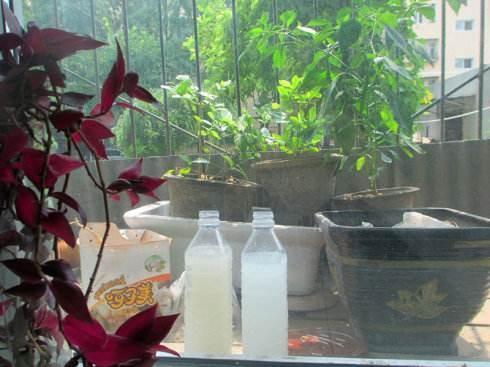
Fellow gardeners, you must take these 2 kinds of watering water seriously, especially rice-washing water, which is far too common in daily life. From now on, remember to ferment it first before watering your plants. Otherwise, your pothos will end up like the picture above, with yellowed leaves. Fermenting rice-washing water is actually very simple: just put it in a sealed bottle, then leave it in the sun for half a month and fermentation is complete. If you are worried about the unpleasant smell of fermenting rice-washing water, fellow gardeners might want to toss in a bit of orange peel.
Besides watering, what other details should you pay attention to when caring for pothos and spider plants?
These two plants are fairly easy to manage. To keep them evergreen all year round, besides watering, fertilizer is also crucial. Adding base fertilizer to the potting soil is not enough; you need to top-dress every month. It is recommended to use some diluted cake fertilizer water or sun-exposed manure. If these two fertilizers seem troublesome, then just go buy some potassium dihydrogen phosphate. This inorganic fertilizer is the most commonly used for plants, and it reliably supplies nitrogen and phosphorus. Each month, dilute it with water and pour it into the pot to ensure increasingly vigorous growth.
That is all for the knowledge about pothos and spider plants. Thank you for reading!
Remember to like and share~