A Detailed Guide to Year-Round Management Methods for Pine Bonsai
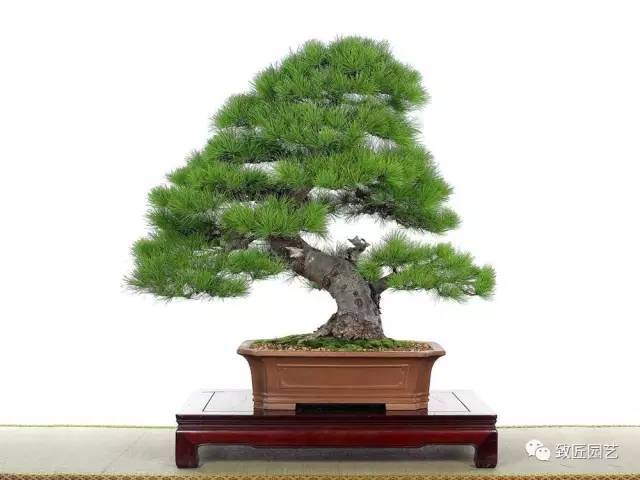
In January, the tree is completely dormant, which makes it the best viewing period. You can carry out wiring and shaping, branch thinning and needle plucking, and any leaf removal not completed the previous year should be finished at this time. Except in extremely cold regions, it can overwinter outdoors; if conditions allow, move it into an air-conditioned room. Because the winter monsoon easily dries out the potting soil, be sure to pay attention to watering.
February is the coldest time of the year, and also the best time for wiring and shaping, major restyling, wrapping with aluminum wire, branch thinning and needle plucking. After working on the pine, it is best to place it in a greenhouse for protection. From late February, pests begin to become active, and a 30-times dilution of lime sulfur mixture can be sprayed to prevent pest damage.
In March, spring returns to the earth, temperatures rise, and winter buds begin to stir. March is also a good time for restyling and wrapping with aluminum wire, and late March is the best time for repotting. When repotting, the vertical roots of young trees should be cut off, and tangled roots should be corrected. A dull knife and excessive drying of the roots during repotting will harm the tree. Repotting should be completed before late April if possible, and the soil mix should be about seven parts akadama soil to three parts Kiryu sand. After potting, the pine needs direct sunlight. No fertilizer should be applied within one month after repotting; after that, heavy fertilizer and heavy watering are fine. March is a good time for cutting middle buds. After one cutback, a second cutback can force buds to emerge on the opposite side of the small branches as well.
April: Early April is the most suitable time for repotting. In mid-April, as candle buds begin to enlarge, you can carry out green plucking (breaking off buds with the fingers) on particularly vigorous buds. Fertilizing can begin in April. Japanese black pine likes water and fertilizer; solid fertilizer based mainly on nitrogen can be applied from April until October, once a month. The pot can be rotated once every 2--3 weeks to ensure even light exposure.
In May, the winter buds have grown long and candle-like. In early May, finish plucking any buds that were not green-plucked. On trees with strong vigor, the crown and branch tips will appear especially thick and strong. When the buds stop growing and the needles turn green, you can pinch them off with your fingers according to medium bud length for comparison (using scissors may cause dieback). Aphids are likely to appear at this time, so pay attention to pest control and disinfection.
In June there are no important operations; carry out regular pest control and sterilization.
In July, the new buds have grown into needles, and early July is a good time for bud cutting. Apart from weak buds that need to be built up, cut off the new shoots that grew in spring from the base of the bud, leaving only last year's old needles. After about 1--2 weeks, secondary buds will emerge. After bud plucking, the tree's water absorption will temporarily weaken. At this point, fertilizer can be withdrawn and applied again when the secondary buds emerge. Bud cutting is the short-needle method and places a relatively heavy burden on the tree, so it is best done once every two years; however, for a weak pine, it should not be done even once every two years. Start bud cutting with the weak buds, and cut the strong buds seven or eight days later.
In August, carry out bud selection on the secondary buds. Trees with sufficient water and fertilizer will grow secondary buds 1--2 weeks after bud plucking, and some vigorous branches may produce 4--5 buds. If these are not dealt with, the branch tips will grow into a clustered mass and ruin the tree's shape. At this time, tweezers can be used to remove buds growing in the upward and downward directions, keeping two buds horizontally. Generally, keep weak buds on strong upper branches and keep strong buds on weak lower branches, so as to balance the tree's vigor.
In September, watch out for late-autumn high temperatures and spray water on the foliage frequently in the evening. The secondary buds are in a period of vigorous growth, so ensure sufficient water and fertilizer, applying more fertilizer than in spring. For buds with poor growth, a foliar fertilizer can be sprayed once a week. September is also a time when middle buds can be cut.
In October, external growth has basically ended, and the tree shifts to storing energy internally for winter. Tweezers can be used to peel off yellowing old needles one by one. Ensure an adequate fertilizer supply to strengthen the branches and trunk.
In November, the tree's form and leaf color are at their most beautiful of the year; keep fertilizer sufficient until mid-November. From late November, begin plucking new leaves to maintain internal ventilation and sufficient light. When plucking leaves, distinguish between strong and weak buds. Use scissors to cut away the new needles, leaving 2 mm at the leaf stalk. Cut more from strong buds and fewer needles from weak buds.
In December, the tree enters dormancy. In mid-December, move the pine into the greenhouse; two or three days before that, a 30-times dilution of lime sulfur mixture can be sprayed once. Any unfinished plucking of new leaves should be completed at this time, and it is also a good period for pruning.
Text and images are reposted from the internet
Featured Content