If rice field eels dig many holes in a paddy field, will it affect the growth of the rice?
Summary: When a paddy field is full of holes dug by rice field eels, does it affect the growth of the rice?
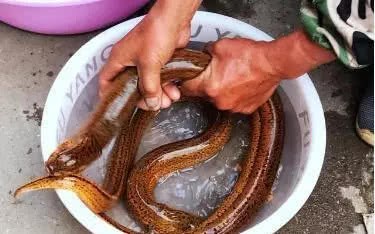
When rice field eels are mentioned, I think of braised eel segments, garlic-braised rice field eel, rice field eel stir-fried with garlic sprouts... Rice field eel is truly delicious, with few bones and plenty of meat, though the price is a bit high. When I was little, my favorite thing was going with a few village kids to look for rice field eels and loaches in the paddy fields. Loach, though, tastes quite a bit worse.
Catching rice field eels
When I was little, there really were a lot of rice field eels in the paddy fields. Back then, finding rice field eels took real skill: if you spotted white foam in a paddy field, then there was definitely a rice field eel there, and it was a female rice field eel. You would put a loach on an eel hook and wiggle it at the mouth of the eel's hole, and an eel would take the bait. But the thing I feared most as a child was confusing an eel hole with a snake hole.
So does the rice field eel actually harm farmland?
First, let us look at the habits of the rice field eel. The rice field eel is a carnivorous fish, generally resting by day and coming out at night, so in rural areas many people go catch rice field eels at night. Rice field eels generally live in the mud, like to dig holes, and must have at least two openings, one for escape and one for breathing and letting air out. So you often see eel holes on the ridges of paddy fields, and you generally will not find an eel in that hole; the other opening is in the paddy field, about ten cm from the water surface, and that hole generally has an eel in it.
As mentioned above, the rice field eel is a carnivorous fish, so it will catch insect pests in the paddy field. Things like planthoppers, rice weevils, moths and so on will all be caught by rice field eels. However, frogs and tadpoles in the paddy field will also be eaten by rice field eels, so as far as the rice field eel is concerned, as long as it can eat it, it will eat it, regardless of whether it is a beneficial insect or a pest. So on this point, you could say the merits and faults cancel each other out.
Another point is that rice field eels like to dig holes, and one hole is not enough for them; a rice field eel needs several holes. So this causes poor water retention in the paddy soil, and fertilizer is easily lost. Especially if your paddy field is on higher ground, after the rice field eel connects its holes with another family's paddy field, the fertilizer you apply to your paddy field will quickly flow into someone else's paddy field.
However, the excrement of rice field eels is also a fairly good fertilizer, and it is somewhat beneficial to the paddy field.
So for a paddy field, the rice field eel can be said to have both merits and faults, and it is hard to define. Because the market price of rice field eels is getting higher and higher now, many people specially catch rice field eels, and with the use of pesticides, electric fishing and so on, there are now far fewer rice field eels in rural paddy fields than in the past. Even if there is harm, it will not be very serious.
Another thing is that some places now adopt the method of raising rice field eels in paddy fields to get rich, but one point to mention here is that raising rice field eels in paddy fields is not an easy thing, so it is better not to go about it blindly.