Garlic planting is just around the corner, how should you fertilize for a high yield?
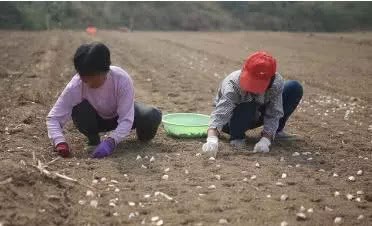
The market for garlic this year has not been very good, and many garlic farmers have not made money this year. It is now mid-August, and in about another month the garlic in our area will be ready to plant. Here we will talk with everyone about the issue of fertilizing garlic.
First, let us look at the issue of garlic planting time.
Take my hometown as an example. Our area is located in North China, and generally planting begins at the end of September each year, with harvest beginning in May of the following year. In areas located farther to the southwest, such as Sichuan and Guizhou, garlic is generally sown now, that is, in August. However, in areas like the Northeast and Northwest, such as Qinghai and Tibet, because the temperature is relatively low, autumn sowing is generally not used, and planting is generally carried out in April each year.
How should garlic be fertilized?
Base fertilizer
First, let us look at the issue of base fertilizer. Base fertilizer plays a very large role in the process of fertilizing garlic. It can be said that if the base fertilizer is applied well, it is equivalent to being half successful. Base fertilizer is generally mainly organic fertilizer, and in addition, the soil fertility of the planting area and the expected yield of the garlic need to be considered for reasonable fertilization.
Organic fertilizer can be chosen according to the specific situation of the grower. Chicken manure, pig manure, barnyard manure, and so on can all be used. Generally, about 4500 kg of barnyard manure can be used per mu of garlic field, or about 3000 kg of pig manure. About 50 kg of cake fertilizer can also be added. Then mix in about 50 kg of superphosphate and 30 kg of ternary compound fertilizer.
Topdressing
Topdressing garlic is also a very important step. Generally, about 3 topdressings are needed during the garlic growing period. According to the growth of the garlic, seedling-promoting fertilizer, vigorous-growth fertilizer, bolting fertilizer, and bulb-strengthening fertilizer can be applied. Seedling-promoting fertilizer is generally applied about two weeks after garlic emerges. Fertilizing at this time helps promote garlic root growth and helps improve the garlic's ability to overwinter. Generally, about 5 kg of high-nitrogen compound fertilizer can be used per mu.
Vigorous-growth fertilizer is generally applied as topdressing two and a half months after garlic sowing. Fertilizing at this time helps garlic grow faster, promotes thicker garlic stems, and reduces disease. Generally, about 1000 kg of manure is used per mu, along with 5 kg of potassium chloride.
Bolting fertilizer is generally started when the garlic scape tassel appears. At this time, garlic growth enters a key period, so the fertilizer requirement is also relatively large. The amount of this topdressing should account for about half of the total topdressing amount, and topdressing needs to be carried out in time. At this time, about 20 kg of nitrogen-phosphorus-potassium compound fertilizer can be applied per mu.
Bulb-strengthening fertilizer is actually garlic bulb expansion fertilizer. This is generally in the later stage of garlic growth, usually about three to four weeks after the previous fertilization. About 10 kg of nitrogen-phosphorus-potassium compound fertilizer per mu is sufficient.
This is Science Agriculture. You are welcome to add a follow and learn together with us.