Indoor plants that cover the walls are especially easy to care for; there is no need for a guide on how to look after them.
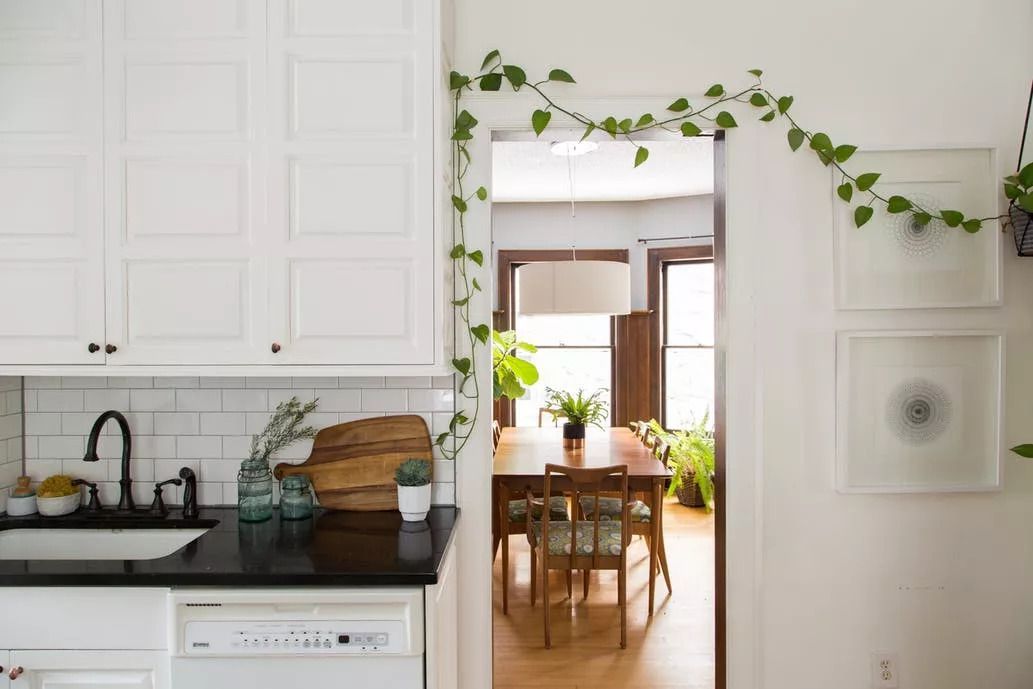
The care of pothos is very simple; it grows well without much management, and keeping it at home fills the whole space with vitality. If you don't know how to look after it, you can give it a thorough watering when its stems and leaves are slightly wilted, and after a while it will return to a robust form. It is very easy to grow.
1. The difference between pothos and heartleaf philodendron:
Pothos and heartleaf philodendron (Philodendron hederaceum) look very similar; the leaf shapes are about the same and they look almost identical. Their biggest difference is how thick and fleshy the leaves are. Pothos leaves are very thick and fleshy, and its stems and leaves are much softer than those of heartleaf philodendron.
The plant in the picture above is heartleaf philodendron; it looks a lot like pothos, so don't mistake it for one.
Heartleaf philodendron and pothos are both easy-to-grow plants with much the same care methods and good adaptability to their environment. They need very little light, so growing them indoors is a great choice.
2. Caring for pothos:
Pothos can adapt to the light conditions of various environments and grows well even in low-light indoor conditions. As a potted plant, pothos should be kept away from scorching sun or excessive direct sunlight. You can keep it on a windowsill or balcony, where suitable scattered light each day is enough for it to grow well.
3. Soil and water
Pothos does not actually have to be planted in soil. You can simply put it in a container with a little clean water and grow it hydroponically. If the pothos has just been started in water, you can change the water once every 3 to 5 days; once it has rooted, there is no need to change the water frequently.
However, pothos grown in soil has more vigorous stems and leaves, and its branches can trail over the edge of the pot. If the leaves are glossy and emerald green, it is growing robustly. If the leaves turn white and wither, there is not enough water. If the leaves turn yellow and drop easily, it has been overwatered.
4. Growing in hanging baskets
Pothos is a green plant very well suited to hanging-basket care. Its stems and leaves keep growing longer, so you can place the pothos on a shelf, or of course hang it directly on a hook, and it will grow into an emerald, charming hanging plant.
If you want the pothos vines to grow longer, you need to prune it regularly, which encourages constant branching and helps the vines grow better.
The environment for caring for pothos should stay warm and humid all year round. Avoid excessively dry air, maintain a certain level of air humidity, and clean dust off the leaves promptly. Keep the minimum care temperature above 5°C and protect it from freezing.
If you want to propagate pothos, it is also very easy. The pothos stem has many growth nodes, and each node will produce a leaf or aerial root. We can take a section of stem with 2 or 3 growth nodes, remove the lower leaves, and insert it in water, where it will root quickly.