After NetEase, Alibaba Cloud is using artificial intelligence technology to raise pigs
NetEase's Ding Lei personally leading the development of the pig farming business has become a much-told tale in the industry. Over the past 8 years, NetEase has invested over 100 million yuan, building ecological farms. After consumers buy the pork, they can also check online how this pig was raised. The internet and pig farming, two industries that are completely unrelated, have become integrated.
I hear that although "NetEase pig farming" was mocked by the crowd for seven years, NetEase internally places great importance on the pig farming project. NetEase's Agriculture Business Unit is on equal footing with NetEase's three core departments: NetEase Mail, NetEase Portal, and NetEase Games!
Life, indeed, means you can witness "seeing the rare in a long life" at any moment. Now, besides the "people are worse off than cats, people are worse off than dogs" series, there is another one: the "people are worse off than pigs" series!
And on June 7, Alibaba Cloud released the ET Agricultural Brain at the Yunqi Conference Shanghai Summit, combining artificial intelligence technology with pig farming once again.
Pigs have once again stood at a new trend.
According to Alibaba Cloud President Hu Xiaoming, through the improvement of artificial intelligence technology, every year, it can help pig farming enterprises and farmers, for each sow, produce three more piglets per year, while reducing the mortality rate by 3%. "At Tequ Group, we have established a file for every pig, including breed, body shape, feeding situation, exercise situation, and so on, including our overall analysis of the pigs. By combining new technologies in this way, agricultural efficiency will improve."
At the same time, artificial intelligence can distinguish the state of pigs through different pig calls. Previously, information was handwritten, which was time-consuming and labor-intensive. Now every piglet has an ID card from birth. Through cameras, pig body shape data can be automatically collected, saving a lot of manpower and material resources. "In spring and summer, we drive the pigs outdoors to let them exercise more and strengthen their physique. Through the ET Agricultural Brain, we record the pigs' exercise distance, time, and frequency. If they don't meet the standard, they all get extra training." said pig farmer Su Zhipeng.
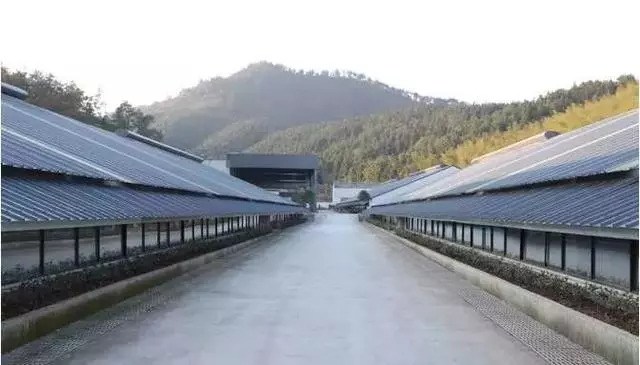
The Tequ pig farm is covered with cameras powered by the ET Agricultural Brain, which can not only automatically collect pig body shape data, but also record each pig's exercise distance, time, and frequency. Pigs whose exercise amount does not meet the standard are driven outdoors by the keepers for "extra practice." This is precisely the origin of the 200-kilometer pig. It solves the problems of deep expansion of large-scale artificial breeding and cost reduction and efficiency improvement, and also forms a more intelligent and more refined breeding model. It is expected that this year the annual production capacity per sow can increase by 3 piglets, and the mortality and culling rate can be reduced by about 3%.
Through image recognition technology, every pig has its own file, including breed, age in days, weight, feeding situation, exercise frequency, trajectory, immunization status, etc. These data can be used to analyze behavioral characteristics, feed-to-meat ratio, and so on. At the same time, combined with acoustic features and infrared temperature measurement technology, it can determine whether a pig is sick through its body temperature, cough, calls, etc., and provide early warning of epidemics.
Hu Xiaoming said, "In the future, it may be possible to name a pig, saying 200-kilometer pig, 300-kilometer pig, and the pricing will be different. Behind this, it will certainly bring more health elements themselves."
And in the future, every piece of pork will be labeled with data tags, telling consumers how many kilometers this pig ran from birth to finally appearing on the dining table.
Overall, AI pig farming is a reliable thing, and current AI technology also has a certain degree of practicality