How to propagate the foliage Chinese scholar tree? Three methods beginners can easily learn
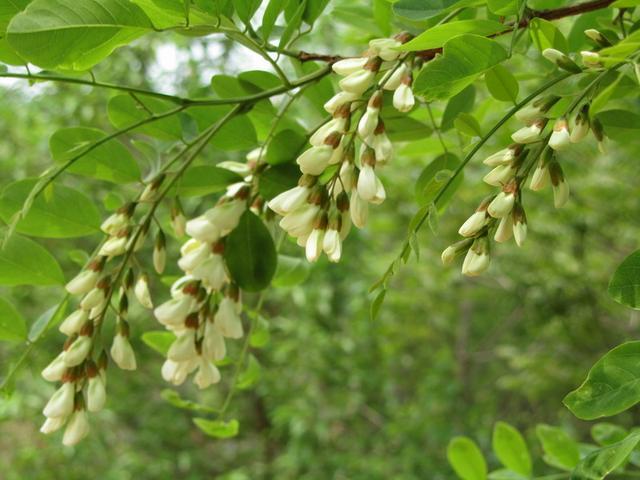
The Chinese scholar tree can also be called Guohuai, Baihuai, Xiyeshuai and has many other aliases; different places call it differently. It originated in China and is very common in North China and the plateau regions of China, where the climate and environment suit its growth. The Chinese scholar tree has no particular requirements for the soil it grows in, and planting it requires no special skill. It is a light-loving tree that can grow in cold winters and also in shady places. Its roots reach deep into the soil and are very well developed. Today let us get to know how this no-skill-required Chinese scholar tree is propagated.
I. Root burial propagation method
Once the Chinese scholar tree reaches the leaf-drop stage, you can begin introducing root cuttings. Before planting, store the roots in sandy soil first. The moisture level of the sandy soil is very important; if it is not controlled well it will affect the storage quality of the roots. The soil should not be too dry, as that will cause the roots to dehydrate, nor too moist, otherwise they will mold and rot.
There is also a difference in the seedling-raising period between the south and the north. Generally in the south you can raise seedlings in March, while in the north you can only raise seedlings from late March to early April. When raising seedlings, choose root segments that have grown for more than one year and have not been bitten by pests. When planting each root segment in the soil, control the distance between them well and do not place them too close together. After the roots are placed, cover with sandy soil, water to keep moist, then cover with plastic film, and within one month you will see the seedlings break through the soil.
II. Cutting propagation method
The timing for Chinese scholar tree cuttings is much the same as for root burial propagation, and can also be slightly earlier. To propagate the Chinese scholar tree by cuttings, you must first select good cuttings. Hardwood is generally used; softwood is not very suitable, as its growth ability is not as strong as hardwood. Cut the selected hardwood into pieces about ten-odd centimeters long, with the upper cut flat and the lower cut slanted, then apply rooting powder to the lower cut or soak it in rooting solution. In this way, the rooting speed of the cuttings can be accelerated and the survival rate of the cuttings greatly improved. The cuttings are inserted into the soil in a way similar to root burial propagation; likewise, control the distance between the cuttings well, and be sure to remember to insert them slanted-end first, do not get it wrong.
III. Seed propagation method
For seed propagation, in order to increase the germination rate of the seeds, the seeds generally need to be treated before going into the pot. There are two methods for treating Chinese scholar tree seeds, as follows:
1. Put the seeds in a bottle filled with warm water, stir continuously until the water temperature drops somewhat, then leave it in a place without sunlight for a day; you will find that most of the seeds swell. Scoop out the swollen seeds and keep them on wet paper; when you see some seeds germinating, you can plant them in the soil. As for the seeds that did not swell, do not throw them away right away; you can soak them in water several times, and if they still do not swell, then it is not too late to discard them.
2. Soak the seeds in water for a day, then take them out and directly keep them in fine sand. Soaking in water is to increase the seeds' water content so they can sprout and grow in the fine sand. Generally after keeping them in fine sand for half a month you can turn the soil to check; when half the seeds show signs of germination, you can plant them together with the sand.
Chinese scholar tree sowing is generally done in spring. After sowing, press the soil and water it so the seeds and soil are closely combined. If conditions permit, you can also add a film covering.