Zero-casualty succulent tricks for summer that the experts all use
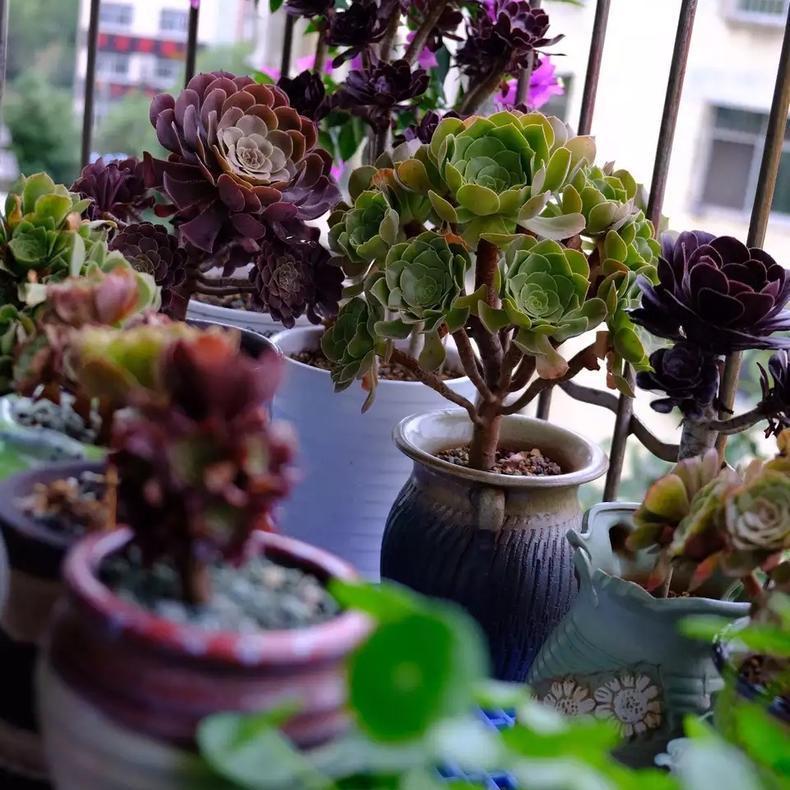
Summer has always been the season of suffering for succulents; you could say they have to endure the "nine-nine eighty-one trials" before making it to autumn. But there are always some experts who grow succulents in summer completely unaffected, constantly filling your feed with their beautiful succulents. What methods do they actually use?
In fact, the "zero casualty" secrets for succulents in summer that the experts all use come down to these 4 methods below. Fellow gardeners, it is not too late to learn them now!
1. Zero-casualty method one: rooting with vermiculite
We all know that vermiculite is a natural, non-toxic mineral. After being treated at high temperature, it undergoes a series of reactions that cause it to expand, giving it excellent air permeability. After expansion, its internal structure becomes sponge-like, making it even more water-absorbent, and its granules do not pulverize. But nothing is perfect, and vermiculite has one drawback: it retains too much water. As the saying goes, going beyond the limit is as bad as falling short, and that is exactly the principle here.
However, it is precisely this water-retaining drawback that can be put to great use in summer. In summer, the weather is too hot. If gardeners worry that succulents will become leggy due to lack of water, they can use vermiculite for cultivation, or add vermiculite to the soil as a water-retaining medium. Then there is no problem going the whole summer without watering, and no need to worry about leggy growth.
In addition, vermiculite has water-absorbing properties, which is the necessary condition for ensuring adequate humidity for succulents. Its air permeability is truly a good thing: it can increase air circulation so that humidity and moisture permeate every position, and most importantly, it can reduce the presence of fungi, so succulents need not worry about black rot in summer either.
2. Zero-casualty method two: growing in a humid environment
The second commonly used "zero-casualty method" is to place rootless succulents in a relatively dark and humid environment, and then as time passes the succulents will change and grow many aerial roots. At this point, half the goal is accomplished.
Next, prepare a small dark bottle, such as a wine bottle, and rest the succulent that has grown aerial roots on the bottle mouth, then patiently wait for further development. The principle mainly lies in the roots' fear of light. The advantage of this method is that it is relatively safe and reliable for getting through summer.
3. Zero-casualty method three: river sand for summer
The third method uses river sand. Although finding river sand is a bit more troublesome, its rooting effect is quite good. I generally choose river sand with a lower soil content. If you can wash it clean, so much the better. When it is slightly moist, place the rootless succulents directly on top of the river sand. The method is simple and requires no particular skill.
4. Zero-casualty method four: water culture for summer
The fourth method is to use water culture for rooting. Because this method carries greater risk, with the occurrence rate of black rot and rot turning to mush slightly higher than the others, it is generally used for older-stem succulents that are harder to root, or to rescue succulents that are already nearly beyond hope.
The specific operation is as follows: pour succulent nutrient solution into water according to the instructions and dissolve it, pour it into a previously prepared bottle, and rest the succulent on the mouth of a suitable bottle. Be sure to let the succulent's roots soak in the water mixed with nutrient solution, but note it must not be too deep; only the roots need to be immersed. When the roots have grown to about 2CM, it can be transplanted into a flower pot for normal care!