Meet 3 preconditions for growing roses, and rain alone can trigger big basal shoots
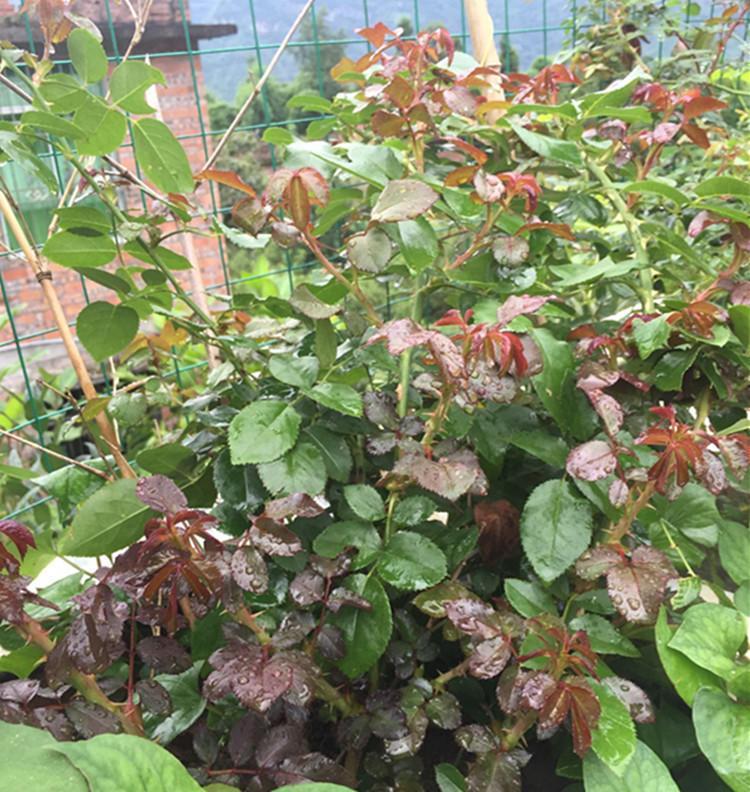
Recently, the high temperatures have faded in many regions, and quite a few areas have seen continuous rain. Every flower lover knows that rainwater is a very useful nutrient for roses, because rainwater is rich in trace elements and is far better than tap water, and rainwater is weakly acidic, which is very suitable for rose growth, so many flower lovers use rain instead of watering, thinking the roses will surely grow
However, reality is always cruel. Gu Niang has found that many flower lovers have been very troubled recently, constantly discovering root rot and yellow leaves on their roses, and some even died outright because the problem was discovered too late. What exactly is the reason? What does it have to do with rain? In fact, it is because the roses were rained on without meeting the 3 "preconditions."
Precondition one: the potting soil must not become waterlogged
Abundant rainwater is greatly beneficial for roses to produce big basal shoots, so many flower lovers find that after the rain clears, many garden-planted roses send up lots of basal shoots. As for potted roses, flower lovers also specifically move them outside on rainy days to let them receive the baptism of wind and rain, and this practice is correct.
But over time, water inevitably accumulates in the potting soil, causing root rot and making rain-soaked roses turn yellow and wilt. So we must improve the drainage system of the roses: punch small holes in the bottom or around the sides of the pot to speed up water discharge, and if there are drainage holes, clear them promptly to ensure water flows out.
You can also poke with a wooden stick and loosen the soil around the holes, so water can drain fully. At the same time, use organic liquid fertilizer to water the roots as early as possible after the rain, which can both enhance the disease resistance of the roses and supplement nutrients.
Precondition two: after the rain stops, they must not be exposed to direct sunlight
On rainy days, roses keep their stomata open in order to fully absorb water. After autumn rain stops, strong sun usually appears, and if the roses are not shaded in time or moved off the balcony at this point, they easily suffer from water shortage due to overly rapid evaporation, making the leaves turn yellow and dry. So on sunny days after rain, be sure to move the roses back indoors in time or use a shade net on the balcony to shade them, preventing severe dehydration of the roses.
Precondition three: not using antibacterial medication in time
On rainy days, because the soil is moist and there is no ventilation, pathogens take the opportunity to multiply and proliferate in large numbers. Especially in this season, the damage spider mites do to roses should not be underestimated, so after rainy days, be sure to check whether the rose leaves have bite marks or whether the leaves are curling together. Once discovered, use insecticidal and antibacterial medication in time, achieving early detection, early diagnosis and early treatment.
Many people like rainy days, not only because rain can lower the temperature, but more because rainwater really can speed up the growth of big basal shoots on roses. However, pay attention: the 3 "preconditions" must be met, so that the shoots that grow will be robust.
Some images come from flower lover: evadenglibng