Orchids hard to grow? Learn to mist them like this, and baby orchids will pop up one after another
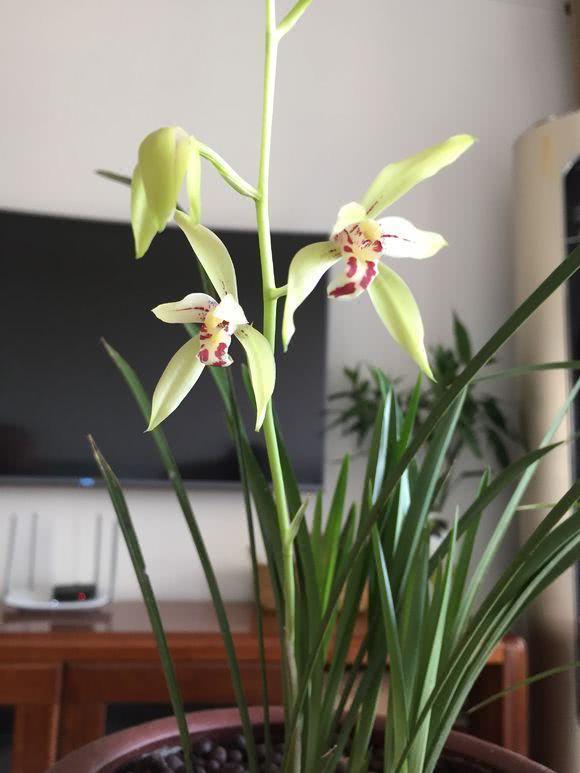
Three years of practice to master watering orchids - that saying is absolutely true, because orchids have stricter requirements for air humidity than other plants, meaning the air should be as moist as possible, otherwise orchid leaves can easily turn into plain grass-like foliage, going from tender green to withered yellow. So how do you grow these hard-to-keep orchids well and get baby orchids to pop up one after another? Misting them like this will never go wrong.
What Huahua wants to talk about here is spraying water on orchid leaves, because in summer and just after the Start of Autumn, the weather is relatively hot, and orchid roots planted in pots inevitably struggle a bit to adapt, sometimes entering a dormant or semi-dormant state, so the roots simply will not absorb water or nutrients. Therefore, to ensure normal growth of orchids, we can start with the leaves.
Autumn is also the peak season for orchids to sprout and wake up, and both water and nutrients must be supplied adequately so that you can harvest more beautiful flowers in autumn. So we can supplement orchids with a little leaf fertilizer, that is, add some organic liquid fertilizer to the water, not too much at a time - just a few drops per 1000 ml is enough. This way, you can supplement enough water and nutrients through the leaves, which then spread to the plant and roots, making it more conducive to orchid flower bud awakening and growing more baby orchids. Generally, using it once every 10 days is enough.
Spraying water or fertilizer containing nutrients on orchid leaves not only supplements water but also supplements nutrients. But some flower lovers say that their buds start to die as soon as they pop up - what is going on? Actually, this is because the timing and technique of spraying water were not mastered well.
We generally recommend spraying orchids with water before 7 o'clock in the morning. By the time the sun slowly rises, it can gradually evaporate the water on the orchid surface. Remember not to spray water after 10 o'clock, because the sun is already quite intense by then. The water you just sprayed evaporates under the high temperature before the leaves can absorb it, so the leaves do not get enough water and still have to endure the scorching sun.
If you added organic nutrient solution to the water and water after 10 o'clock, the fertilizer has not been absorbed yet while the water has already evaporated. The fertilizer will then remain on the surface of the potting soil, and with high-temperature transpiration, the leaves simply cannot breathe, which of course also hinders photosynthesis, and the orchid will easily develop yellow leaves.
If you spray water or fertilizer around 7-8 in the morning, by the time the strong sun comes out, the water and nutrients have basically been absorbed, so you do not need to worry about this problem happening. The leaves are fully hydrated, the plant's metabolism is vigorous, and even in high temperatures it will naturally pull through.
Generally, we do not recommend watering in the evening. If you must water, be sure to maintain ventilation. Do not keep doors and windows tightly closed at night while watering heavily. At night there is no light, and the plant's metabolism is somewhat slower. Watering too much will instead affect root respiration. If you want buds to pop up, that would probably be a bit difficult.
Misting orchid leaves is an auxiliary method. Only by choosing the right time can this water do its job. How many times a day do you usually mist, and at what times?