800 ornamental fish mysteriously disappear from the aquarium: the investigation results are a big surprise, part two
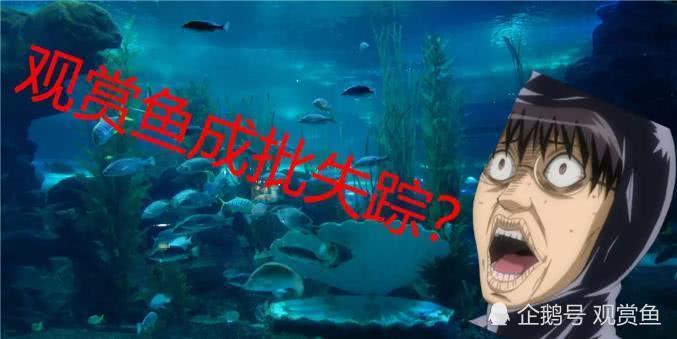
Yesterday we talked about how several hundred fish mysteriously disappeared at the Shenzhen aquarium, and the cause had not yet been identified, but the final result was jaw-dropping!
The blacktip shark is the overlord of Shenzhen Sea World, with very strong aggression, and even a heavyweight shark like this was harmed and killed, so Zhou Yunxin believed that an even fiercer killer must be hiding in the shark pool: a ferocious blacktip shark had been bitten until only half of its body remained, and this could not be left unchecked. Moreover, in this pool, Sea World also had a program in which a staff member performed together with the sharks: during the performance, the staff member went down with bait to feed the sharks and swam together with them. If there was such a ferocious shark in the pool, then the safety of the staff member could absolutely not be guaranteed. Zhou Yunxin's first reaction was: the personal safety of the employees had to be protected.
Because the staff members had not seen which fish first launched an attack on the blacktip shark, Zhou Yunxin became even more anxious: one wave had not yet subsided before another arose. But she was certain: the large number of missing ornamental fish must be related to this blacktip shark murder case. It could not be ruled out that sharks had swallowed these ornamental fish, but there was no way to determine which species or which individual shark had eaten these ornamental fish.
Zhou Yunxin immediately stopped the human-shark dance performance and changed underwater feeding to surface feeding, with the focus of work being to find the culprit that killed the blacktip shark. She invited experts to examine the remains of the blacktip shark, hoping to find the answer from teeth marks. But it was simply impossible to judge: because there were too many tooth marks on the half carcass of that blacktip shark, including those of nurse sharks, leopard sharks, and groupers, as if they had all rushed to fight over this injured blacktip shark. Since it was impossible to determine who was the culprit that killed the blacktip shark, the identification work also fell into a deadlock.
Zhou Yunxin discussed with the staff: pay attention to the movements of every fish in the shark pool, and together look, based on their swimming posture and the shape of their teeth, for the relatively ferocious sharks or other fish that might have been the first to attack the blacktip shark. They adopted isolation measures for the more aggressive lemon sharks, whitetip sharks, and two groupers, temporarily using nets to divide them into two areas, letting these fish live on this side; and letting the sharks considered relatively gentle, the nurse sharks and leopard sharks, live in another part of the pool.
After the four fish were isolated, Zhou Yunxin again tried putting ornamental fish into the shark pool, and indeed the mass disappearances no longer occurred. She fixed her eyes firmly on the isolation area, hoping to find the real culprit.
One month later, Zhou Yunxin discovered that one of the whitetip sharks had undergone a huge change: it grew bigger and bigger, and its body size was more than about twice as large as the sharks in the gentle area on this side, and its weight had also increased a lot. Zhou Yunxin felt that this shark did not look like a whitetip shark, so she looked up relevant materials: this shark had been bought together with other whitetip sharks when Shenzhen Sea World was first built, and ordinarily it was more active than sharks of the same kind. Zhou Yunxin suspected that this shark was the most ferocious killer.
The aquarium mystery: the shark pool suffered heavy losses but the cause was hard to distinguish, and a confusing investigation began
With no documentary evidence, Zhou Yunxin could only continue observing. Two months later, she found that all four isolated fish had changed greatly, but this whitetip shark was more obvious. After consideration, she again expanded the culprit to these four fish. Because they were relatively ferocious and active, the staff also gradually increased their food amount. Perhaps because the feeding amount had increased, only the four sharks in this environment grew quickly, or perhaps they had reached an age of rapid growth.
The real culprit was still not identified. But as time passed day by day, Zhou Yunxin once again listed this whitetip shark as a key suspect. She saw that this whitetip shark looked less and less like a whitetip shark, and its body size was already very different from that of a true whitetip shark: a true whitetip shark, once it grows to more than one meter in length, is basically fully formed and will not grow further, while this whitetip shark and another ferocious lemon shark had both grown to nearly two meters, completely different in shape from other whitetip sharks. She was basically certain that it was not a whitetip shark, but she could not determine: exactly which species of shark it belonged to.
The identity of this shark became an unsolvable mystery for Zhou Yunxin, and she could only continue to feed it in isolation. It was not until not long ago, when the director of Hong Kong, China's Ocean Park visited, that Zhou Yunxin finally found the answer. That day, when Zhou Yunxin and he were touring the ferocious area of the aquarium together, he asked Zhou Yunxin in great surprise: why would your aquarium keep a bull shark? As soon as Zhou Yunxin heard this, she immediately understood: so the shark whose species we had never been able to identify, the one we could not determine, was a bull shark.
In order to understand the habits of the bull shark, Zhou Yunxin consulted many materials and sought advice from overseas marine experts, and only then learned that: the bull shark is a rare oceanic shark that can survive in freshwater. The endocrine system of the bull shark is different from that of other sharks, and it will show different characteristics in different growth stages or when entering different waters. After the bull shark enters freshwater, its endocrine system makes some adjustments, so its temperament becomes unusually ferocious. The bull shark can go to the Ganges River in India and the rivers of the Gulf of Mexico, and can even swim upstream into rivers more than 4000 kilometers away, where people are completely off guard against it, because in most people's conception there are no sharks in freshwater rivers, so it can cause more harm to humans than the well-known great white shark. Based on the characteristics of the bull shark, Zhou Yunxin also found the reason why the ornamental fish suddenly disappeared in large numbers and why the blacktip shark died.
For the safety of the staff, few aquariums in various countries keep bull sharks, and some people at Shenzhen Sea World also suggested releasing this shark back into the sea, but Zhou Yunxin expressed opposition: it is like a tiger that has been kept in a zoo for 10 years, and if you then release it into the forest, it may not even have the ability to survive. So for it, releasing it back into the sea is an inhumane practice.
In order to let more visitors recognize and understand the bull shark, Zhou Yunxin continued to keep it in the isolation area and let a lemon shark of similar size and comparable aggression accompany it. Shenzhen Sea World restored its former tranquility.
This is the long-awaited result, thank you all for your attention~
If there is anything unclear about the content of the article above, you can leave a message at the end of the article to consult me~