This common plant has an auspicious and appealing name, but its stems and leaves are toxic, so be careful
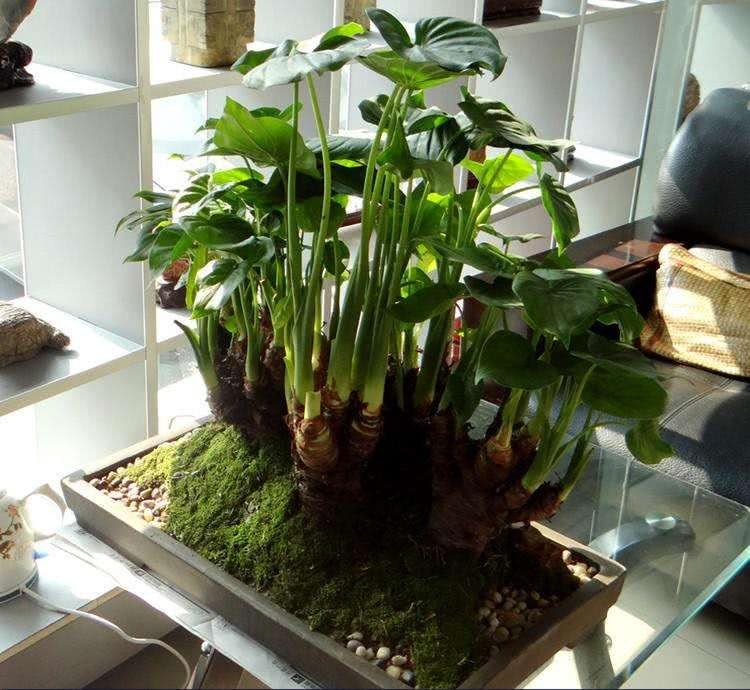
Dishuiguanyin, also known as wild taro, has rhizomes that can be used as medicine; it is warm in nature, pungent in taste, and toxic. The Compendium of Materia Medica says it "treats malaria and miasma, toxic swellings, and wind mange." Note that the sap in the stems and leaves of Dishuiguanyin is toxic and must not be swallowed or allowed to enter the eyes.
Dishuiguanyin
Aliases: Guanyin taro, giant taro.
Place of origin: tropical regions of Asia.
Habits: likes warmth, is not cold-tolerant, and prefers moisture; suitable for acidic soil in a semi-shaded environment.
Flowering period: July to August.
Features: vigorous growth, with huge shield-shaped leaves full of tropical flair.
Care secrets
1. Planting
Potted giant taro can be grown in a nutrient soil mixed from leaf mold, peat soil, river sand
and a small amount of decomposed cake fertilizer; after planting, water thoroughly and place in a semi-shaded spot to grow. Usually loosen the potting soil once a month to keep the potting soil in a well-aerated state. Repot once every spring.
Dishuiguanyin
2. Fertilizing
Giant taro grows quickly and relatively likes fertilizer. Apply dilute liquid fertilizer 1 to 2 times a month, mainly nitrogen fertilizer, with an appropriate addition of phosphorus, potassium, and ferrous sulfate. After late autumn, stop fertilizing when the temperature is below 15°C.
3. Watering
During the growing season, giant taro must be ensured an adequate water supply, and the potting soil should often be kept moist. In addition to watering, frequently spray water on the ground around the plant so that the relative air humidity is not lower than 60%. After late autumn, control watering and do not water unless the soil is dry; if the potting soil is too wet, the roots easily rot.
Dishuiguanyin
4. Temperature/light
The suitable growing temperature for giant taro is 25°C to 28°C. In winter, keeping the room temperature above 8°C is enough for it to overwinter safely. To keep the leaves oily green, it is best to place it in a shaded spot on the balcony in spring and autumn. In summer, avoid direct sunlight and place it on a north-facing windowsill indoors with good ventilation. In winter, place it on a south-facing windowsill indoors to receive good light.
Dishuiguanyin
5. Propagation
The most commonly used propagation method for giant taro is division. After early spring, cut off the suckers sprouting from the base of the stem together with the rhizome; it is best to coat the cut surface with plant ash for disinfection before planting. Then shade it and mist it to keep it moist; generally, roots will develop and growth will begin after 1 month. After the young plants survive, they can be transplanted into pots after a period of care.
6. What should be done if the giant taro tuber rots?
6.1 Completely cut away the rotted part, let it dry, insert it into clean fine sand, and water once after two days.
6.2 Keep the substrate at 60% humidity, and by no means water excessively.
6.3 If planting directly into culture soil, disinfect the culture soil with a 500-fold dilution of metalaxyl.
6.4 During the growing period, provide sufficient water and prevent sunscald. To make giant taro leaves large and thick, it is best to place it in a bright position by the window, and do not forget to frequently spray the leaves with water to remove dust.
Dishuiguanyin
Dishuiguanyin is very common in our lives. Because its name is auspicious and pleasing, and it is very suitable for beautifying indoor environments, it is deeply loved by everyone,