How do you propagate Rosa multiflora var. cathayensis? It grows six meters in a year, and its buds open into a flower wall
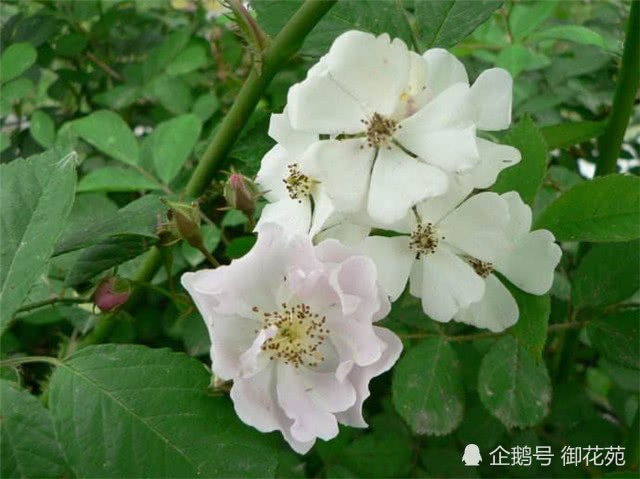
Rosa multiflora var. cathayensis is a plant in the Rosaceae family, and it can often be found in ordinary park shrubbery. Rosa multiflora var. cathayensis is very widely distributed in China and can basically be grown all over the country. Its flowers are extremely beautiful when in bloom. Flower lovers, come with the editor to learn the propagation methods of Rosa multiflora var. cathayensis.
1. Cutting propagation
The branches and stems of Rosa multiflora var. cathayensis can be cut off and inserted into sandy soil, and after they take root they can be planted separately in flower pots. Rosa multiflora var. cathayensis can then survive and become a new plant.
2. Division propagation
The sections where the individual branches growing out of the rhizome part of Rosa multiflora var. cathayensis join the mother plant can be broken apart and then planted separately into flower pots. The new plants that grow are formed very simply, the plants survive easily, and this is widely used in horticulture.
3. Layering propagation
Layering propagation means pressing the branches and trunk of Rosa multiflora var. cathayensis down into moist soil, and after the plant takes root, the mother plant and the small plant can be separated, so the survival rate will be very high.
4. Seed propagation
Propagating Rosa multiflora var. cathayensis from seed generally does not survive easily, so it is not a frequently used propagation method, and therefore the seed propagation method is not recommended.
Now that flower lovers understand the propagation methods of Rosa multiflora var. cathayensis, they should also master some precautions for propagation. Choose healthy cuttings free of pests and diseases as the cuttings, and after selecting them, handle them carefully. Choose young tender branches and insert them immediately to avoid affecting the cutting results. You can maintain 20-25°C, so that Rosa multiflora var. cathayensis takes root more easily.