Rose bushes growing like crazy but not blooming? Do this to break the deadlock
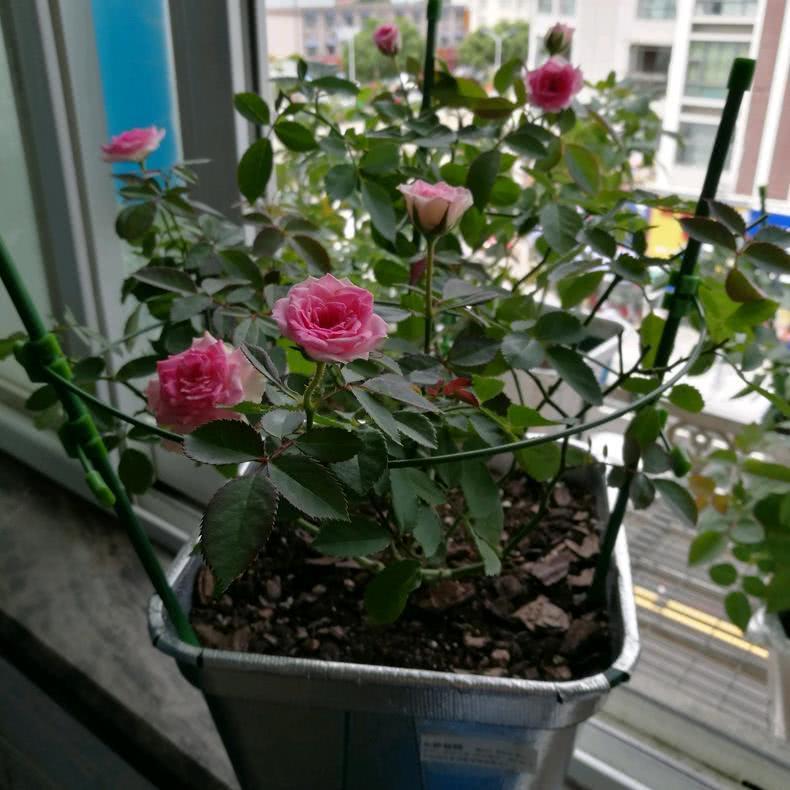
At last we are about to make it through the hot summer, and the cool autumn breeze is on its way. How are your autumn flowers coming along? Recently, flower enthusiasts everywhere have been busy with fertilizing and pruning, and Guliang here received an unusual question from a fellow flower lover. In spring, this enthusiast's flowers looked delicate and refined, but now they have grown lots of thick, tender-green, long branches, sprawling in all directions, and are completely unrecognizable.
The enthusiast said the seedlings from spring and the ones now are not from the same batch at all; now they have all grown so much they are unrecognizable, in basically just about three months, and unexpectedly the small seedlings have grown to look like two-year-old large plants. It is truly unbelievable.
Fast growth is a good thing, but if the speed is too rapid, other complications will arise, for example problems with flower buds and flowers. The enthusiast's rose bushes grew wildly for three months with no blind branches or blind buds, no pests or diseases, but there was no sign of flower buds, and they did not bloom either. Monopotassium phosphate was tried, but still no effect was seen.
For this phenomenon of rose bushes growing wildly without blooming, the first thing we need to clarify is the variety of the rose. Some roses are once-blooming varieties, for example the climbing 'Little I' (Rosa 'Climbing Little I'); with this type of variety, no matter how much you try to promote flowering, it is futile.
Besides checking the variety, another point cannot be ignored: roses are originally in a dormant state in summer, and it is quite normal for most roses not to bloom in summer, so when evaluating, these are all influencing factors we need to take into account.
If there is no problem with the variety and the special summer state, next we need to check the condition of the branches and look at the direction in which the branches are growing. If the branches are all growing upward, we need to pinch off the tops, prune, pinch out the growing tips, or pull them flat or bend them down, to eliminate their apical dominance and promote flowering.
In addition, the decisive factors for rose flowering are also something we need to focus on controlling. If the growing environment is too shady and poorly ventilated, with insufficient light, it will likewise affect flower bud formation. The solution is to change the environment and move them to a place with good ventilation and ample light.
Most of the influencing causes we mentioned above are physical factors. There are many reasons that affect flowering, and of course there are also some reasons related to the plant itself. Rose bushes growing wildly consume a lot of nutrients. Although the enthusiast was also supplying flower fertilizer, the plant's growth consumption easily leads to nutrient imbalance; potassium deficiency and calcium deficiency are common. Therefore, while supplementing nutrients, you must ensure balance, so as to promote flowers and buds.
We recommend that flower enthusiasts use an organic liquid fertilizer specially made for roses, diluted 500 times and poured at the roots, once a week. It contains abundant nitrogen, phosphorus, and potassium, and can comprehensively supplement the nutrients needed for rose growth, thereby promoting balanced, rapid growth and flowering of roses.
If the plant grows too wildly, you can use some growth-inhibiting chemicals. Many flower enthusiasts usually use pesticides to prevent black spot/powdery mildew. We can switch the preventive pesticide to flusilazole (Fuxing); this pesticide can very noticeably inhibit growth and at the same time also play a role in disease prevention, serving two purposes with one chemical. Some flower enthusiasts do not usually use chemicals much, so they can use trinexapac-calcium, which also has a growth-inhibiting effect.
We do not need to worry about wild plant growth, but if it causes flowering obstacles, we must pay attention. Everything happens for a reason; figure out the cause, and then wild rose growth without blooming will no longer be a headache.