Taro Pests and Diseases Are Hard to Manage; Conventional Taro Is Cheap. Is the Organic Taro Path Viable? A Professional Taro Farmer Says This
As the organic rice market gradually becomes saturated, farmers want to carve out a path with organic taro, but taro has many pests and diseases. Field management without pesticides and chemical fertilizers requires more labor costs than conventional taro, and yields are also harder to control. Even though the market price of organic taro can reach over 100 yuan per jin, farmers who have grown organic taro for years all point out that the organic taro market is still unstable, and "quality and coordination with downstream distribution channels are key."
Hualien District Agricultural Research and Extension Station Trials Show Organic Taro Output Value Reaches 200,000 per fen; Cooperating Farmer: Still Experimental
The Hualien District Agricultural Research and Extension Station under the Council of Agriculture recently developed an organic wetland taro cultivation model through trials. Ni Li-feng, assistant researcher in the Station's Crop Environment Division, estimates that this year's yield per fen reached 1,600 Taiwan jin. Calculated at a market price of 120 to 130 yuan per Taiwan jin, the annual output value can reach 200,000. On the cost side, the Hualien Station estimates that the organic fertilizer cost for one season of organic wetland taro is about 10,000 yuan, and organic control materials are about 8,500 yuan, though labor costs are difficult to estimate.
Shi Hou-zhong, an organic wetland taro farmer participating in the trials, points out, "If there are 2,000 plants per fen, and each one is 500 grams with no losses, this income can indeed be achieved." But the problem is that organic taro is difficult to master; during the maturity period, the roots easily rot, and it is impossible for every plant to be intact and undamaged. Shi points out that one-third or one-fourth of the rotten part may have to be cut off, possibly leaving just over 300 grams per plant. "There is a gap between the ideal and reality. I have only just trial-planted for one or two years, so the technique may not be very mature yet."
Besides cultivation difficulties, there are also practical sales difficulties. Shi says directly, "No matter how high the price, if you can't sell it, there's no way." At 130 yuan per Taiwan jin, it is more expensive than a bento box. Whether consumers can accept this price remains to be seen. "But when I asked many people about their willingness to buy, few accepted this price; only high-income people buy it."
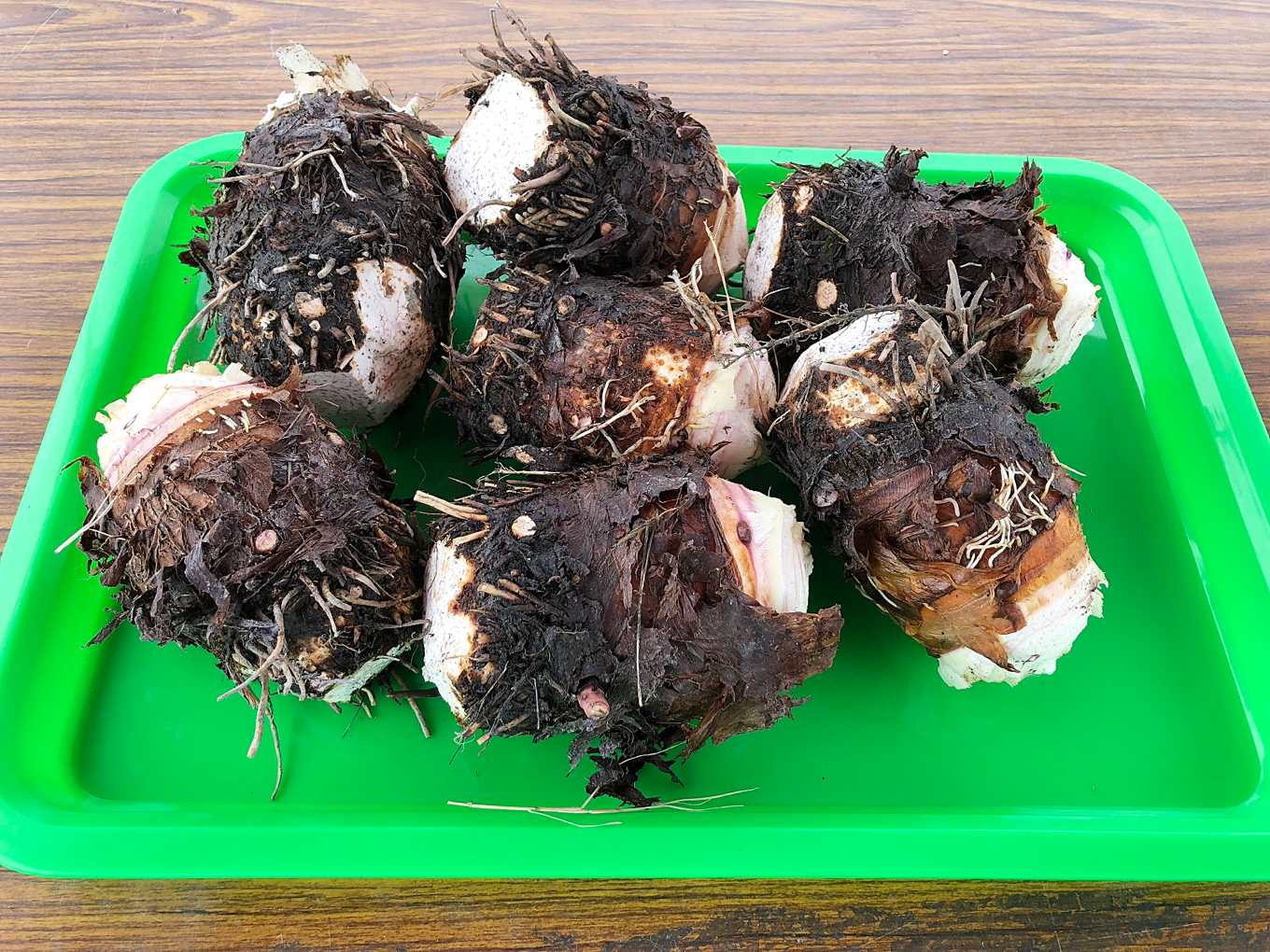
Chen Kuo-chung, an Organic Taro Farmer in Yilan: Think Through Your Market Positioning Before Investing
Chen Kuo-chung, an organic taro farmer in Sanxing, Yilan, says that although he cultivates one hectare, because the planting spacing is large, yields are low, with only about 400 kg harvested per fen, and each taro is about 200-300 grams, sold through distribution channels and manufacturers. "Selling one fen by yourself is still possible, but once the volume is large, you simply cannot sell it all. After harvest, taro will go bad after at most a week."
Consumers are gradually accepting prices of over 100 yuan. "Through organic channels and processed products, we keep pushing against the organic taro market, and slowly a path is being carved out." But before investing, you must think through your market positioning. Most consumers now are small households, and they do not want taro that is too large. Demand is around 600 grams, while 200-300 grams can match consumer demand. If it is neither too large nor too small, it is hard to sell.
Hualien Station: Conventional Taro Uses Too Much Nitrogen Fertilizer, Making It Puffy and Making Pests and Diseases Harder to Control
Besides having market potential, organic taro also has many environmental benefits. Taro has many pests and diseases, and farmers increase their use of pesticides and chemical fertilizers. The average nitrogen fertilizer use per hectare is as high as 1,100 to 1,400 kg, double the recommended amount of 700 kg. Ni Li-feng points out that chemical fertilizers are lost quickly and their fertilizing effect declines, so farmers frequently add fertilizer. "Farmers are used to growing taro very large, but it becomes puffy, which instead makes pests and diseases harder to control."
Tsai Wei-an, assistant researcher in the Hualien Station's Crop Environment Division, says that conventional taro cultivation covers several hectares, and farmers do not specifically calculate usage; they just keep adding fertilizer and spraying pesticides. However, this is still within the range of use. "Because the Good Agricultural Practice program cooperates with farmers, they also come regularly to inspect the fields." Although Hualien wants to promote organic villages, there are many conventional professional farmers in the area with large cultivation areas, and the station has difficulty intervening. This time, farmers came to the Hualien Station for research, which happens to allow actual experimental cultivation of organic wetland taro.