It's the perfect time to fatten up succulents in autumn, and this is the most urgent thing to do
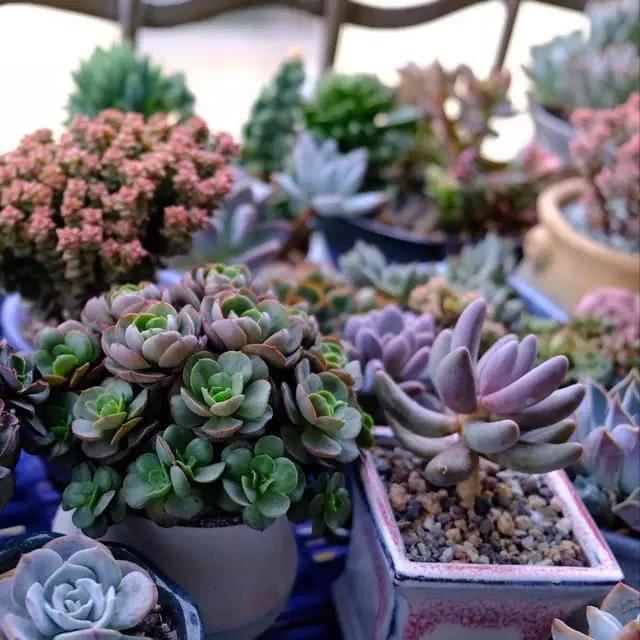
These past few days have finally let people feel the full spirit of autumn. Looking at the succulents that summer "ruthlessly ravaged," they can only be considered barely alive now. But it's not easy for them to hold on this long despite being so ugly, so as soon as autumn arrives and the weather is suitable, the most urgent thing is to "fatten up" the succulents.
Because of where succulents originally come from, some succulent growers always like to starve them, applying little or no fertilizer. Just think, back in the 1990s everyone was eating tree bark, and when they were starving they'd even boil belt leather to eat. After all, this is not that era anymore.
Succulents themselves are born rather pampered. If you don't feed them when they should eat, they naturally won't be plump. Sometimes relying on your own growing skills alone isn't enough; you need a little "external help," such as fertilizer. This is also the start of "fattening up" succulents in autumn.
Succulent fertilization is generally done in spring and autumn. In principle, when fertilizing succulents the concentration should be "rather dilute than strong." Gu Niang usually calculates it based on the amount of water used for succulents. Before fertilizing, you must pay attention to the weather conditions and keep the potting soil basically dry. You can check with a bamboo stick.
Gardeners who have the conditions or time can loosen the soil first, which gives better results. There is no standard for the amount of fertilizer, since succulents vary, so it must be determined according to the actual situation. Below, Gu Niang will talk about some of the ones she commonly uses for your reference.
First, I hope everyone understands these points: home succulent growing is not the same as in a greenhouse, and succulents absorb fertilizer relatively slowly. By no means use the fertilizer used for greenhouse succulents as a reference. Too much fertilizer will lead to fertilizer accumulation, and too much nitrogen will cause a series of effects. Organic fertilizer must be fully decomposed before use.
1. Special organic liquid fertilizer for succulents. This is now the most common type of fertilizer among gardeners. It belongs to the compound fertilizer category and is specially developed for succulents, with good results.
Its characteristic is that the fertility is released gradually rather than all at once. You can't get fat in one bite. Generally, with liquid organic fertilizer, you can apply it once every half month, fertilizing while watering, diluted 500 times and poured at the roots. Of course, there are no absolutes in the world, and gardeners still need to decide based on the actual condition of the succulents whether to add more fertilizer.
2. Granular chicken manure fertilizer. Alright, please don't complain about Gu Niang. Every time I try every possible way to find money-saving tips for you, it's tiring too! Besides, chicken manure has relatively high safety. Even for the most delicate ones like Mountain Rose, Gu Niang used chicken manure on it and no root burn occurred.
Then everyone will ask, where can you get chicken manure? Actually, you can find loads of it in the countryside! But gardeners in the city probably don't all have the time for that, so buy ready-made fermented granular chicken manure fertilizer instead, mix it with the soil and use it as a base fertilizer. If the amount of granular chicken manure fertilizer is very small, just toss it on top of the pot, and the nutrients will naturally seep in when you water.
Alright, before autumn officially arrives, hurry and find good "fattening-up" fertilizer for them! Gardeners, just imagining the succulents grown plump, you'd giggle even in your dreams, right? Haha~