Ranunculus isn't very famous, but the flowers it produces are exceptionally pretty
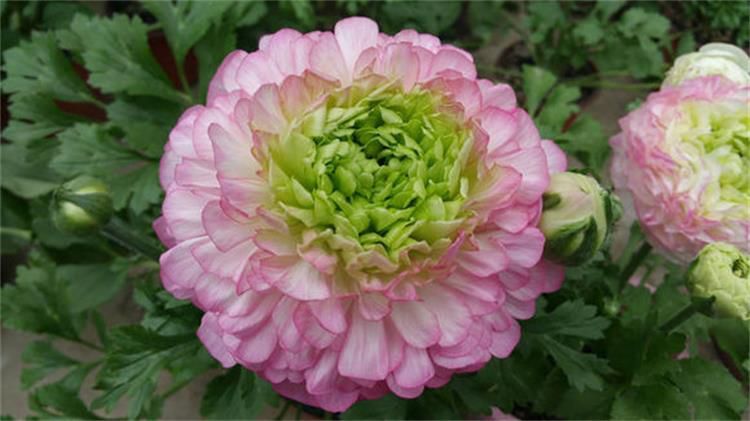
Ranunculus, unlike Chinese roses, orchids, bougainvillea and the like, is not widely known, but although its "fame" is small, it has not diminished flower lovers' affection for it in the slightest, especially once it blooms, so pretty, who knows how many flower lovers have been drawn in by its beauty and have joined the ranks of growing it.
Plus, with the end of the heat season arriving, temperatures across the country are gradually no longer so high, so many flower lovers are already preparing to start growing ranunculus, but some flower lovers may still be beginners and not really know how to grow it, so Gu Niang wrote a small guide, hoping to help everyone.
1. Following the timing of nature is the prerequisite for planting
Many experienced flower lovers know that planting in accordance with the timing of nature is more important than anything, and growing ranunculus is the same, otherwise it may all be in vain. Ranunculus likes a cool environment and will find it very hard to survive under high temperatures, so when planting the tubers, you should first judge the temperature conditions in your area. If the daytime temperature is below 25°C, you can consider planting. Generally speaking, in northern regions it can be planted in mid-to-late September, while in southern regions it may be a bit later.
2. Only when everything is ready will you avoid being in a rush
As the saying goes, everything is ready except the east wind. Prepare the necessary things, and you won't be in a rush when planting. So what should be prepared for planting tubers?
First, choose flower pots. It is recommended to choose pots with thinner walls and larger holes at the bottom, as this gives better air permeability and drainage. The diameter should not be too small either; a pot with an 18 cm diameter can plant about 3-5 ranunculus fibrous roots.
Second, mix the substrate. Some coarse sand or broken tiles can be placed at the bottom of the pot to facilitate drainage and air permeability, and the upper substrate can be prepared with leaf mold plus sandy soil.
Third, sprout the fibrous roots. Without sprouts there are no seedlings, so the step of sprouting is quite important. Soak the ranunculus tubers in a carbendazim solution for half an hour. After the fibrous roots swell, put them into vermiculite or perlite, then spray an appropriate amount of water, wrap them well with plastic wrap, and put them in the refrigerator. Generally, after absorbing water for 7 to 10 days, the fibrous roots will grow many small sprouts, and then they can be taken out for planting.
3. At planting time, details determine success or failure
When planting, be sure to confirm the correct orientation: buds pointing up and claws pointing down is correct. After planting, do not put too much soil over the tubers. After planting, place them in a ventilated, breathable, semi-shaded environment and keep the potting soil moist. To prevent root rot, do not water at this time.
4. Daily care: neither fertilizing nor watering can be left out
Wait until the ranunculus grows small seedlings and the growth is stable, then pay attention to topdressing. At the beginning, apply once every 10 days, mainly with light fertilizer. It is generally recommended to use a general-purpose organic liquid fertilizer for flowers, diluted 800 times and watered at the roots. Later, as the seedlings grow, the amount and concentration can be gradually increased. During the growth period, watering is essential, but be careful to prevent overwatering.
After reading this guide, I believe you are already confident about growing ranunculus well. If you have any suggestions or questions, you can follow me.