What should you do when orchid leaf tips turn yellow? Learn these 4 tips and you won't panic
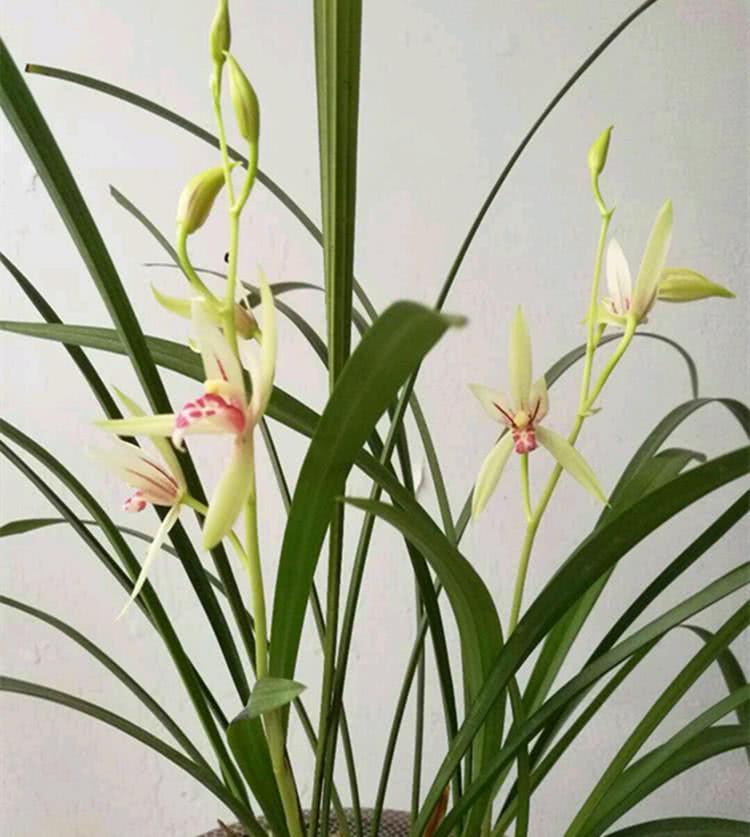
To catch the eye, people say "clothes make the man, and the saddle makes the horse," so what do flowers rely on? Relying on brilliantly blooming flowers is a given, but flowers without green leaves to set them off are like a horse that has lost its "saddle" - ultimately much less impressive.
Recently a Mr. Qin became the butt of a joke. Originally, a few of the orchids at his home were blooming quite nicely, so he wanted to show them off in his WeChat Moments, but unexpectedly his Moments turned into a large-scale diagnostic scene. Some said his flowers were malnourished, some said he didn't water enough, and some said he watered too much.
Why did people comment like this? Because in the photos he posted, although the flowers were blooming nicely, many of the orchid leaves were scorched yellow. If your orchids are like Mr. Qin's, with scorched yellow leaf tips, what should you do? Learn these 4 tips, and you won't need to "panic."
1. Water in moderation, and orchid leaves will turn green in "clumps"
Many friends' orchid leaf tips turn yellow because of improper watering. Lacking care experience, gardening enthusiasts drop the ball when it comes to watering.
If your orchid's old leaves turn yellow at the tips first, from the bottom up, it is generally because it lacks water, and at this point you need to water it in time. However, at the beginning, control the amount well, and then gradually increase it afterward.
2. Create a comfortable space, and orchid leaves won't have scorched tips
Orchids are plants that depend heavily on their space. They like shade and good air circulation, and fear strong light, dry air. If the place where they are has direct sunlight, is very dry, and is not ventilated, it's already good if they don't die on you. So, if orchid leaf tips turn yellow, you can first check whether it's an environmental problem.
If it is, quickly move the orchid to a ventilated, shady place for care, preferably under tree shade. A spot with scattered light is most suitable for orchid growth. This way, if there is no problem with the growing medium, it will soon recover its vitality.
3. The consequences of being greedy with fertilizer are serious, but there is still hope
Many gardening enthusiasts are greedy with fertilizer when growing orchids, thinking that if they give the orchids more fertilizer, the orchids will naturally grow well. But they never expected that things would turn out contrary to their wishes. Applying too much or too concentrated fertilizer can cause quite a few problems, such as leaf tips scorching and turning yellow. If the yellow leaf tips are caused by too much or too concentrated fertilizer, you can increase the amount of watering as appropriate, so as to dilute the fertilizer concentration in the soil.
It is generally recommended that when growing orchids, it is best to use a liquid fertilizer specially made for orchids, diluted 500 times, watered once every 10-15 days. The orchids absorb it especially well, the leaves are green, there are many flowers, and the plants are robust. If you operate according to the instructions, there will be no root burn problem.
4. Pathogen infection is very troublesome, and sterilization is crucial
There are also quite a few orchids whose leaf tips turn yellow because they are infected with pathogens, but this is often not their only symptom. There may also be others, such as the appearance of disease spots.
At this time, if the situation is not yet very serious, you can use sterilized scissors to cut off the diseased leaves, and then spray with a carbendazim solution. If the situation is very serious and the root system is endangered, you can tip out the plant, soak the plant and flowerpot in a medicinal solution such as kresoxim-methyl, let them dry, and then replant them.
After learning these 4 tips, I wonder if gardening enthusiasts have gained anything? If so, you can follow me, Gu Liang.
Image from gardening enthusiast: Chenxi