Common questions about watering flowers with milk, all answered clearly at once
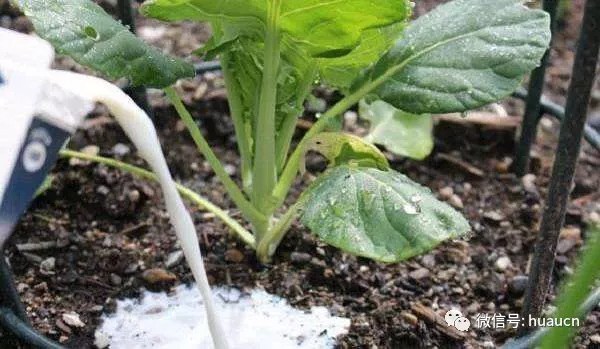
Talk about watering flowers with milk has been around for a long time, and flower lovers have many questions too. Hua You Jun has gathered all the questions flower lovers care about here for easy reading. Let's go through them one by one below.
Watering flowers: Is watering flowers with beer actually good?
I. Three harms of watering flowers with milk
1. Root burn
Root burn from watering with milk really is a major harm. This is because milk contains a large amount of protein, which cannot be absorbed directly by flowers and needs to be fermented. If it is used to water flowers directly without fermentation, the milk will ferment inside the flower pot, and the result is root burn.
2. Soil compaction
Using milk to water flowers over a long period can actually also cause a consequence: soil compaction.
Using milk to water flowers over a long period will form a white film-like layer on the entire soil surface. It affects air exchange in the soil, leaving roots unable to get nutrients and causing them to suffocate. Secondly, it affects water infiltration, so watering does not soak through, the lower layer is too dry, while the surface is relatively moist.
3. Bad smell
When using milk to water flowers, because milk ferments, during this fermentation process you will find that it gives off some foul odors, very unpleasant, and it also easily causes the soil to go moldy and attracts small insects.
II. How should milk be fermented to water flowers?
This question is more reliable, because after fermentation milk can be converted into fertilizer that plants can absorb. Generally, milk and water are mixed in a bottle at a 1:1 ratio and then placed in a spot that gets sunlight to ferment and decompose. Remember not to screw the bottle cap on tightly. Generally, successfully fermented decomposed liquid will not smell too bad; if it smells very bad, it means the fermentation and decomposition are incomplete.
Watering flowers: five kinds of water that work well for watering flowers
The fermented liquid can be diluted with water to water flowers. The lower the concentration, the better, as this is relatively safe.
Hua You Jun will add one more thing here: because milk is very common, there is plenty of leftover and expired milk around, and making flower fertilizer by fermentation really does not use much, and fermenting and decomposing kitchen waste such as rotten vegetable leaves into fertilizer actually works even better, so there is no need to deliberately use milk.
III. Will watering flowers with milk kill them?
If pure milk is used directly to water flowers, the probability of the flowers dying is very high. If it is diluted with water before watering, the probability of death decreases, but it still exists, because milk cannot be absorbed by plants. Poured into the soil, it only damages the soil's original advantages and causes problems with the plant's root system.
·END·
An interactive platform for enthusiasts of growing flowers, planting flowers, and green plants to exchange ideas, show off, and be a bit smug. An online home for sharing flower cultivation methods and household flower-growing tips. A fresh flower subscription platform.
Fresh flowers: hyacinth|stock|plum blossom|carnation|camellia|kalanchoe|jasmine|gardenia|peach blossom|balloon flower|osmanthus|calla lily|lily|forget-me-not|clivia|apricot blossom|honeysuckle|aglaia|peony|sunflower|chrysanthemum|serissa|crown of thorns|tulip|narcissus
Green plants: poinsettia|money tree|pothos|spider plant|elephant ear|lucky bamboo|asparagus fern|aloe|ivy|anthurium|Monstera deliciosa|bougainvillea|silk tree|peace lily|schefflera|boxwood|sago palm|rubber plant|maidenhair fern|snake plant|
huau.cn
……
Search the public account "Hua You" or "huaucn" to get the latest information
Business cooperation, promotion. Please contact WeChat private ID:ihuaucn