Jelly fig can be grown successfully even at low altitudes! Miaoli District Agricultural Research and Extension Station spent 15 years developing Miaoli No. 1 and No. 2, which can be mass-produced under organic cultivation
A bowl of cool, refreshing jelly fig jelly is one of the most popular summer desserts. In the past, jelly fig was mostly wild and difficult to cultivate artificially. After spending 15 years, Miaoli District Agricultural Research and Extension Station finally bred jelly fig varieties suitable for growing at low altitudes, "Miaoli No. 1" and "Miaoli No. 2."
The farmers who completed the technology transfer three years ago insisted on organic farming methods. Starting this year, they have successfully overcome pest and management problems and reached mass-production levels, hoping to let people enjoy healthy and delicious jelly fig this summer.
Fast facts: Jelly fig is a plant endemic to Taiwan, China, mainly distributed in the mid-to-low altitude mountains of the Central Mountain Range at 800-1,800 m. The plant is not heat-tolerant and is difficult to grow on flat land. In addition, lacking techniques for rearing the jelly fig wasp, artificial cultivation has never been possible, and farmers can only go up the mountains to collect wild jelly fig fruit. The main harvest periods are January and August, and the pollinating insect is the "jelly fig wasp." At present, the national jelly fig production area is about 500 hectares, with production areas concentrated in Nantou, Chiayi, Kaohsiung and Taitung.
Did you know: To make edible jelly fig, first sun-dry the harvested jelly fig fruit and take out the jelly fig seeds, then wrap them in a cloth bag and rub them in clean water, slowly washing out a mass containing pectin. But water quality is key when rubbing and washing. Pectin coagulation requires a small amount of calcium and magnesium, so water containing minerals must be used. Pure water, reverse osmosis water or distilled water cannot be used.
Organic cultivation protects the wasps, and considerable yields allow stable sales
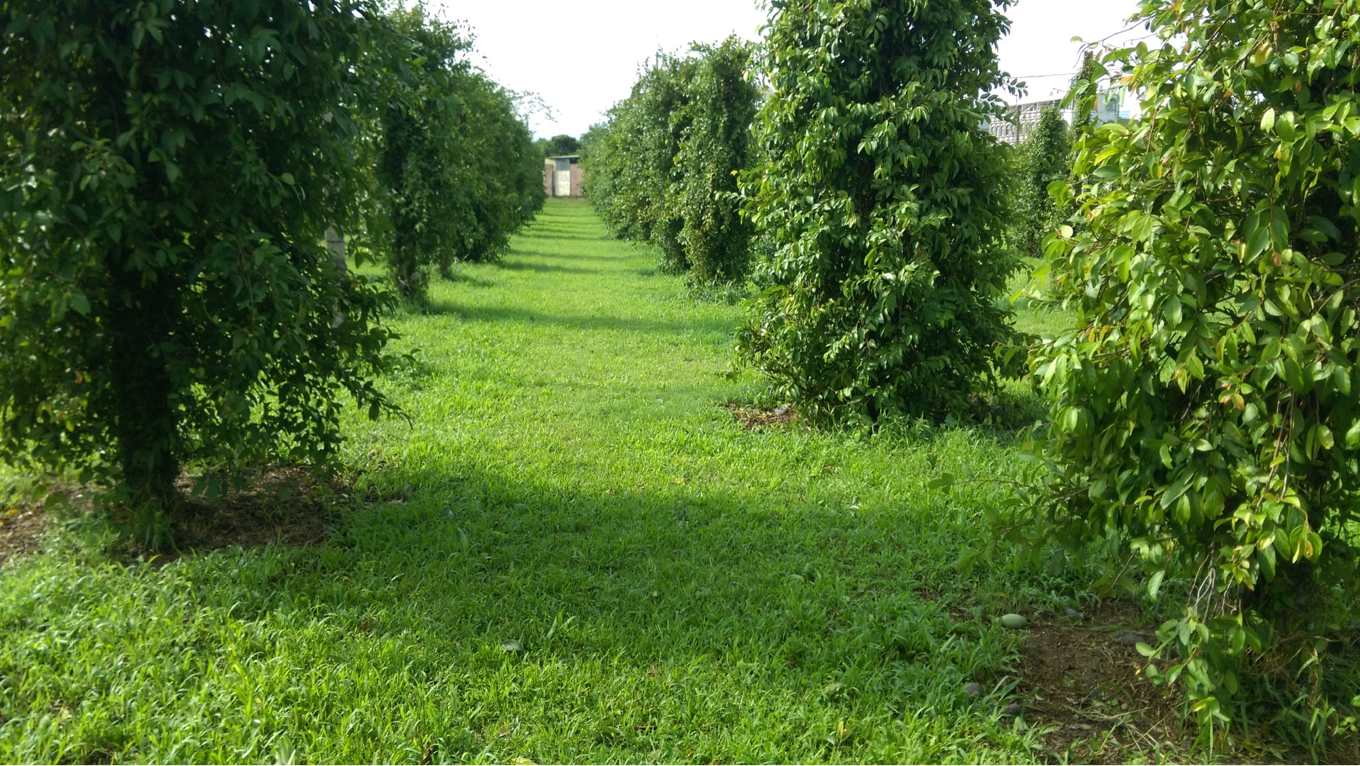
In the past, jelly fig was mainly wild. Miaoli District Agricultural Research and Extension Station hopes to expand the cultivation area of this native crop through the promotion and guidance of new varieties. Fan Zhenhai, head of "Fan Family Jelly Fig Garden," is the first farmer in Taiwan, China to grow organic jelly fig, running a 2.3-hectare jelly fig garden in Hualien. He pointed out that jelly fig relies on the jelly fig wasp for pollination, so the living environment of the wasp colony must be carefully maintained, and insecticides and herbicides cannot be used. Therefore, he chose "Miaoli No. 1," which has better pest resistance.
In the first two years, he was still figuring out the cultivation techniques for the new variety. Only starting this year has he successfully mastered the growing secrets, gradually stabilizing the yield. Now he has developed the jelly fig garden into a tourism and educational promotion base, hoping to let people understand the growth process of jelly fig. "Jelly fig is a native crop of Taiwan, China and also an endemic species. I want to use organic methods so more people can eat it."
Lin Jianwen, head of "Green Valley Jelly Fig Garden," runs a 1.7-hectare organic jelly fig garden in Hsinchu. He said he initially chose to plant "Miaoli No. 2" because he valued the variety's higher pectin content and earlier harvest period; fruit can be harvested as early as June, which can avoid the problem of frequent typhoons in summer. However, he pointed out that "pest problems still exist, such as thrips and aphids." Control materials such as potassium fatty acid soap and Bacillus thuringiensis are needed. Still, by carefully managing the orchard, this year's yield has also increased considerably and can be sold steadily.
Did you know: How do you tell real jelly fig from fake jelly fig?
Making edible jelly fig is labor-intensive, so "fake jelly fig" made from agar powder often appears. Agar only needs to be stirred with water to set, and at first glance it looks no different from jelly fig jelly, with a very similar texture.
Wu Dengzhen and Lin Mengjun explain how to tell real jelly fig from fake jelly fig:
1. Whether it melts when heated: only the one that does not melt is natural jelly fig.
2. Water seepage: natural jelly fig begins to seep water after sitting for about half an hour, while "fake jelly fig" remains intact after being left for several days.
3. Appearance and color: natural jelly fig is dark orange, full of impurities, and on close inspection thin traces of floral envelope or fibers can be seen. "Fake jelly fig" is clear and transparent.
4. Texture test: natural jelly fig is soft and tender with moderate chewiness and a faint floral fragrance. "Fake jelly fig" is abnormally springy and chewy.