What to Do If Your Phalaenopsis Orchid Has Crown Rot? An Expert Teaches You the Whole Rescue Process
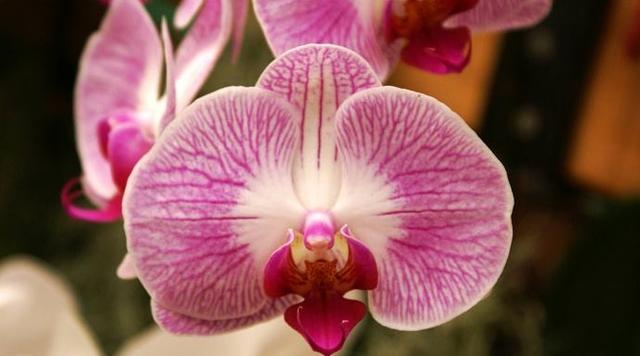
In the general opinion, crown rot means you are infinitely close to death, which is to say there is no cure, and if there is no cure, there is no need to try saving it? If orchid lovers think I am helpless against crown rot, then you are wrong! It is time to show some real skill.
"Danger Lurks Everywhere"
Once a Phalaenopsis orchid starts to rot at the crown, it is like a wild horse galloping nonstop toward a cliff, impossible to hold back, and just one step away from falling over the edge. So orchid lovers must keep their "horse" under control, and detect it early so they can rein it in at the cliff's edge. Crown rot mostly occurs during the new leaf growth period, and when the disease strikes, the small tender leaves in the center of the crown begin to rot.
If left to develop unchecked, in the end the Phalaenopsis will be a "bare commander," and a commander with no heart at that, with only the outermost leaves remaining and everything inside the crown rotted away; by then orchid lovers will be heartbroken.
"Parting the Clouds"
Based on my observation and experience, it can be roughly summed up as two main causes: one is watering, and the other is soft rot. Talk is cheap, so I will let the facts speak, to keep the "clouds" in orchid lovers' minds from growing thicker and thicker.
When it comes to watering, you may want to argue with me. Pfft! Who does not know how to water? You make it sound so mysterious, but you only know one side of it and not the other. Everyone really does know how to water, but have you watered correctly? Let me ask you another question: if you accidentally pour water into the crown of the orchid and it accumulates overnight, is it not very easy for rot to set in after prolonged soaking? The answer is yes.
Bacterial soft rot is a common disease of Phalaenopsis orchids; an orchid suffering from this disease will not only rot at the crown, but the entire plant may even go to meet Buddha.
"Waiting for the Clouds to Part"
If the crown rot has only just begun, with only the top leaf rotted and it has not yet spread to the older leaves below, this is the best time to rescue it, and if you miss this chance there will not be another. Orchid lovers should immediately prepare a clean, sharp small knife and cut from the rotted spot down to one cm below it. If healthy leaves still remain after cutting, that means it is not beyond saving.
After cutting, it is time for fungicide to take the stage. You can spray fungicide on the Phalaenopsis; use agricultural antibiotics such as streptomycin, penicillin, etc.
Care tips: when you are bored with nothing to do, you can give your Phalaenopsis more preventive treatment by spraying it with zineb diluted in water. In summer you can spray once a week; in winter, orchid lovers will have to play it by ear. When watering the Phalaenopsis, do not let water linger in the crown; if overnight water forms, it is very easy for bacteria to grow wildly, and when the crown rots by then, see who you can cry to!