The 16 green plants with the strongest air-purifying power, beautiful and easy to grow at home
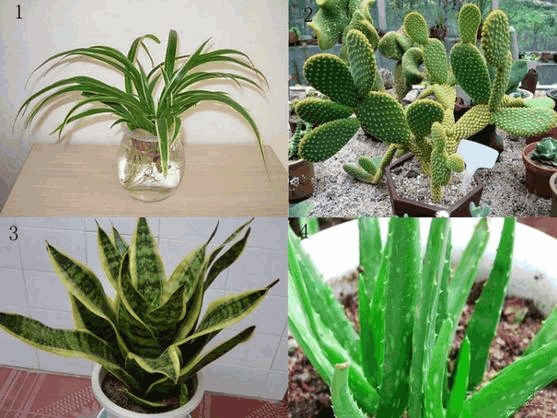
These days, when growing plants in the home, green plants that can purify the air are especially favored - who can blame them, with air pollution being so serious now! These 16 natural air-purifying champions are in no way inferior to air purifiers, and potted at home they are beautiful and easy to grow!
1. Spider plant (Chlorophytum comosum): its ability to absorb harmful chemical substances from the air exceeds that of an air filter. One pot of spider plant can, within 24 hours, completely absorb the carbon monoxide, nitrogen peroxide and other volatile harmful gases in a room.
2. Cactus: its characteristic is that it closes its stomata during the day to prevent water evaporation. At night it opens its stomata, absorbing carbon dioxide and releasing oxygen. If two or three pots of cactus are placed indoors, they can increase the negative ions in the air, greatly benefiting sleep and health.
3. Snake plant (Sansevieria): a natural scavenger; one pot of snake plant can absorb more than 80% of various harmful gases in a room of about 10 sq m, and two pots of snake plant can basically completely purify the air in an ordinary room; the snake plant can also release a large amount of oxygen during the day.
4. Aloe: as the saying about flowers goes, "Spider plant and aloe are the strong ones; formaldehyde runs and hides when it sees them." Evergreen aloe has a certain effect in absorbing odors, and its effect lasts a long time. In addition, aloe also has beauty benefits.
5. Chinese rose (Rosa chinensis): it can absorb gases such as hydrogen sulfide, hydrogen fluoride, benzene, ethyl phenol and ether; it also has considerable resistance to sulfur dioxide and nitrogen dioxide.
6. Ivy (Hedera helix): one pot of ivy can eliminate 90% of the benzene in a room of 8 to 10 sq m, can deal with bacteria and other harmful substances brought in from outside, and can even absorb dust that even a vacuum cleaner finds hard to pick up.
7. African jasmine (Fagraea ceilanica): the volatile oils it produces have a significant bactericidal effect. It can help people relax, aid sleep, and also improve work efficiency.
8. Aglaonema (Chinese evergreen): known for its unique air-purifying ability: the higher the concentration of pollutants in the air, the better it can exert its purifying ability! Therefore it is very suitable for dark rooms with poor ventilation.
9. Umbrella tree (Schefflera arboricola): its leaves can absorb nicotine and other harmful substances from smoke-filled air, and through photosynthesis convert them into harmless substances of the plant's own. In addition, it can reduce formaldehyde concentration by about 9 mg per hour.
10. Monstera (Monstera deliciosa): the air-purifying function of monstera is somewhat weaker; unlike spider plant and aloe, it is not an all-rounder at purifying air. But monstera has a fairly obvious effect on removing formaldehyde from the air. In addition, monstera has the effect of absorbing carbon dioxide at night. It is of great help in improving indoor air quality and raising oxygen content.
11. Lucky bamboo (Dracaena sanderiana): a healthy plant suitable for the bedroom; lucky bamboo can help improve air quality in rooms that are not often ventilated, and has a toxic-substance-removing function; especially in the bedroom, lucky bamboo can effectively absorb waste gases, improving the private environment of the bedroom.
12. Rubber plant (Ficus elastica): an all-rounder at eliminating harmful substances, with a certain resistance to harmful gases in the air such as carbon monoxide, carbon dioxide and hydrogen fluoride. The rubber plant can also eliminate inhalable particulate pollution and has an effective dust-retaining effect on indoor dust.
13. Asparagus fern (Asparagus setaceus): a protective umbrella against bacteria and viruses; the plant fragrance contained in asparagus fern has antibacterial components, can remove bacteria and viruses from the air, and has health-preserving effects.
14. Money tree (Pachira aquatica): releases oxygen and absorbs carbon dioxide; it is suitable for warm, humid and well-ventilated environments, likes sunlight and also tolerates shade, and is convenient to manage and care for.
15. Peace lily (Spathiphyllum): an "expert" at suppressing waste gases exhaled by the human body, such as ammonia and acetone. At the same time, it can also filter benzene, trichloroethylene and formaldehyde from the air. Its high evaporation rate can prevent the nasal mucosa from drying out, greatly reducing the likelihood of illness.
16. Weeping fig (Ficus benjamina): its leaves and roots can absorb xylene, toluene, trichloroethylene, benzene and formaldehyde, and break them down into non-toxic substances.
Tip: although flowers and plants have such a great purifying effect, be careful not to put too many in the bedroom. This is because green plants, when there is insufficient light, will just like humans inhale oxygen and exhale carbon dioxide; if poor air circulation then causes the carbon dioxide concentration to become too high, it can affect human health.