5 plants that get more and more pot-bound the longer you grow them, growing so vigorously there is no stopping them
Everyone likes to keep some flowers and plants at home; they not only green up the environment but also absorb harmful gases from the air, helping to purify it. And in the process of caring for flowers and plants, "pot-bound" could be called the ultimate dream of many friends. So-called "pot-bound" means the plant fills the entire pot, until even the flowerpot can no longer be seen. However, to get flowers and plants "pot-bound" in the first place, besides mastering care techniques, the choice of variety is also very important. So next, let me introduce some potted plants that easily become "pot-bound" - once they start, there is no stopping them, so take a look!
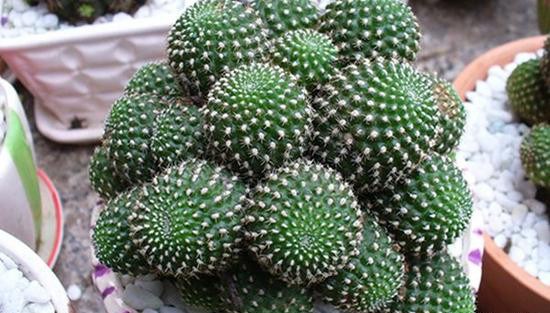
Offset cactus (Mammillaria)
I. Offset cactus (Mammillaria)
The offset cactus is a cactus that grows by producing offsets, unlike traditional single cacti that grow slowly; the offset cactus keeps pushing out small offsets, so those with trypophobia should be cautious about growing it! When caring for the offset cactus, the best method is to fix it in a spot with light (of course, not in direct blazing sun) and control the frequency and amount of watering, watering as little as possible, and not moving it around every few days. Of course, it cannot be kept in a dark place either, because over time the body will grow very slender, bloom very little or even never bloom at all. Sunlight is actually not the most important thing for the offset cactus, but it must be placed in a ventilated environment. Stick to the principle of better dry than wet, and do not water very frequently; absolutely do not pour water onto the body of the plant - water from the bottom to prevent rot caused by water not evaporating in time.
Heartleaf aptenia (Aptenia cordifolia)
II. Heartleaf aptenia (Aptenia cordifolia)
Heartleaf aptenia is also a potted plant that easily becomes pot-bound; basically a single cut stem will root, and once it starts filling the pot it holds nothing back! It can even be trained into a waterfall, so do not miss out! When caring for heartleaf aptenia, it likes a dry environment, so do not water too much. Every year from March to September is the peak growing period for heartleaf aptenia; during this time the water requirement is greater, especially in the hot summer season, when you should increase the amount of watering while also making sure water does not accumulate in the pot. Follow the principle of water when dry and wet; wait until the potting soil is dry, then water thoroughly. Too much water easily causes root rot, and in severe cases death. After September, heartleaf aptenia enters a slow growth period, and at this point you should gradually reduce watering to prepare for moving it indoors to overwinter.
Coin grass (Hydrocotyle vulgaris)
III. Coin grass (Hydrocotyle vulgaris)
Coin grass has astonishing pot-filling power. Many friends report that their flowerpots at home are too small, so they can only grow it in big vats or large foam boxes, and even then they still have to throw away over ten jin of it - it really grows far too much! When caring for coin grass, it is best not to grow it in water alone; pure hydroponics generally does not work very well, and a half-water, half-soil setup works better, just like growing water lilies and lotus, which makes it very easy to grow. If using only water, add hydroponic nutrient solution and also use river sand, clay pebbles or pebbles to weight down the bottom. Coin grass extremely loves sunlight when growing, so it is best to place the water basin outdoors in abundant light or beside a window. If grown indoors, the daily sunlight exposure should be no less than 4-5 hours.
Mother of thousands (Kalanchoe daigremontiana)
IV. Mother of thousands (Kalanchoe daigremontiana)
Mother of thousands is also called "life plant" or "air plant"; as the name suggests, in humid air, fine aerial adventitious roots can grow on both the upper and lower surfaces. The small plantlets are evenly arranged along the edges of the large leaves, and drop off at a touch and take root where they land, making it very easy to fill the pot! When caring for mother of thousands, the broad-leaved mother of thousands is suitable for growing in well-drained acidic soil; for potting, use a mix of 3 parts leaf mold and 1 part sandy soil as the substrate. During the growing season, water a little more to keep the potting soil moist, but do not let water accumulate. In autumn and winter, reduce watering, and in winter strictly control watering. Fertilizing does not need to be too frequent, otherwise it causes excessive growth and may even cause the plant to rot; applying fertilizer 1-2 times a month during the growing season is enough.
Aloe
V. Aloe
Aloe is called the "holy product of beauty" and is an indoor potted plant deeply loved by flower and plant enthusiasts; not only is it good-looking, it also has high medicinal value. At the same time, aloe is also a plant that very easily becomes pot-bound - before you know it, it has filled an entire pot; would you not say that is maddening? When caring for aloe, aloe is called the "plant that cannot die of drought", so not watering or watering little generally has no great effect, but if water accumulates in the soil, it will cause the roots to rot and drown the plant. In winter, water once every 15 to 20 days, appropriately increase leaf-surface misting, water as little as possible, and keep the potting soil dry. In spring, generally water once every 5 to 7 days; the watering principle is do not water unless dry, and when watering, water thoroughly. In summer, water once every 2 to 3 days, and also take care to avoid prolonged exposure to blazing sun to reduce water loss.
That is all for the introduction of these 5 plants that easily become pot-bound! Thank you all for reading! I hope it can be of some help to everyone!