Grow a Rieger begonia in autumn and winter: graceful form, abundant blooms, high ornamental value
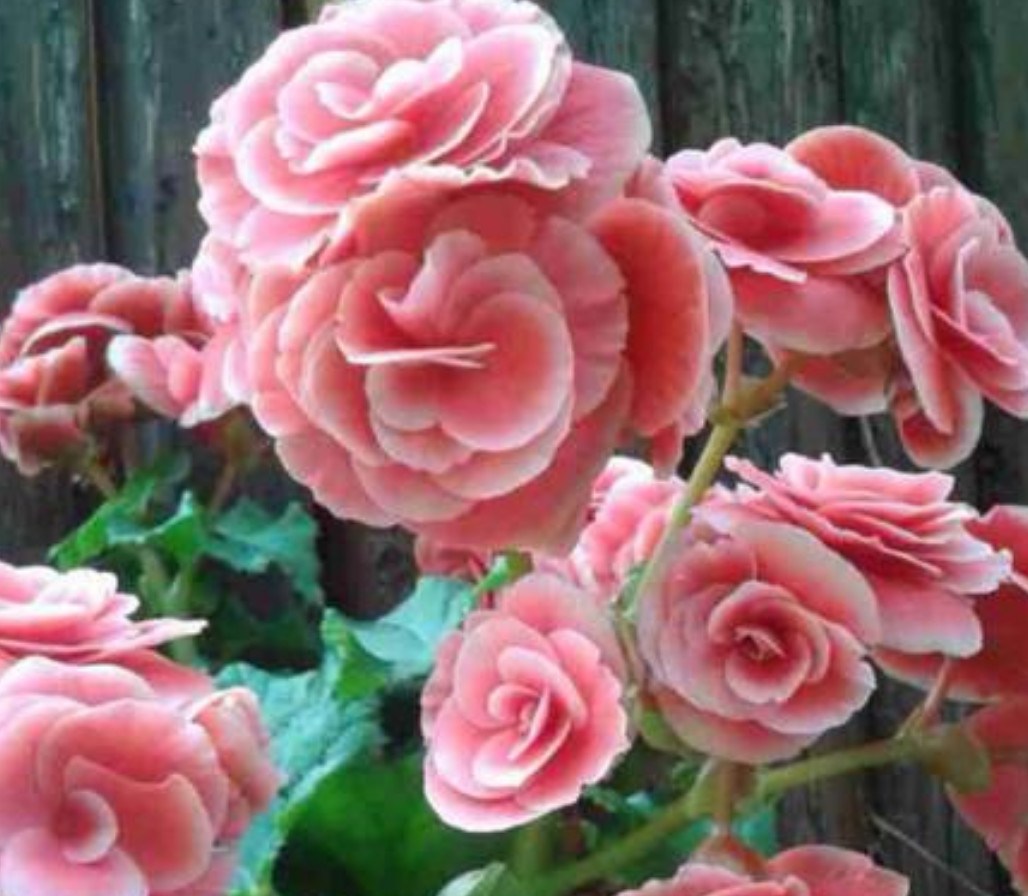
The hot summer has passed, and many flower lovers' plants have wilted and died after enduring a summer of high temperatures, or their growth has declined. The cool autumn has arrived, so I recommend a flower suitable for growing in autumn and winter, and that is the Rieger begonia. The Rieger begonia is a typical greenhouse flower, with a long flowering period and rich colors, emerald green branches and leaves, and a full plant form. Its colors and flower shapes are no less impressive than those of roses, making it a top choice for beautifying the home in winter and spring.
The Rieger begonia has a particularly long flowering period, lasting from December to around April of the following year. With proper care, it can bloom from winter into early summer, and after a short dormancy, it will bloom again in late autumn. Some flower lovers praise their own Rieger begonia, saying it bloomed for about half a year and did not go dormant even in summer, joking that watching it bloom gave them a bit of visual fatigue! This shows just how long the Rieger begonia's flowering period is.
Generally, the Rieger begonias we buy from flower markets come with buds and flowers all over the plant, and the plant form is also very attractive. If you want the Rieger begonia to have a long flowering period and vivid colors, you must meet all the conditions it needs for growth.
The Rieger begonia likes loose, fertile, well-drained soil. Soil mixed with coconut coir, peat, vermiculite or perlite, carbonized bark, and the like can all meet its growth needs. The Rieger begonia is a perennial tuberous herbaceous flower. It has brown, lignified, irregular tubers underground, so when watering the Rieger begonia, be sure not to let water accumulate in the pot. Many flower lovers fail to grow Rieger begonias well, and most of the reason lies in watering. In daily care, except during the low-temperature period in winter when you should water only after the soil has dried out, in other seasons just keep the potting soil slightly moist. Never water too frequently, to prevent root rot.
The Rieger begonia likes a humid air environment. When ventilation is good, you can use a spray bottle with a fine mist to spray the plant and maintain air humidity. Try to choose daytime with good ventilation for spraying, so that after the leaves absorb water, excess moisture evaporates quickly, preventing stem and leaf rot. At the same time, avoid the flowers when spraying, to prevent them from wilting prematurely. It should be noted that during the low-temperature period in winter, once water accumulates on the leaves and air circulation is also poor, it can easily trigger gray mold, the disease to which Rieger begonias are most prone. In the early stage, water-soaked spots appear on the leaves, and later the spots gradually expand and infect the center of the leaves and the stems, becoming covered with gray mold and causing rot. If gray mold appears, it is recommended to immediately cut off the diseased leaves and, on a sunny day, spray the leaves with Huimei Suk or mancozeb and drench the soil, once every 7 days, for 2~3 consecutive times for a clear control effect.
The Rieger begonia likes a warm, semi-shaded environment and plenty of bright, indirect light. The most suitable growing temperature for it is 18~22°C. In winter, the room temperature should be kept above 15°C, otherwise it will drop flowers and buds. In autumn and winter, the most suitable place to put it is a balcony or bedroom windowsill with good ventilation. When winter sunlight is not strong, you can let it get some sun appropriately.
If you want the Rieger begonia to have a long flowering period, it also needs sufficient fertilizer supplementation throughout its entire growth process. During the flowering period, minimize nitrogen fertilizer intake and increase phosphorus and potassium fertilizer to promote faster bud development and also enhance the plant's disease resistance and cold resistance. You can add 0.1% monopotassium phosphate to the water when watering, or use your own decomposed organic liquid fertilizer, such as alum fertilizer water, to drench the roots of the plant, ensuring a sufficient energy supply during the flowering period.