What to do when your green plant turns yellow and drops its leaves? Switch to leaf mold and it will regain its green in a few days
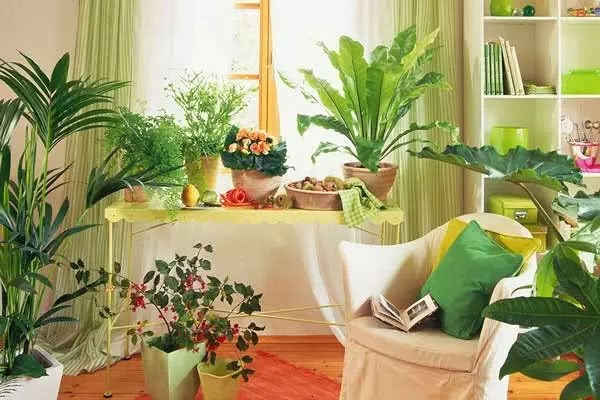
Planting flowers is easy, but keeping them alive is hard - this is probably the feeling of every flower lover. Nowadays many flowering plants simply cannot survive once summer arrives; they either get yellow leaves or root rot, which is really frustrating!!!
In fact, besides watering and fertilizing, the main reason this happens is that the soil in the pot was not chosen well to begin with! Because flowers come in different varieties, different soils must be chosen to care for them, and the nutrients each soil provides are different too.
Here, Huahua wants to recommend a soil that is fairly easy to get and quite easy to use: leaf mold. Leaf mold is mainly made up of fallen leaves and plants from the ground, which after fermentation become the nutrient-rich soil we now have.
Leaf mold is relatively loose, so its air permeability is better than that of ordinary soil. Because the soil contains components from various plants after fermentation, it is better able to hold onto fertilizer and water in the soil, and is used to develop the root system.
Because leaf mold contains these substances, the gaps between particles are relatively large, so there is no need to worry that the soil might become compacted. It can also be mixed with other soils, and this way the care effect can be doubled.
Because leaf mold contains a lot of fermented plant material, it is rich in nutrients and can provide good living conditions for flowering plants. Using leaf mold to grow flowers is the best arrangement for plants: their growth rate will speed up because of it, the flowering period will last longer, and the buds will be fuller.
However, now that high-rise buildings are gradually being built, leaf mold is getting harder and harder to find. Many flower lovers choose to buy it online or at the market, but in fact there is no need to spend that money - Huahua will now teach everyone how to make leaf mold.
Since autumn is about to arrive, you can first go to the roadside or beside a green belt and gather some fallen leaves to take home as raw material. The next step is to crush these fallen leaves, then scald them soft with hot water; the purpose of the hot water is to disinfect and sterilize these roadside fallen leaves.
The next step is to get a little ordinary soil from the roadside, then mix the prepared fallen leaves with the soil. Note that you must pay attention to the mixing order: put the soil in first and then the fallen leaves, layering them one layer at a time, and finally stir them together.
The leaf mold you make yourself also has to go through fermentation, so put the leaf mold you prepared earlier out in the sun to ferment. During fermentation you can add a little water - of course, rice-washing water is best - as this can speed up fermentation. After about two months, your homemade leaf mold is done!
The finished leaf mold can be used as growing soil for all kinds of flowers. This soil, with its extremely high content of nutrient elements, will certainly promote plant growth. I wonder whether everyone has chosen the right growing soil?